Why Do Trainers Have Heels? The Science of Shoe Drop
Shoe Drop Impact Calculator
Adjust the sliders below to simulate how different shoe geometries affect your body mechanics based on current sports science.
Simulation Inputs
Biomechanical Profile
High DropRecommended Strike Pattern
Rear-foot strike is most common and comfortable with this drop.
Expert Recommendation
- This setup is ideal for cushioning-focused runners.
You might think all sneakers are flat. You grab a pair from the shelf, and they look identical to your neighbor's. But put them on a table, or better yet, measure the height difference between the sole under your heel and the sole under your toes, and you'll find a secret variable that changes how you move. This is called heel-toe drop, or simply shoe drop. It is the single most overlooked factor in why some shoes feel comfortable while others leave your calves screaming after three miles.
Most modern running trainers have a drop between 8mm and 12mm. That means your heel sits higher than your forefoot. Why do manufacturers build this slope into the shoe? Is it just marketing fluff, or does it serve a mechanical purpose? If you've ever wondered why switching from high-drop shoes to zero-drop minimalist shoes caused shin splints, or why basketball players seem to prefer lower drops, you're asking the right questions. We need to look at what happens inside your foot when gravity pulls you down.
The Anatomy of Shoe Drop
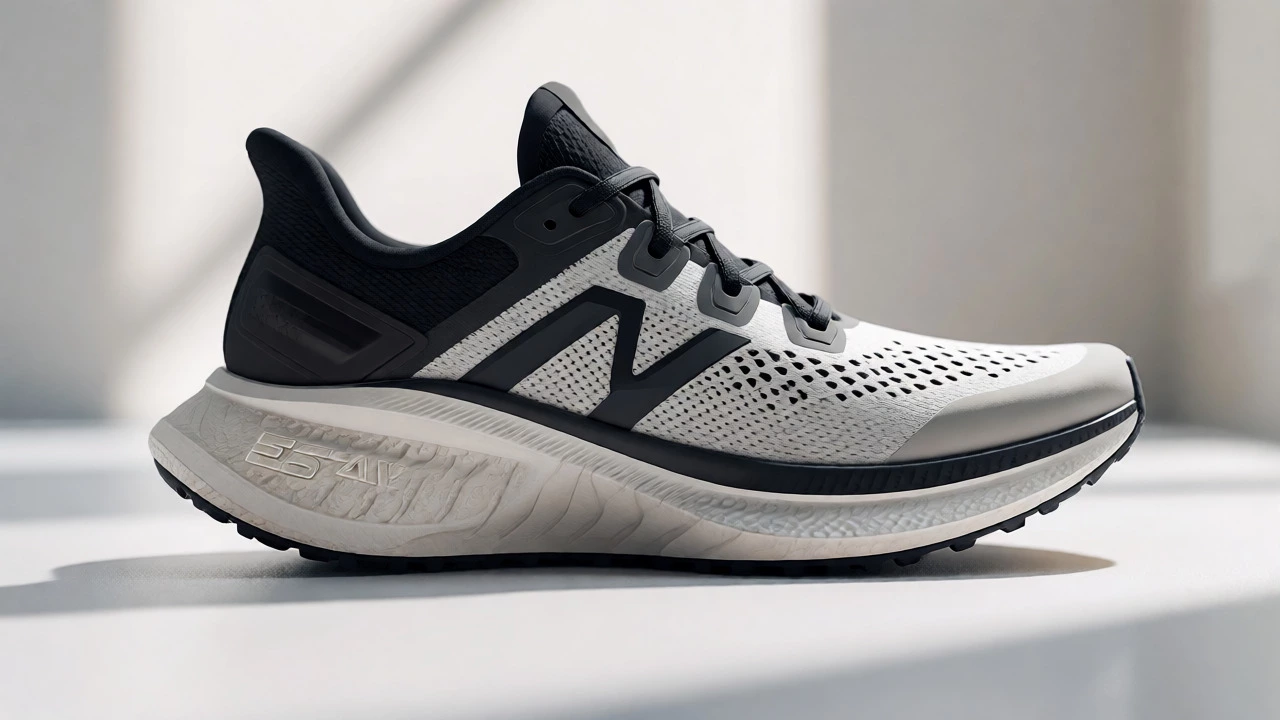
To understand why trainers have heels, you first need to visualize the geometry. A standard running shoe isn't a block of foam; it's a wedge. The midsole material, usually EVA foam or polyurethane, is thicker at the back than at the front. This creates an angle. When you stand still, your ankle joint is slightly plantarflexed-meaning your toes point downward relative to your shin. This position shortens the gastrocnemius and soleus muscles, collectively known as the calf complex.
This elevation reduces the stretch required by your Achilles tendon during the gait cycle. Without a heel lift, your heel would strike the ground first (in a rear-strike pattern), forcing the Achilles to lengthen significantly to allow the foot to flatten. By raising the heel, designers reduce the strain on this tendon. For people with tight calves or existing Achilles issues, this built-in cushioning acts like a permanent orthotic insert. It’s not about looking taller; it’s about reducing tension on soft tissue.
Biomechanics: How the Slope Changes Your Stride
Your body adapts instantly to the angle of the surface beneath it. Think about walking up a steep hill versus walking on flat pavement. On the hill, your knee bends more, and your hip flexors work harder. In a high-drop trainer, your body mimics a slight downhill stance. This shifts your center of mass forward. To keep balance, your torso leans slightly ahead.
This forward lean encourages a different impact pattern. With a high heel, many runners naturally adopt a rear-foot strike because the elevated heel provides a large surface area for initial contact. The thick foam absorbs the shock before it travels up the leg. Conversely, if you remove that heel (zero-drop), your natural instinct is to land closer to your center of gravity, often resulting in a mid-foot or forefoot strike. The heel isn't just a shape; it dictates where your foot hits the ground.
| Shoe Feature | High Drop (8-12mm) | Low/Zero Drop (0-4mm) |
|---|---|---|
| Achilles Tension | Reduced strain; shorter muscle activation | Increased strain; requires longer muscle length |
| Knee Load | Higher stress on knees due to forward lean | Lower stress on knees; more load on hips/calves |
| Typical Strike Pattern | Rear-foot strike common | Mid-foot or Forefoot strike encouraged |
| Best For | Tight calves, Achilles tendinitis history | Strong feet, natural runners, sprinters |

Why Not Everyone Runs Flat?
If barefoot running is so natural, why did the industry spend decades adding heels? The answer lies in our modern lifestyle. Most people don't run barefoot. We wear supportive shoes from childhood. Our feet weaken. Our arches lose their dynamic strength. Our calves tighten from sitting at desks all day. If you take someone with sedentary habits and force them into a zero-drop shoe, their achilles tendon gets overstretched immediately. They get injured.
Trainers with heels act as a bridge. They provide stability for populations that aren't biomechanically ready for neutral positioning. This is particularly true for older adults or those recovering from injuries. The heel offers a platform that feels secure. It prevents the feeling of "sliding" backward that some people experience in flat shoes. It’s a safety feature disguised as comfort.
Sport-Specific Needs: Basketball vs. Running
Not all trainers serve the same job. Look at basketball shoes. They often have moderate drops but massive lateral support. Why? Because basketball involves vertical jumping and sudden stops. A slight heel helps athletes stay on their toes, ready to explode upward. It keeps the ankle in a pre-loaded position.
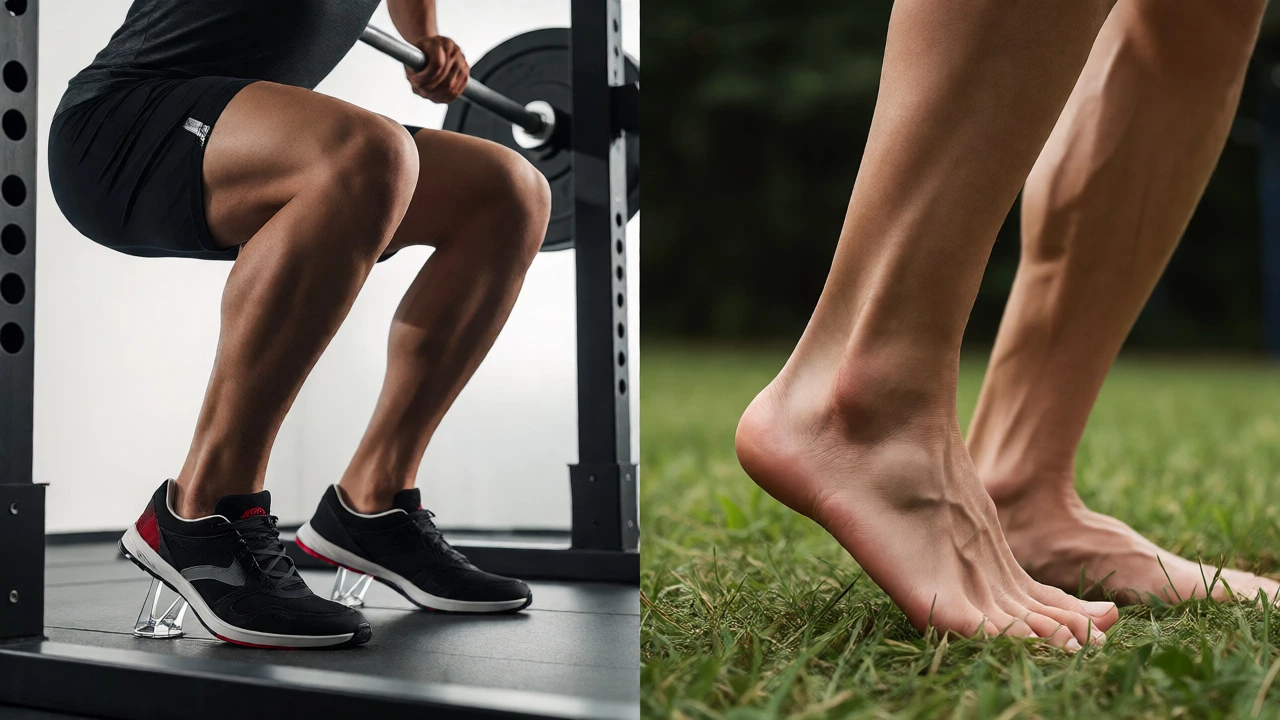
Now compare that to weightlifting shoes. These have a pronounced heel, sometimes 15mm or more. Lifters wear them to improve squat depth without needing extreme ankle mobility. The heel allows the shins to travel further forward over the toes, keeping the torso upright. Here, the heel isn't for cushioning; it's for leverage. Similarly, soccer cleats often have low drops to maximize ground feel and acceleration speed. The design follows the function.
The Rise of Zero-Drop and Minimalist Trends
In the early 2010s, brands like Vibram FiveFingers and Altra popularized zero-drop shoes. The idea was to return to a natural foot position. Proponents argued that high heels in shoes contribute to poor posture and knee pain. There is truth here. If you rely on the heel for too long, your intrinsic foot muscles can become lazy. They stop doing their job of stabilizing the arch.
However, switching to zero-drop isn't a quick fix. It requires a transition period. You cannot swap your 10mm daily runner for a 0mm shoe and run a marathon the next weekend. Your tendons need time to adapt to the increased load. Many people fail because they ignore this adaptation phase. The heel exists partly because changing human biomechanics takes years, not weeks.
How to Choose the Right Drop for You
Don't let marketing dictate your choice. Test the mechanics yourself. Go to a store and try on shoes with different drops. Walk around. Then jog. Pay attention to two areas: your Achilles tendon and your knees.
- Choose High Drop (8-12mm) if: You have a history of Achilles tendinitis, tight calves, or you primarily run long distances with a rear-foot strike. Brands like Brooks and New Balance excel here.
- Choose Low Drop (4-6mm) if: You want a middle ground. This is often ideal for gym workouts involving both lifting and cardio. Nike often uses this range in their versatile trainers.
- Choose Zero Drop (0mm) if: You have strong feet, no current calf injuries, and you prefer a forefoot strike. This promotes better proprioception (body awareness). Altra and Topo Athletic are leaders in this space.
Remember, there is no "best" drop. There is only the best drop for your specific anatomy and activity level. If you switch drops, do it gradually. Start by alternating days. Give your body six to eight weeks to adjust. Ignoring this rule is the fastest way to end up with a stress fracture.
What is considered a high heel-toe drop?
A high drop is typically defined as anything above 8mm. Most traditional road running shoes fall into the 10mm to 12mm range. This significant elevation places the most relief on the Achilles tendon and calf muscles, making it suitable for runners who prioritize cushioning and have tight posterior chains.
Do high heels in trainers cause knee pain?
It depends on your stride. High drops can increase stress on the knees because they encourage a forward lean and rear-foot striking, which sends more impact shock through the patellofemoral joint. However, they decrease stress on the Achilles and calves. If you suffer from runner's knee, a lower drop might help redistribute the load.
Is zero-drop better for posture?
Theoretically, yes. Zero-drop aligns the foot with the rest of the kinetic chain, potentially improving pelvic alignment and reducing excessive lumbar lordosis (swayback). However, if your feet lack the strength to maintain this alignment, you may compensate elsewhere, leading to other postural issues. Strength training is essential when using zero-drop footwear.
Can I wear high-drop trainers for weightlifting?
Yes, but specialized weightlifting shoes are better. General high-drop trainers have soft foam that compresses under heavy loads, causing instability. Weightlifting shoes use hard plastic or wood heels that do not compress, providing a solid base for squats and cleans. Using a squishy running shoe for heavy lifts compromises power transfer.
How long does it take to switch shoe drops?
Plan for at least 4 to 8 weeks. Start by wearing the new drop for short walks or easy runs once a week. Gradually increase the frequency and intensity. Rushing this process is the primary cause of injury when transitioning between different shoe geometries. Listen to your calves; if they ache excessively, slow down.