What Does a Black Hoodie Symbolize? Meaning, History & Style

Black Hoodie Symbolism Decoder
Discover how context changes the meaning of your black hoodie. Select a scenario to see the perceived symbolism and social signal.
Perceived Symbolism
Focused, innovative, unconventional
Social Signal
"I prioritize comfort over tradition."
You put on a black hoodie and suddenly, you’re invisible. Or are you? One minute you’re blending into the subway crowd in Vancouver, the next you’re standing out like a beacon in a room full of suits. It’s weird how one piece of fabric can shift your entire vibe depending on who’s looking at you. If you’ve ever wondered why this specific garment carries so much weight, you’re not alone. The black hoodie is a cultural chameleon that shifts its meaning based on context, from high-fashion luxury to protest uniform. It’s not just about staying warm; it’s about signaling something to the world.
Let’s cut through the noise. You want to know what people think when they see you in that dark fleece pullover. Do they see laziness? Creativity? Threat? The answer is: all of the above, and none of them. The symbolism of the black hoodie isn’t fixed. It’s fluid. It depends entirely on where you are, who you’re with, and what era we’re living in. As someone who has watched fashion cycles spin for years here in Canada, I can tell you that few items have been as misunderstood or as fiercely protected as this staple.
The Origins: From Utility to Subculture
To understand the symbol, you have to look at the source. The hoodie didn’t start as a statement piece. It started as workwear. In the 1930s, Champion introduced the hooded sweatshirt for laborers working in cold New York warehouses. The primary function was utility. Keep the head warm. Keep the hands free. Simple. But by the time it hit the streets of Philadelphia and later, New York City, it had shed its industrial skin.
In the 1970s, the black hoodie became synonymous with hip-hop culture, particularly in the Bronx. Artists wore them not just because they were comfortable, but because they were accessible. They were affordable armor against a city that often felt hostile. This is where the first major symbolic shift happened. The hoodie stopped being just clothing and started becoming identity. It said, "I am part of this community," and "I am ready for whatever comes." The color black added a layer of seriousness. It wasn’t bright or playful. It was grounded. It was real.
The Paradox of Visibility and Invisibility
Here is the core tension that makes the black hoodie so fascinating. It offers two opposite things at once: anonymity and presence. When you pull the hood up, you create a barrier between yourself and the observer. Your eyes are shadowed. Your expression is hidden. Psychologically, this gives the wearer a sense of control. You decide when to engage. You decide when to be seen.
But visually, a black hoodie is stark. Against a light background, it creates a silhouette. Against a dark background, it disappears. This duality is why it’s favored by introverts, creatives, and those who prefer to observe rather than perform. It’s a shield. In a world obsessed with social media performance, the black hoodie says, "I’m here, but I’m not performing for you." It’s a rejection of the demand to always be smiling, always be engaging, always be 'on.'
| Context | Perceived Symbolism | Social Signal |
|---|---|---|
| Creative Workspace | Focused, innovative, unconventional | "I prioritize comfort over tradition." |
| Streetwear Scene | Trendy, connected, culturally aware | "I know what’s current." |
| Formal Setting | Rebellious, casual, potentially disrespectful | "I don’t follow the rules." |
| Nighttime Urban | Anonymous, cautious, blended-in | "I am observing, not participating." |
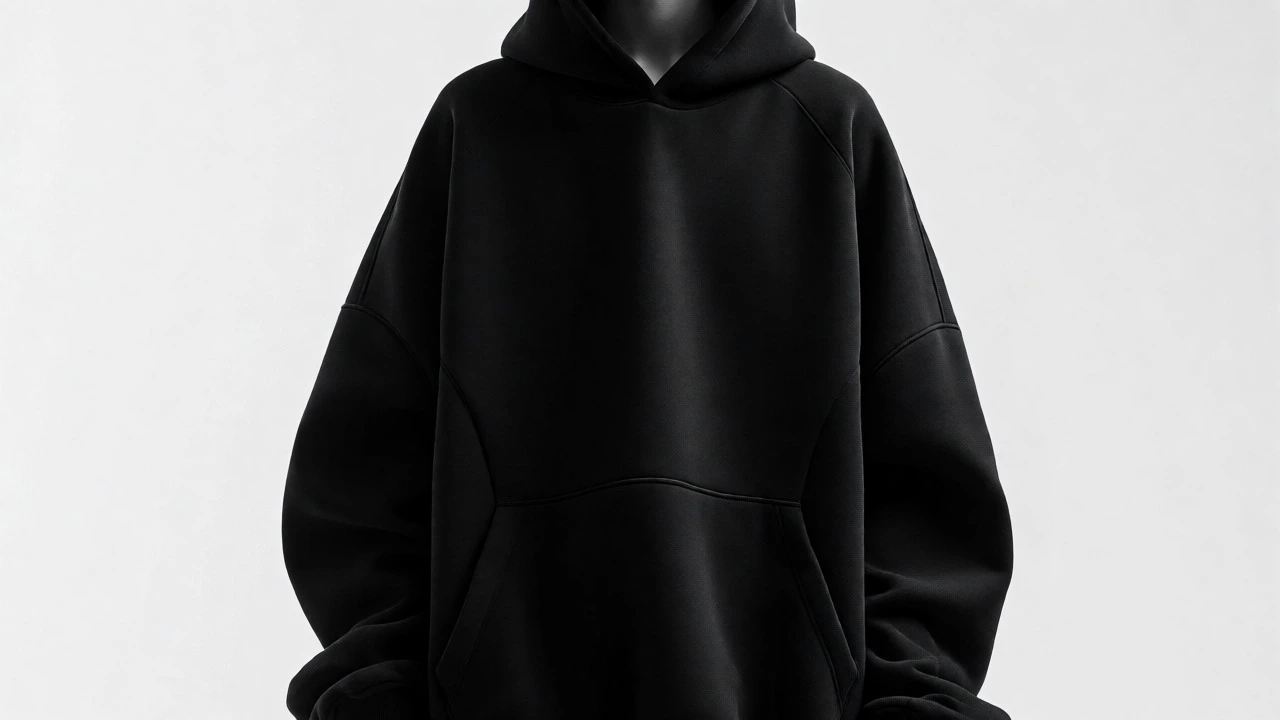
Fashion Highs and Lows: Luxury vs. Stereotype
We need to talk about the elephant in the room: bias. For decades, the black hoodie carried a negative stigma, particularly for young men of color. It was coded as "threatening" or "suspicious" in retail environments and public spaces. This wasn’t about the fabric; it was about racial profiling. The garment became a lightning rod for discussions on safety and prejudice. Wearing one could mean being followed in a store or questioned by security. That historical baggage still lingers, even if it’s fading in many circles.
Simultaneously, the high-fashion world co-opted the hoodie. Designers like Vetements and Balenciaga released oversized black hoodies priced in the thousands. Suddenly, the same silhouette that signaled poverty or rebellion now signaled wealth and insider status. This juxtaposition is jarring but revealing. It shows that the value of the black hoodie isn’t inherent-it’s assigned by the viewer’s cultural lens. A CEO wearing a $500 black hoodie is seen as "tech-savvy" and "modern." A student wearing a $20 black hoodie might be seen as "unprepared." Same shape. Different story.
The Tech Bro Effect and Modern Professionalism
If you work in tech or creative industries, you know the drill. The black hoodie replaced the suit as the uniform of power. Mark Zuckerberg didn’t invent this, but he cemented it. The logic was simple: if your brain is busy solving complex problems, why waste energy on tie knots and dry cleaning? The black hoodie became a symbol of meritocracy. It suggested that your output mattered more than your appearance.
This shift has rippled outward. Today, seeing a black hoodie in a business meeting isn’t necessarily shocking. It signals efficiency. It says, "I’m focused on the product, not the presentation." However, this only works if you have the confidence (or the credentials) to back it up. Without that aura of competence, a black hoodie in a boardroom can just look like you forgot to change clothes after the gym. Context remains king.

Psychological Comfort and the Armor Concept
Let’s get personal for a second. Why do we actually reach for the black hoodie? Often, it’s about sensory regulation. The weight of the fabric, the warmth around the neck, the ability to hide your face-these provide a tactile comfort that other clothes don’t. Therapists sometimes refer to this as "grounding." For people dealing with anxiety or social fatigue, the black hoodie acts as a portable safe space.
It’s also a neutralizer. Black matches everything. It doesn’t clash. It doesn’t draw attention to your body shape in a way that feels exposing. It flattens the visual field. For many, this neutrality is liberating. It removes the decision fatigue of outfit planning. You grab the black hoodie, you leave. Done. This simplicity is a huge part of its enduring appeal. In a chaotic world, the black hoodie is a constant. It’s reliable. And reliability is a powerful symbol in itself.
How to Wear It With Intention
So, how do you harness the symbolism instead of letting it define you? It starts with fit and condition. A baggy, pilled black hoodie reads differently than a structured, crisp one. If you want to lean into the "creative professional" vibe, pair your black hoodie with tailored trousers and clean sneakers. This elevates the garment, showing that the choice was deliberate, not lazy.
If you’re aiming for the "streetwear" aesthetic, layer it under a denim jacket or an oversized coat. Play with proportions. If you want to minimize the "threat" perception in formal settings, ensure the hoodie is well-maintained and perhaps choose a lighter shade of charcoal if pure black feels too stark. Remember, you are controlling the narrative. The hoodie is just the tool; you are the driver.
Ultimately, the black hoodie symbolizes freedom. Freedom from dress codes. Freedom from judgment. Freedom to be anonymous or iconic, depending on your mood. It’s a canvas that you paint with your actions, not just your style choices. Next time you zip it up, ask yourself: what do I want this garment to say today?
Is wearing a black hoodie considered unprofessional?
It depends entirely on the workplace culture. In traditional corporate environments, it may be seen as too casual. However, in tech, creative, and startup sectors, a clean, well-fitted black hoodie is increasingly accepted as smart-casual attire. The key is pairing it with polished elements like quality shoes or tailored pants to signal intentionality.
Why is the color black significant for hoodies specifically?
Black is versatile, slimming, and hides stains well, making it practical. Symbolically, black conveys authority, mystery, and sophistication. Unlike brighter colors, it doesn't distract, allowing the wearer to blend in or stand out through silhouette alone. It serves as a neutral base that adapts to various subcultural meanings without clashing.
Does a black hoodie have negative associations?
Historically, yes. Due to racial profiling and media stereotypes, the black hoodie has sometimes been associated with delinquency or threat, particularly for young men of color. While these biases are diminishing, they haven't disappeared completely. Being aware of this context helps wearers navigate different social spaces with awareness.
Can a black hoodie be considered high fashion?
Absolutely. Luxury brands like Balenciaga, Vetements, and Off-White have released premium black hoodies that sell for hundreds or thousands of dollars. In these contexts, the hoodie symbolizes exclusivity and trend-awareness rather than utility or rebellion. The price point and brand logo transform the symbolic meaning from humble to elite.
What does pulling the hood up signify?
Pulling the hood up typically signifies a desire for privacy, focus, or protection from the elements. Socially, it can indicate that the wearer wants to disengage from their surroundings or feels vulnerable and seeks comfort. It creates a physical barrier between the individual and the outside world, reinforcing the theme of anonymity.