Can People Tell a Cheap Suit? Spotting Quality vs. Price
Suit Quality & Perception Checker
Select the characteristics that apply to your current or prospective suit to see how it might be perceived by others.
Visual Cues Checklist
Check the boxes for features present in the suit you are evaluating.
You walk into a room wearing a $200 suit from a department store sale. You feel sharp. The cut fits your shoulders. But does everyone else see what you paid for? Or do they just see "that guy in the cheap suit"?
This is the million-dollar question (or rather, the two-hundred-dollar question) that keeps guys up at night before job interviews, weddings, or first dates. We spend hours agonizing over whether our wardrobe choices scream "budget" or whisper "class." The truth isn't black and white. It’s not about the price tag alone. It’s about specific visual cues that trigger an immediate judgment in the human brain.
Most people aren’t trained tailors. They don’t know the difference between a Bespoke suit made entirely by hand measurements and a Off-the-rack standardized size suit available immediately. But they notice things. Subtle flaws add up. A shiny lapel, a bagging back, or a lining that bunches up when you sit down-these are the red flags. This guide breaks down exactly what people see, why they see it, and how you can look expensive without spending a fortune.
The Fabric Tells All: Shine and Weave
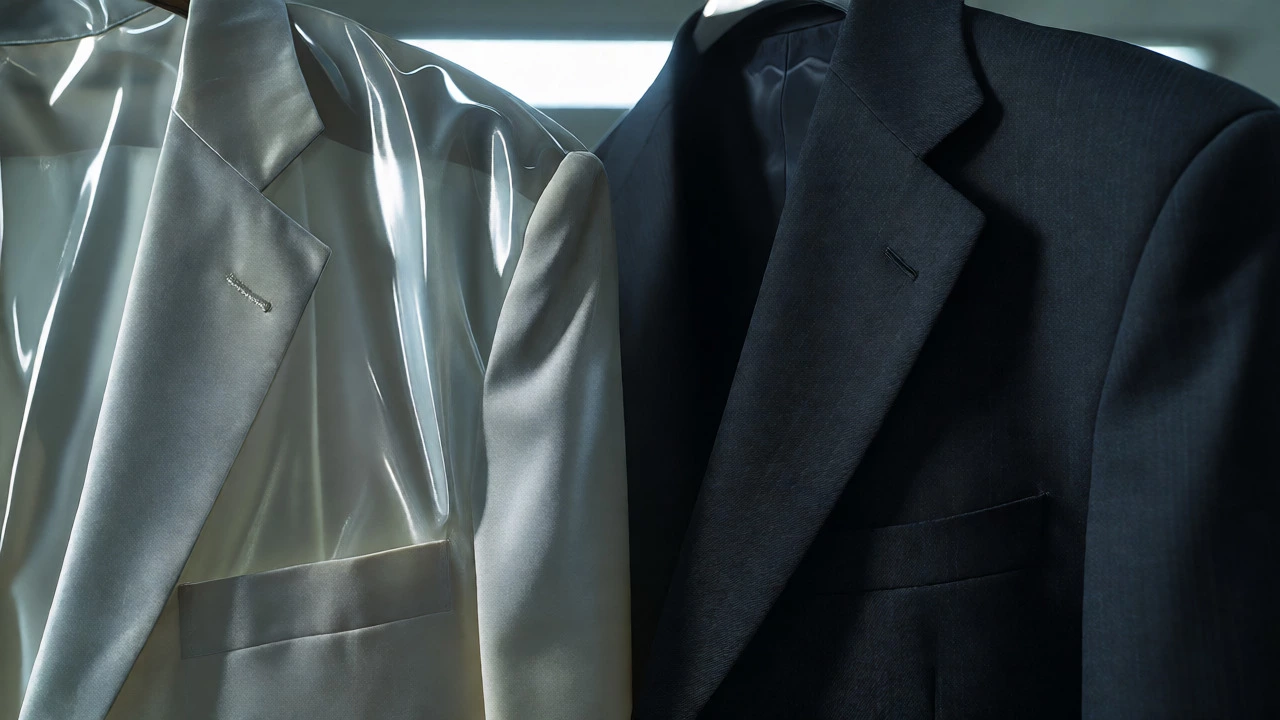
If there is one giveaway that screams "cheap," it’s shine. Not the healthy sheen of high-quality wool under stage lights, but the plastic-like glare of polyester blends. Synthetic fibers reflect light differently than natural ones. When you stand under office fluorescent lighting, a poly-blend suit often looks like a shower curtain. Real wool absorbs light; synthetics bounce it.
But it’s not just about material composition. It’s about the weave. Cheap suits use loose weaves to save money on yarn. If you stretch the fabric slightly across the chest, does it become translucent? Does the pattern warp? High-quality Worsted Wool smooth, tightly woven wool fabric used for formal suits holds its shape and color depth. A cheap suit might look fine flat on a hanger, but as soon as it moves with your body, the structure fails.
Here’s a quick rule of thumb: If the suit feels slippery or overly smooth, be suspicious. Natural wool has friction. It grips. Synthetics slide. Run your hand against the grain. If it resists slightly, you’re likely dealing with better quality. If it glides like ice, check the label.
The Fit Is King (And Queen)
Let’s get this out of the way: A $500 suit that fits poorly looks worse than a $100 suit that fits perfectly. People judge fit instantly. They might not articulate why something looks off, but their brains register asymmetry or excess fabric as "wrong."
The biggest offender is shoulder padding. In cheap suits, manufacturers try to accommodate the widest range of bodies with minimal alteration. This leads to the dreaded "sloping shoulder" look where the jacket extends past your actual shoulder bone, creating a boxy silhouette. Or worse, the padding is too thick, making you look like you’re wearing armor from a low-budget sci-fi movie.
Check the break of the trousers. If the pants pool around your ankles like a deflated balloon, it’s a sign the tailor didn’t hem them correctly-or you bought a length meant for someone much taller. Conversely, if they’re too short, exposing socks unnecessarily, it can look trendy or sloppy depending on execution. The goal is a clean line. No bunching. No dragging.
| Feature | Cheap Suit Indicator | Quality Suit Indicator |
|---|---|---|
| Fabric Sheen | High gloss, plastic-like reflection | Matte finish, subtle luster |
| Lining | Synthetic, bunches easily, loud patterns | Bemberg or silk, hangs straight, neutral colors |
| Buttons | Plastic, uniform holes, loose stitching | Horn or mother-of-pearl, cross-stitched, secure |
| Pockets | Fake pockets, stiff flaps | Functional, soft edges, natural drape |
| Collar Roll | Stiff, stands away from neck | Natural curve, hugs neck gently |

Details That Betray the Price Tag
Once someone gets within conversational distance, the micro-details come into play. These are the elements you touch and see up close. And honestly? Most people notice these more than they realize.
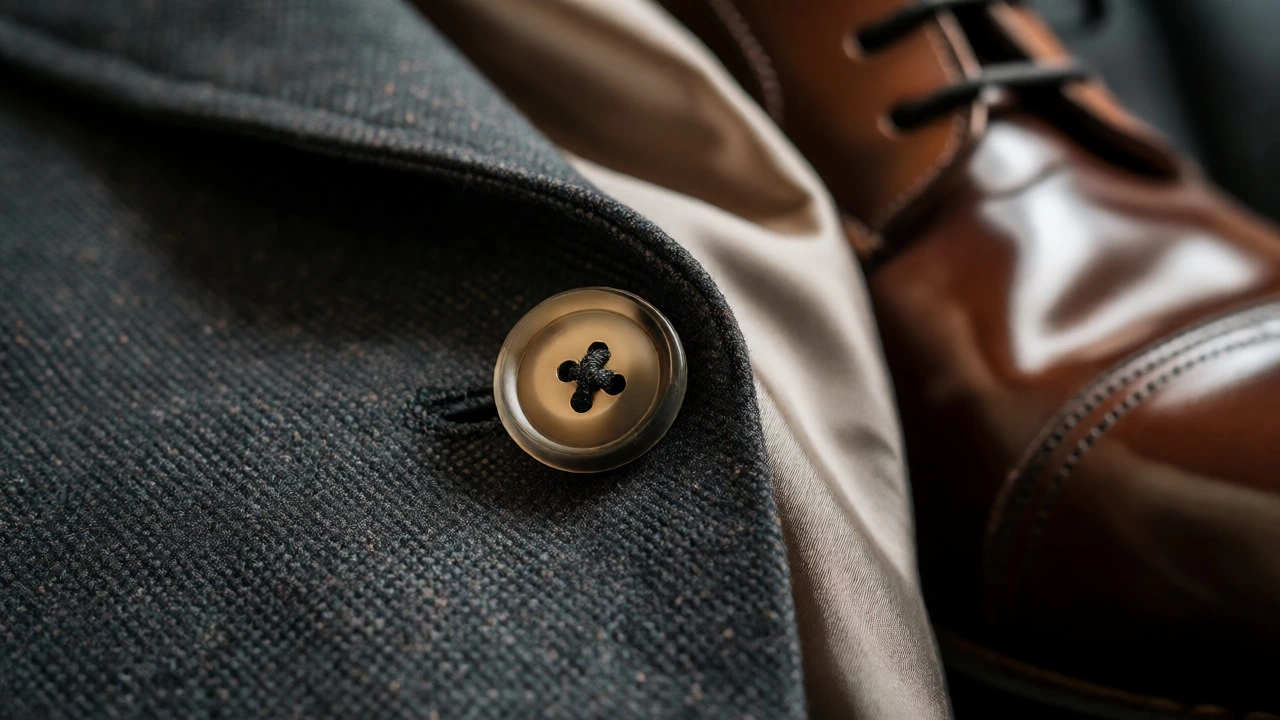
Look at the buttons. Cheap suits use molded plastic buttons. They feel light and hollow. Higher-end suits use horn, corozo, or mother-of-pearl. These materials have weight and unique imperfections. More importantly, check how they’re attached. Are they stitched on with a single thread loop? Or is there a shank-a little stem of thread underneath the button? That shank allows the button to pop open easily without stressing the fabric. No shank means the button pulls tight against the cloth, eventually tearing the hole. It’s a small engineering failure that speaks volumes about cost-cutting.
Then there’s the lining. Open the jacket. What do you see? Cheap linings are often bright, busy prints designed to distract you from poor construction inside. They also tend to be made of viscose or polyester, which traps heat and wrinkles instantly. Quality linings use Bemberg (cupro) or silk. They breathe. They glide over shirts. They stay flat. If the lining ripples every time you move, the suit lacks internal structure.
Don’t forget the collar. Place your finger along the seam where the collar meets the neck. On a good suit, this roll is smooth and continuous. On a bad one, you’ll feel ridges or stiffness caused by excessive fusing. Fusing is glue used to bond interlining to the outer fabric. Cheap suits fuse the entire front panel. This creates a cardboard-like stiffness that doesn’t move with you. Better suits use half-canvas or full-canvas construction, allowing the chest area to mold to your body over time.
The Psychology of Perception
Why do we care so much? Because humans are pattern-recognition machines. We make snap judgments based on visual data processed in milliseconds. A study published in the Journal of Experimental Social Psychology found that clothing significantly impacts perceived competence and status. But here’s the twist: It’s not always about objective quality. It’s about consistency.
A well-fitted, mid-range suit worn with confidence beats a poorly fitted luxury brand every time. People detect dissonance. If your shoes are scuffed, your belt doesn’t match your shoes, or your tie is tied loosely, those errors overshadow the suit itself. The "cheap" label often sticks because the overall ensemble feels disjointed, not necessarily because the fabric was inferior.
Consider the context. At a creative startup meeting, no one cares if your suit is off-the-rack. They care if you look put-together. At a traditional law firm, standards are stricter. Knowing your audience helps you calibrate how hard you need to work to hide budget constraints.
How to Look Expensive on a Budget
You don’t need to sell a kidney to look professional. You just need to prioritize. Here is a strategy to maximize perceived value without maximizing cost.
- Invest in Tailoring: This is non-negotiable. Take a $300 suit and spend $80-$100 having it tailored. Shortening sleeves, taking in the waist, and adjusting the trouser length transforms a generic garment into a custom-looking piece. Fit is the ultimate luxury signal.
- Stick to Solid Colors: Patterns are risky. Pinstripes can look dated if spaced incorrectly. Checks require precise alignment. Navy blue and charcoal gray are forgiving. They hide minor fabric flaws and focus attention on the cut rather than the texture.
- Mind the Shoes: Your shoes frame the suit. Scuffed leather drags down even the best suit. Clean, polished leather boots or derbies elevate the entire look. Keep them simple. No flashy buckles unless appropriate for the event.
- Keep It Simple: Avoid pocket squares if you’re unsure. A crisp white shirt and a solid tie are timeless. Over-accessorizing with a cheap suit highlights the lack of quality in the base layer.
Also, rotate your suits. Wearing the same suit three days in a row causes fatigue in the fabric. The knees bag out. The elbows shine. Give each suit 48 hours to rest and recover its shape. This maintenance trick makes cheaper fabrics last longer and look fresher.
When Does It Actually Matter?
Does anyone really notice? Let’s be real. In casual settings, nobody is inspecting your lapel stitching. Friends notice if you look tired, not if your suit is fused. However, in high-stakes environments-job interviews, client meetings, weddings-the stakes rise.
In these scenarios, people subconsciously assess reliability and attention to detail. A suit that fits well signals that you respect the occasion and yourself. It doesn’t mean you’re rich. It means you’re prepared. Conversely, obvious signs of neglect-wrinkled collars, missing buttons, ill-fitting cuffs-signal distraction or indifference.
So, can people tell a cheap suit? Yes, but usually only when it’s poorly maintained or badly fitted. A decent suit, properly tailored and cared for, passes the test 95% of the time. The other 5%? That’s for the tailors and the snobs who probably haven’t been invited to anything fun lately.
Is a $200 suit worth buying?
Yes, if it fits well after tailoring. At this price point, you’re mostly paying for synthetic blends, but a skilled tailor can adjust the proportions to make it look intentional. Focus on navy or charcoal solids to minimize fabric flaws.
Do people notice if my suit is polyester?
They notice the shine more than the fiber content. Under harsh lighting, polyester reflects light aggressively, looking plasticky. If you avoid direct spotlight exposure and keep the suit matte-looking through proper steaming, most people won’t identify the material specifically.
What is the biggest giveaway of a cheap suit?
Poor fit is the number one indicator. Excess fabric pooling at the waist or shoulders extending beyond your natural bone structure are instant flags. After fit, shiny fabric and stiff collars are the next most common visual cues.
Should I buy a canvas suit or a fused suit?
If you plan to wear the suit frequently, choose canvas. It molds to your body over time and lasts longer. Fused suits are fine for occasional wear but tend to bubble or peel after dry cleaning. For beginners, a half-canvas option offers a good balance of structure and comfort.
How many suits should I own?
Start with two: one navy and one charcoal. This covers most business and social occasions. Rotate them to allow the fabric to rest. Add a third suit, perhaps in a lighter gray or pattern, once you’ve mastered fitting and maintenance of the first two.