Why Can't You Wear Crocs at Work? The Real Reasons Behind the Ban
Crocs Workplace Suitability Checker
Answer the questions below to see if your workplace environment tolerates or bans Crocs.
Verdict:
--Key Factors Analysis
Recommendation
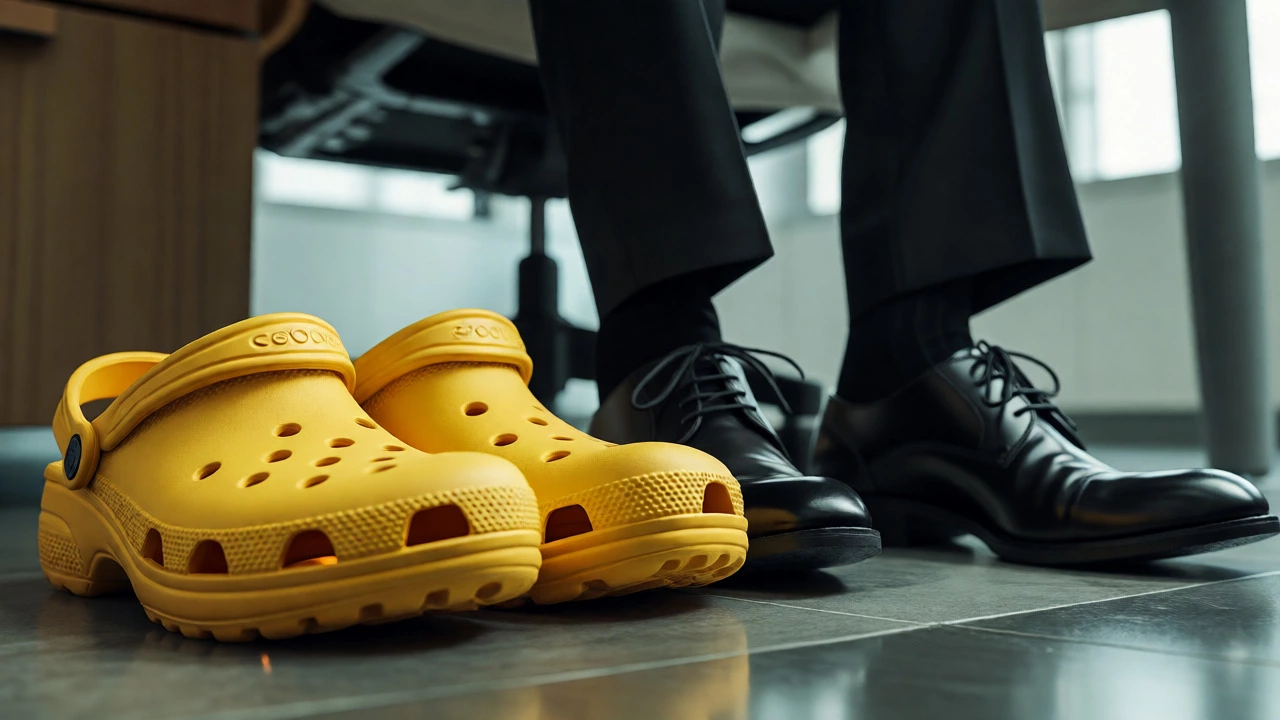
You know that feeling. It’s 3 PM on a Tuesday, your feet are throbbing in stiff leather oxfords or slick-soled pumps, and you’re eyeing the bright yellow Crocs a brand of casual footwear made from closed-cell resin called Croslite sitting under your desk. They look like a cloud for your toes. But then you remember: no way. Your manager would have an aneurysm. Why is this specific type of shoe so controversial in professional settings when it promises all-day comfort? Is it just snobbery, or is there actually a solid reason behind the "no Crocs" rule?
The answer isn’t black and white. While some workplaces have softened their stance, especially post-2020, many still ban them outright. This isn’t always about being out of touch with comfort; often, it’s about liability, hygiene, and the subtle language of professional presentation. Let’s break down exactly why your favorite clog might be getting you side-eyed in the office.
The Hygiene and Safety Reality Check
Let’s start with the most practical argument against wearing Crocs to work: they aren’t as safe or hygienic as people think. When you slip into a pair of classic clogs, you’re dealing with a shoe that has massive ventilation holes. In a sterile environment like a hospital or a clean lab, those holes are a problem. Debris, dust, and fluids can get inside easily. Conversely, if you sneeze or cough, droplets escape more freely than they would through a mesh sneaker or a solid leather shoe.
Safety is another big hurdle. Many Crocs models, particularly the standard clogs, lack a heel strap. If you’re walking briskly or climbing stairs, the shoe can slip off. Imagine carrying a tray of coffee or a stack of files and losing one shoe mid-step. It’s a tripping hazard. Even in offices where heavy machinery isn’t involved, loose footwear increases the risk of ankle twists. Employers worry about workers’ compensation claims, and a shoe that doesn’t secure the foot firmly is a red flag for insurance auditors.
| Feature | Standard Crocs Clog | Traditional Dress Shoe | Athletic Sneaker |
|---|---|---|---|
| Heel Security | Low (unless strap used) | High | High |
| Hygiene Barrier | Low (ventilation holes) | High (closed toe) | Medium (mesh) |
| Professional Perception | Casual/Unclean | Formal/Respectful | Neutral/Athletic |
| Traction | Variable (often slippery when wet) | Good (leather sole) | Excellent (rubber grip) |
The Visual Language of Professionalism
Fashion communicates status and intent before you even say hello. For decades, business attire has relied on signals of polish and attention to detail. A polished shoe says, "I care enough to prepare." A chunky, brightly colored plastic clog says, "I prioritized my comfort over social norms." This isn’t necessarily fair, but it is how human brains process visual cues quickly.
Consider the client meeting scenario. You’re pitching a high-stakes project. Your suit is tailored, your hair is done, but your feet are in neon pink Crocs. Does it undermine your authority? For many clients, yes. It creates a cognitive dissonance. The brain struggles to reconcile the formal upper body with the ultra-casual lower body. This distraction can subtly erode trust. People associate certain materials-like leather, suede, or high-quality synthetics-with durability and seriousness. Plastic, while durable in its own right, carries a connotation of disposability or childhood innocence that clashes with executive presence.

The "Slippery When Wet" Problem
Here is a specific, tangible issue that trips people up: traction. The material Crocs are made from, Croslite a proprietary closed-cell resin, provides excellent cushioning but poor grip on smooth surfaces when wet. Have you ever walked across a marble lobby floor after rain in a pair of rubber-soled sandals? It’s precarious.
In corporate buildings with polished concrete, tile, or hardwood floors, this becomes a genuine safety concern. One splash of water from a cooler or a rainy day tracked in by colleagues can turn a hallway into a skating rink. Unlike athletic sneakers with tread patterns designed for multi-directional movement, standard Crocs have a relatively flat bottom. If you work in a setting where spills happen-cafeterias, kitchens, labs-this lack of grip is a legitimate reason for a ban. It’s not just about looking silly; it’s about avoiding a broken tailbone.
When Are Crocs Actually Allowed?
It’s not all doom and gloom for the clog lovers. Context matters enormously. There are industries where Crocs are not just tolerated but encouraged. Healthcare professionals, for instance, wear them extensively. Why? Because nurses stand for twelve-hour shifts. The arch support and easy-clean nature of the material outweigh the aesthetic downsides. In these fields, the shoe is seen as a tool of the trade, much like a stethoscope.
Similarly, creative tech startups and remote-work-first companies have dropped strict dress codes. If your team works via Zoom, nobody sees your feet. If you’re in a casual Friday culture, a clean, neutral-colored pair of Crocs might pass muster. The key here is intentionality. Wearing dirty, hole-filled Crocs with frayed edges looks negligent. Wearing a clean, monochrome pair with smart casual clothes shows you made a choice. There is a difference between "I didn't want to change my shoes" and "I chose this for comfort and style."

How to Make Them Work (If You Must)
If you absolutely hate traditional work shoes and want to sneak Crocs into the rotation, you need to play by specific rules. First, color control is vital. Stick to black, navy, grey, or beige. Bright green or leopard print screams "beach vacation," not "boardroom." Second, condition matters. Scuffed, yellowed, or smelly Crocs are a hard no. Keep them pristine. Third, pair them correctly. Don’t wear them with a full three-piece suit. Try them with dark jeans and a blazer, or chinos and a button-down. The goal is to balance the casualness of the shoe with slightly elevated clothing elsewhere.
Also, consider the model. The classic clog is the most controversial. However, newer styles like the Crocs LiteRide or the Pollex Clog have sleeker profiles and better straps. These look less like garden tools and more like modern minimalist footwear. Some employers who ban the classic clog might allow these updated versions because they fit better within a "smart casual" definition.
The Psychological Comfort Factor
We have to acknowledge why we love them. Foot pain distracts us. If you’re wincing every time you take a step, your productivity drops. Studies on workplace ergonomics consistently show that physical discomfort leads to higher error rates and lower job satisfaction. If Crocs keep you standing tall and focused, that’s a benefit. The resistance to them often comes from managers who haven’t experienced the same foot pain or who prioritize uniformity over individual well-being.
However, comfort shouldn’t come at the cost of safety or professionalism. If your workplace bans them, it’s usually because they’ve found a middle ground that works for the majority. Maybe supportive orthopedic shoes that look like loafers are the compromise. Brands like Dansko or specialized medical-grade sneakers offer similar arch support without the plastic aesthetic. Exploring these alternatives might satisfy your need for comfort without triggering the dress code police.
Are Crocs considered unprofessional in all industries?
No, they are widely accepted in healthcare, food service, and casual tech environments. However, they remain banned in finance, law, and traditional corporate sectors where formal attire is strictly enforced.
Can I wear Crocs to a job interview?
Generally, no. Unless you are interviewing for a role in a highly casual startup or a field where Crocs are standard uniform (like nursing), it is safer to wear traditional dress shoes or clean, minimal sneakers to make a strong first impression.
Why do some bosses hate Crocs so much?
Many managers view them as a symbol of laziness or lack of effort. Additionally, concerns about safety (slipping) and hygiene (open vents) drive policy decisions, regardless of personal taste.
What is the best alternative to Crocs for office comfort?
Look for ergonomic loafers, memory foam insoles in leather shoes, or stylish athletic-inspired dress shoes from brands like Allbirds or Cole Haan, which offer similar cushioning with a more professional appearance.
Do Crocs cause foot problems over time?
Podiatrists note that while Crocs provide good arch support, the lack of heel stability can lead to tendonitis or claw toes if worn for extended periods without proper securing, as the foot grips the shoe to stay on.