The Rule of 5 in Fashion: A Complete Guide to Evening Dresses
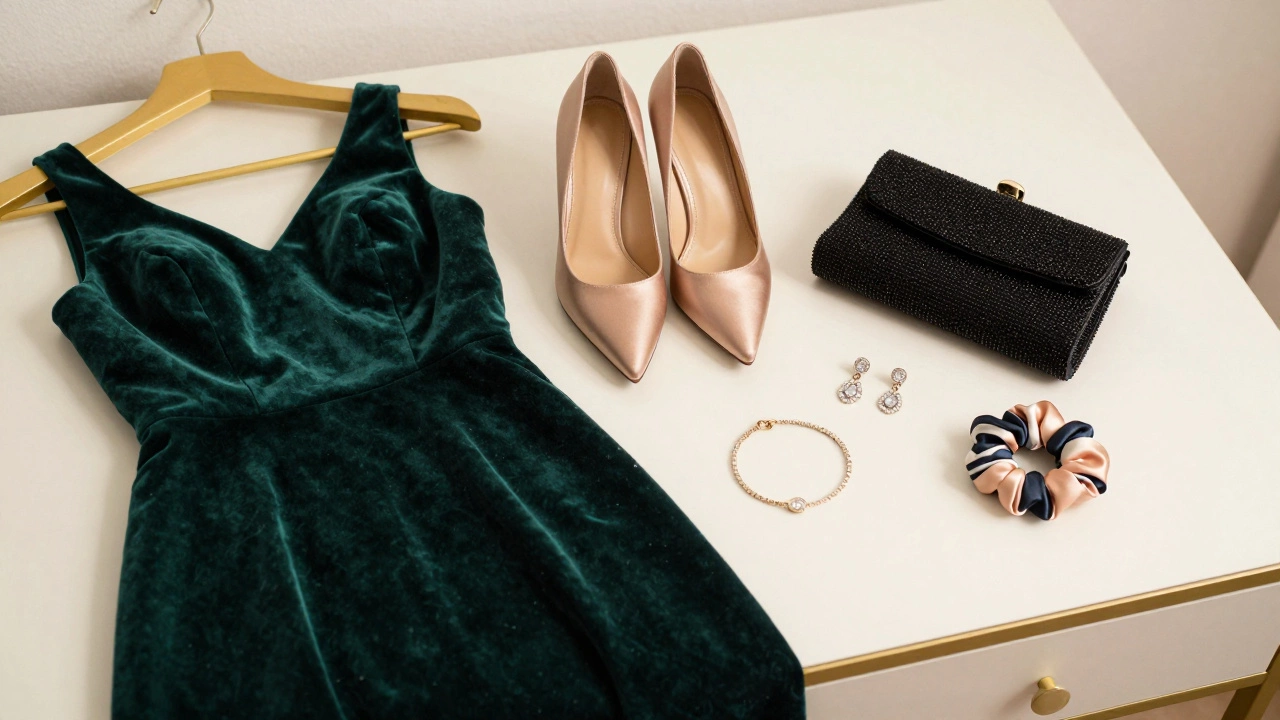
Evening Look Balancer
Start by selecting your foundation dress. Aim for exactly 5 elements for a balanced look!
Ever stood in front of your closet with a stunning evening dress that looks perfect on the hanger, but somehow feels... off? You add earrings, and it’s too much. You take them off, and you feel naked. This is where the Rule of 5 comes in. It’s not just another arbitrary fashion decree; it’s a practical framework for balancing your look so you never feel over-dressed or under-accessorized.
The concept is simple: aim for five key elements in your outfit. These aren’t random items; they are strategic points of focus that work together to create a cohesive, polished appearance. Whether you’re heading to a black-tie gala, a wedding reception, or a sophisticated dinner date, mastering this rule ensures you look intentional rather than accidental.
Understanding the Core Concept
Fashion advice can often feel contradictory. One influencer tells you to layer necklaces, while another says less is more. The Rule of 5 bridges this gap by providing structure. Think of your outfit as a sentence. If every word is capitalized and bolded, the reader gets lost. You need punctuation, rhythm, and emphasis. In fashion, these "words" are your clothing and accessories.
Traditionally, the Rule of 5 suggests identifying five distinct areas or items to highlight. For an evening look, this usually breaks down into:
- The Foundation: Your main garment (the dress).
- The Footwear: Shoes that complement the hemline and style.
- The Bag: A clutch or small purse that holds essentials without bulk.
- Jewelry Set 1: Either statement earrings OR a necklace, rarely both at full volume.
- Jewelry Set 2 / Accent: A bracelet, ring, or hair accessory to complete the balance.
This isn’t about counting every single piece of thread. It’s about managing visual weight. When you limit your focal points to five, you force yourself to make deliberate choices. Do you want the neckline of your gown to be the star? Then keep jewelry minimal. Do you have a simple sheath dress? Then your shoes and bag can carry more personality.
Breaking Down the Five Elements
To apply this effectively, let’s look at each element individually. Understanding how they interact is key to avoiding the "cluttered" look that plagues many well-intentioned outfits.
1. The Foundation: Your Dress
Your evening gown is the anchor. It takes up the most visual space, so it dictates the tone. A heavily embellished sequin dress counts as two elements on its own because it demands attention. In this case, your other four elements must be subdued. A plain silk slip dress, however, is a blank canvas. It allows you to use the remaining four slots for more expressive accessories. Always assess the "noise" level of your foundation first.
2. Footwear: The Grounding Element
Shoes are often overlooked until you sit down and they dig into your ankles. But visually, they ground your silhouette. For evening wear, nude pumps elongate the leg, making them a versatile choice that doesn’t compete with the dress. Metallic heels (gold, silver, bronze) act as a bridge between jewelry and footwear, tying the look together. If your dress is patterned, stick to solid-colored shoes. If your dress is solid, you can experiment with texture or color in your shoes.
3. The Bag: Function Meets Form
In the era of smartphones, we need somewhere to put our phones. But a bulky tote ruins an elegant line. A minaudière or a sleek satin clutch fits the Rule of 5 perfectly. It’s one item, but it serves a dual purpose: utility and decoration. Choose a bag that matches either your shoes or your jewelry metal tone to maintain cohesion. Avoid bags with excessive hardware if your dress already has detailing.
4. Jewelry: The Art of Subtraction
This is where most people stumble. The Rule of 5 encourages you to pick ONE area for major jewelry impact.
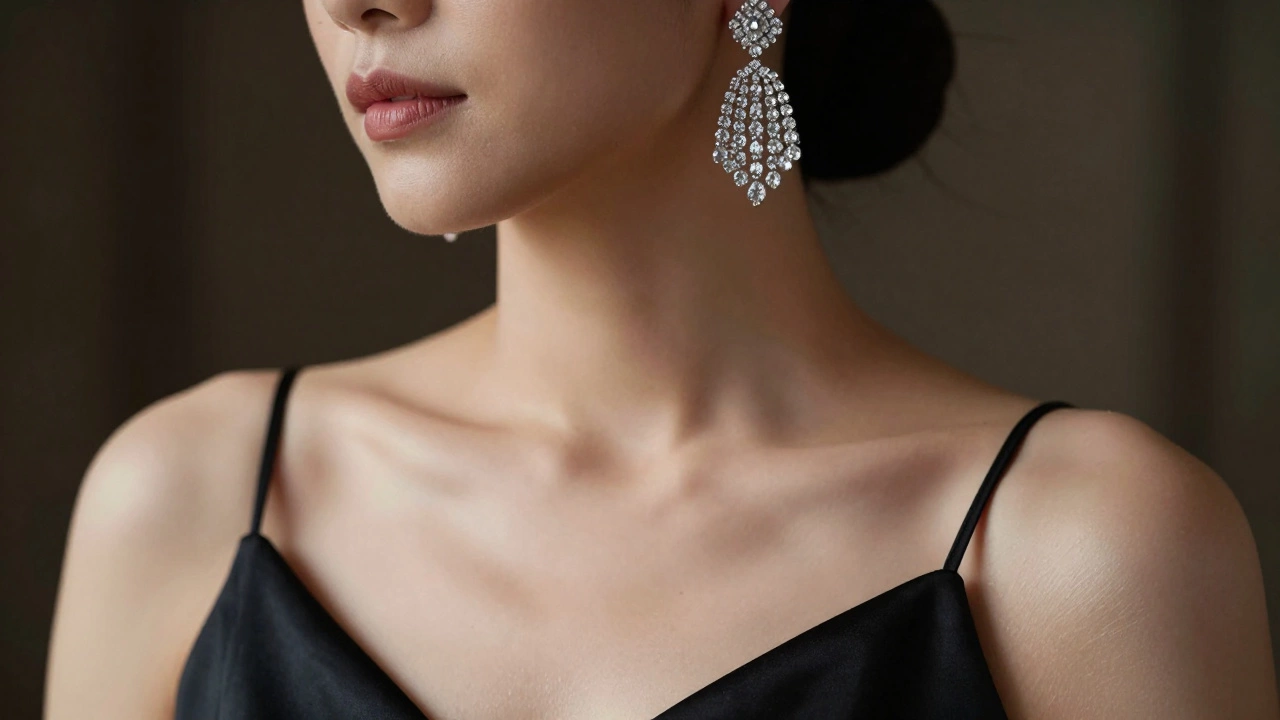
- Earrings Focus: If you wear chandelier earrings, skip the necklace. Let your ears breathe.
- Necklace Focus: If you wear a statement pendant, keep earrings to small studs or hoops.
- Wrist Focus: A cuff bracelet can stand alone if your neckline and ears are quiet.
Remember, rings count as part of this category. A stack of ten rings might feel like one "look," but visually, it adds significant noise. Keep it to two or three meaningful pieces.
5. The Fifth Element: Hair, Makeup, or Scarf
The final slot is flexible. It could be a bold red lip, an intricate updo, a silk scarf tied around the neck, or even a belt if your dress allows it. This element ties the previous four together. If your jewelry is gold and your shoes are metallic, a warm-toned makeup palette completes the sensory experience. This fifth element is what makes the outfit feel "finished" rather than just "put together."
Why Balance Matters More Than Trends
Trends come and go. One year, it’s all about maximalism; the next, it’s minimalist chic. The Rule of 5 works regardless of the trend because it addresses human perception. Our eyes naturally seek contrast and balance. When an outfit has too many competing patterns, colors, or textures, it creates visual fatigue. By limiting your focal points, you guide the viewer’s eye smoothly across your ensemble.
Consider the difference between a busy street sign and a well-designed billboard. Both convey information, but one is readable and the other is chaotic. Your outfit is your personal billboard. The Rule of 5 ensures your message-confidence, elegance, creativity-is clear.
Common Mistakes to Avoid
Even seasoned shoppers fall into traps when applying fashion rules. Here are the most common pitfalls:
| Mistake | Visual Impact | Rule of 5 Fix |
|---|---|---|
| Layering necklaces AND statement earrings | Cluttered neckline, draws eye upward chaotically | Choose one focal point: Neck OR Ears |
| Matching shoes, bag, and belt exactly | Looks dated and overly rigid | Match metals (gold/silver), vary textures |
| Ignoring the dress pattern | Competing prints cause visual confusion | If dress is busy, keep accessories solid |
| Over-accessorizing a simple dress | Distracts from the garment's beauty | Let the fabric speak; use subtle jewelry |
Another mistake is forgetting comfort. If your shoes hurt, you won’t walk confidently. If your earrings are heavy, you’ll constantly adjust them. Confidence is the invisible sixth element of any great outfit. Never sacrifice comfort for the sake of fitting a rule.
Adapting the Rule for Different Body Types
The Rule of 5 is universal, but its application shifts based on your body shape. The goal is always to draw attention to your favorite features.
For Petite Frames: Large accessories can overwhelm you. Use the Rule of 5 to select smaller, delicate pieces. A dainty necklace and small stud earrings might count as two elements, but their visual weight is low. This allows you to wear a bolder shoe or bag without feeling dwarfed.
For Taller Frames: You can carry larger volumes. A wide-brim hat or a large statement necklace works well here. Ensure your five elements are proportionate to your height. Small, delicate jewelry might get lost on a taller frame, so scale up your accessories accordingly.
For Curvy Silhouettes: Highlight your waist or bust. If you’re wearing a fitted gown, a belt might be your third element. Keep jewelry near the face to draw eyes upward. Avoid bulky bags that widen your hips unnecessarily.
Practical Scenarios: Applying the Rule
Let’s walk through two real-world examples to see how this plays out.
Scenario A: The Black-Tie Gala
You’re wearing a floor-length velvet column gown. The fabric is rich and dark.
- Foundation: Velvet Gown (High visual weight)
- Footwear: Nude satin pumps (Neutral, elongating)
- Bag: Small black clutch (Matches dress, disappears)
- Jewelry: Diamond drop earrings (Sparkle against velvet)
- Fifth Element: Sleek low bun (Highlights earrings and neckline)
Notice how the bag and shoes recede, letting the earrings and hair shine. The dress does the heavy lifting.
Scenario B: The Summer Wedding Reception
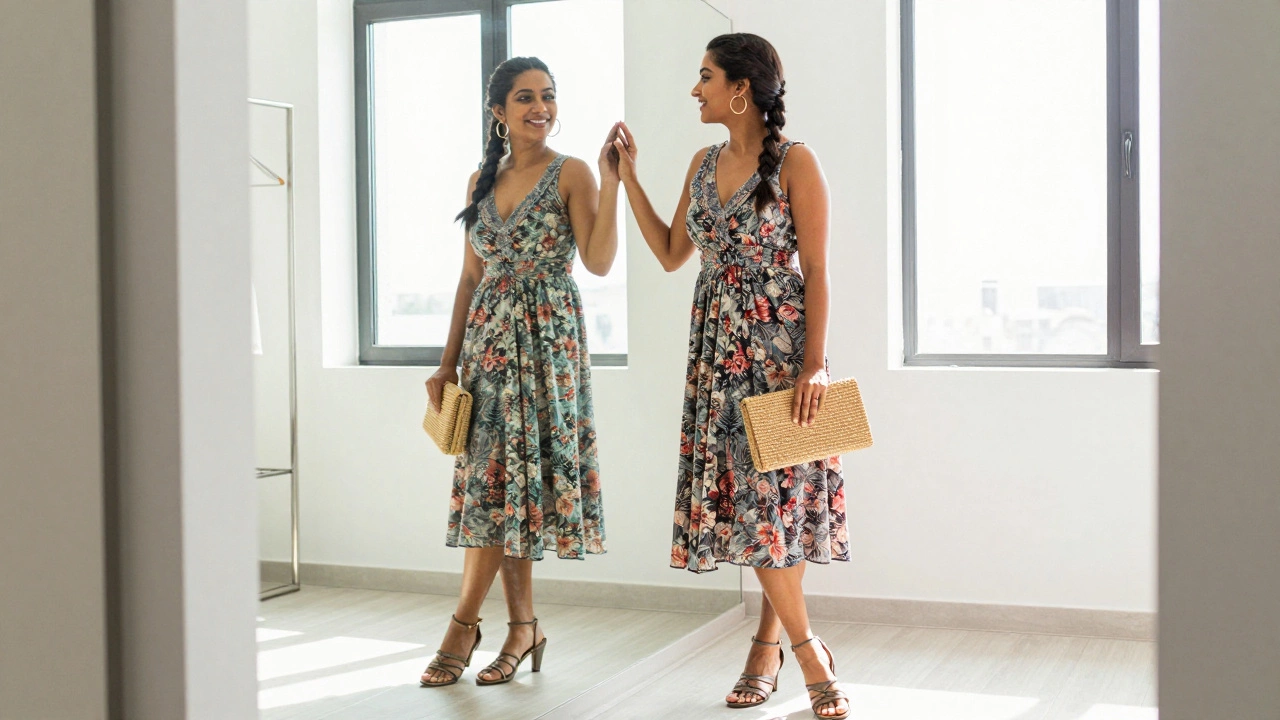
You’re wearing a floral midi dress with a V-neck.
- Foundation: Floral Midi Dress (Patterned, medium weight)
- Footwear: Strappy metallic sandals (Adds shine)
- Bag: Woven straw clutch (Textural contrast)
- Jewelry: Gold hoop earrings (Simple, complements sandals)
- Fifth Element: Braided side hairstyle (Softens the look)
Here, the accessories add texture and shine to balance the busy floral print. No single item overwhelms the others.
Beyond Clothing: The Psychological Aspect
Why do we care about rules? Because decision fatigue is real. Getting dressed every morning involves hundreds of micro-decisions. The Rule of 5 simplifies this process. Instead of asking "What goes with this?" you ask "Which five elements tell my story today?" This shift in mindset reduces stress and increases confidence.
Furthermore, adhering to a structured approach helps you build a capsule wardrobe. You start buying pieces that mix and match easily within this framework. You stop impulse-buying accessories that only fit one specific outfit. Over time, your style becomes more refined and consistent.
Final Thoughts on Personal Style
Rules are meant to be learned, then broken. Once you master the Rule of 5, you’ll know when to bend it. Maybe you love stacking bracelets and don’t mind skipping earrings. That’s fine! As long as you understand *why* you’re making those choices, you’re in control. The goal isn’t perfection; it’s intentionality. Your outfit should reflect who you are, not just what’s trending. Use the Rule of 5 as a scaffold, not a cage.
Can I wear a necklace and earrings together using the Rule of 5?
Yes, but you must manage the visual weight. If you wear a delicate necklace, you can pair it with statement earrings, or vice versa. However, wearing two large, bold pieces simultaneously usually violates the spirit of the rule by creating too much competition for attention. Aim for one dominant jewelry zone.
Does a belt count as one of the five elements?
Absolutely. A belt is a strong structural element that defines your waist. If you wear a belt, it typically replaces the need for a bag or additional jewelry accents. Treat it as a primary focal point similar to a necklace.
How do I apply the Rule of 5 to casual outfits?
The principle remains the same. For jeans and a t-shirt, your five elements might be: Jeans, T-Shirt, Sneakers, Watch, and Sunglasses. Even in casual wear, limiting your accessories prevents looking sloppy. A watch and sunglasses can elevate a basic outfit significantly.
What if my dress is very detailed, like lace or beading?
A highly detailed dress counts as multiple elements visually. In this case, reduce your other four elements to basics. Wear simple nude shoes, a minimal clutch, and perhaps just small stud earrings. Let the dress be the star of the show.
Is the Rule of 5 strict, or can I adapt it?
It is a guideline, not a law. Once you understand the concept of balance, you can adapt it. Some people prefer a "Rule of 3" for minimalism. The key is awareness of visual weight and ensuring your outfit feels cohesive rather than cluttered.