Should You Wash Hoodies? The Complete Guide to Cleaning Without Shrinking

Hoodie Washing & Care Guide
Fabric Identification
Select the material composition of your hoodie:
Your Hoodie Plan
Check StatusAnalyzing fabric...
Select your hoodie details to generate a personalized cleaning guide.
Recommended Wash: --
Step-by-Step Guide:
That oversized fit you loved when you bought it is gone. The sleeves are now cap-length, and the waistband rides up your back like a pair of ill-fitting underwear. If this sounds familiar, you’ve likely made the same mistake millions of us do: throwing a hoodie, a casual sweatshirt with a hood into the washing machine on hot water and tumble drying it on high heat.
The short answer to "should you wash hoodies?" is yes, absolutely. But the method matters more than the act itself. Washing a hoodie incorrectly doesn't just make it look worn; it permanently alters the fabric structure, ruining the silhouette and comfort. Whether you own a $20 basic or a limited-edition streetwear piece, understanding how to clean it without destroying it is essential for keeping your wardrobe looking fresh.
Understanding Fabric Composition Before Washing
You cannot treat every hoodie the same way because they are not made from the same materials. The first step in deciding how to wash your hoodie is checking the care label inside the neck or hem. This small tag holds the key to whether your garment will survive the wash cycle intact.
Most hoodies fall into three main categories based on their fiber content:
- 100% Cotton: These are heavy, breathable, and prone to shrinking. Cotton fibers contract significantly when exposed to heat and agitation. A medium-sized 100% cotton hoodie can shrink up to two sizes if washed in hot water.
- Polyester Blends: Often mixed with cotton (e.g., 60% cotton, 40% polyester), these offer better shape retention. Polyester is synthetic and resistant to shrinking, but it can pill over time if agitated too roughly.
- Fleece or French Terry: These refer to the texture of the inner lining. Fleece is brushed for softness, while French terry has loops. Both require gentle handling to prevent matting of the fibers.
If your hoodie contains wool or cashmere blends-common in premium winter layers-you should skip the machine entirely and opt for hand washing or dry cleaning. Ignoring these material differences is the fastest way to ruin a garment.
The Golden Rules of Machine Washing Hoodies
If your care label permits machine washing, follow these steps to minimize damage. The goal is to reduce friction and heat exposure, which are the two biggest enemies of hoodie longevity.
- Turn It Inside Out: This is non-negotiable. Turning your hoodie inside out protects the outer surface from pilling and fading. It also keeps prints, logos, and embroidery safe from rubbing against other clothes or the drum walls.
- Use Cold Water Only: Hot water relaxes cotton fibers, allowing them to tighten up as they dry, leading to shrinkage. Cold water cleans effectively for most everyday dirt and odors while preserving the fabric's integrity.
- Select a Gentle Cycle: Use the delicate or gentle setting on your washer. Aggressive cycles spin faster and create more turbulence, which stresses the seams and stretches the shoulders.
- Use Mild Detergent: Avoid bleach or harsh chemicals. Bleach weakens fibers and causes yellowing in white hoodies over time. A standard liquid detergent is sufficient.
- Wash Similar Colors Together: Dark hoodies can bleed dye, especially during the first few washes. Washing blacks with whites will result in grayish stains on your lighter garments.
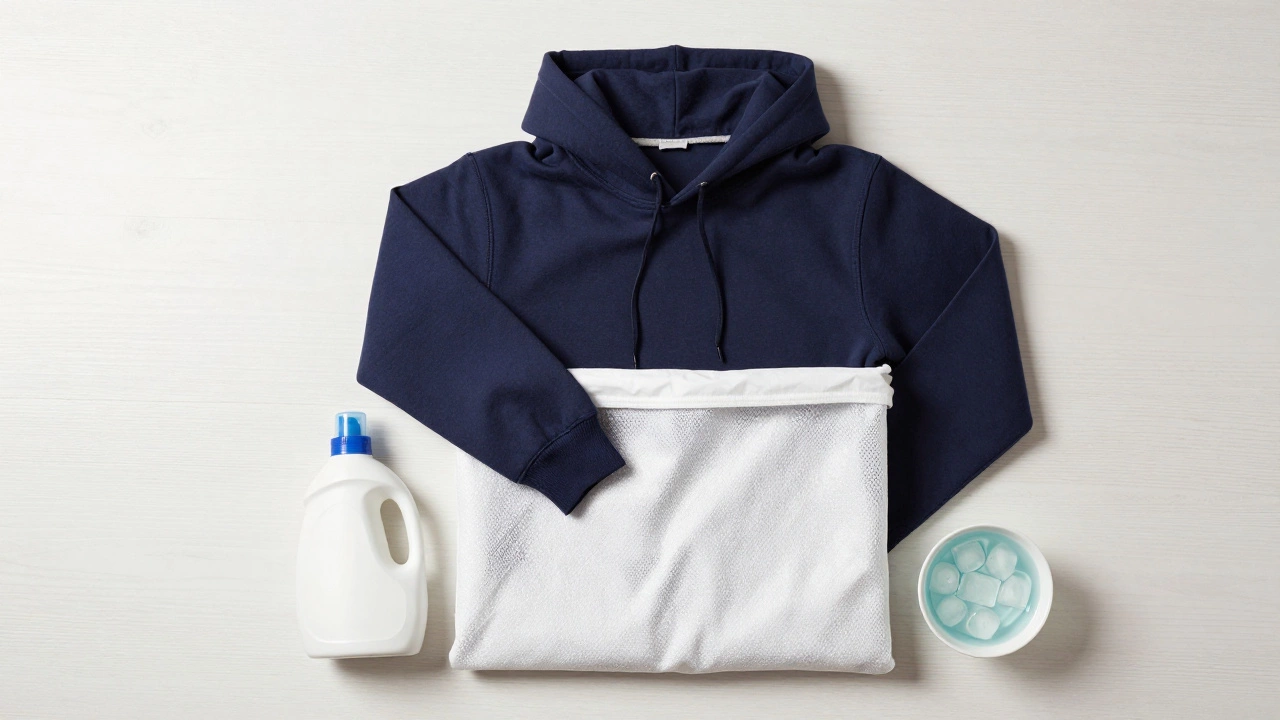
Pro tip: Place your hoodie in a mesh laundry bag before washing. This extra layer of protection prevents the hoodie from getting tangled with other items and reduces mechanical stress on the fabric.
To Dry or Not to Dry? The Heat Danger Zone
The dryer is where most hoodies meet their demise. While convenient, the combination of heat and tumbling action shrinks cotton and breaks down elastic bands in cuffs and hems. If you want your hoodie to last for years, avoid the dryer whenever possible.
Air Drying is Best: Lay your hoodie flat on a clean towel or drying rack. Hanging a wet hoodie by its shoulders on a hanger can cause the weight of the water to stretch out the shoulder area, creating unsightly bumps. Flat drying maintains the original shape and prevents distortion.
If you must use a dryer, use the lowest heat setting or an air-only cycle. Remove the hoodie while it is still slightly damp and let it finish air drying. This hybrid approach reduces drying time while minimizing shrinkage risk. Never put a hoodie in the dryer until it is bone dry, as the prolonged heat exposure guarantees contraction.
Hand Washing: The Safest Option for Delicates
For expensive hoodies, vintage pieces, or those with intricate graphics, hand washing is the gold standard. It gives you complete control over the cleaning process and eliminates the risk of machine-induced damage.
Here’s how to hand wash a hoodie properly:
- Fill a sink or basin with cold water and add a small amount of mild detergent.
- Submerge the hoodie and gently press the water through the fabric. Do not wring or twist, as this distorts the shape.
- Let it soak for 15-30 minutes to loosen dirt and oils.
- Rinse thoroughly with cold water until all soap residue is gone.
- Press out excess water by rolling the hoodie in a clean towel. Then lay it flat to dry.
This method takes more effort but ensures that delicate fabrics, such as lightweight cotton or blended materials, remain soft and true to size.
How Often Should You Actually Wash Your Hoodie?
Unlike shirts or underwear, hoodies don’t need to be washed after every wear. Over-washing accelerates wear and tear, causing fading, pilling, and loss of elasticity. Most people can get away with wearing their hoodie 3-5 times before washing, depending on activity level and personal hygiene.
Consider washing your hoodie if:
- You’ve sweated heavily during exercise or outdoor activities.
- You notice visible stains or odors.
- You’ve worn it outside in polluted or dusty environments.
Between washes, you can refresh your hoodie by airing it out outdoors or using a fabric sanitizer spray designed for clothing. This extends the life of the garment and reduces energy consumption from unnecessary laundry loads.

Dealing With Stains and Odors
Hoodies often accumulate odors from body oils, food spills, or environmental factors. Treating stains promptly prevents them from setting into the fabric.
For oil-based stains (like grease from food), apply a small amount of dish soap directly to the spot and gently rub it in before washing. Dish soap cuts through grease effectively without damaging most fabrics. For odor removal, add half a cup of white vinegar to the rinse cycle. Vinegar neutralizes smells without leaving a strong scent behind.
Avoid using baking soda directly on dark-colored hoodies, as it can leave white residues that are difficult to remove. Instead, use it sparingly and ensure thorough rinsing.
| Material Type | Wash Temperature | Drying Method | Shrinkage Risk |
|---|---|---|---|
| 100% Cotton | Cold | Flat Air Dry | High |
| Cotton/Poly Blend | Cold | Low Heat Tumble | Medium |
| 100% Polyester | Cold/Warm | Tumble Dry Low | Low |
| Wool/Cashmere Blend | Hand Wash Cold | Flat Air Dry | Very High |
Common Mistakes That Ruin Hoodies
Even with good intentions, some habits can quickly degrade your hoodie collection. Here are the most common errors to avoid:
- Using Fabric Softener: Fabric softeners coat fibers with a waxy layer that reduces breathability and absorbency. Over time, this buildup makes fleece feel less soft and more plasticky.
- Washing with Zippers or Velcro: Items with zippers, hooks, or Velcro can snag and pull at hoodie fabric, causing runs or holes. Always fasten zippers and wash hoodies separately from abrasive items.
- Ironing Directly on Prints: If your hoodie has screen-printed designs, ironing directly over them can melt or crack the ink. Turn the hoodie inside out and use a low heat setting if necessary.
- Storing Wet: Leaving a damp hoodie in the washer or piled up can lead to mildew growth and unpleasant odors. Always dry hoodies completely before storing them.
Reviving Shrunken Hoodies
If your hoodie has already shrunk, there’s a chance you can restore some of its original size. Soak the shrunken hoodie in lukewarm water mixed with hair conditioner or baby shampoo for 15-30 minutes. These products relax the fibers, making them more pliable.
After soaking, gently stretch the hoodie back to its original dimensions while it’s still wet. Lay it flat on a towel and pin the edges to maintain the stretched shape as it dries. This method works best on cotton blends but may have limited success on heavily shrunken 100% cotton garments.
Can I wash my hoodie in hot water?
No, washing hoodies in hot water is not recommended. Hot water causes cotton fibers to contract, leading to significant shrinkage. Always use cold water to preserve the size and shape of your hoodie.
How do I prevent my hoodie from pilling?
Pilling occurs due to friction. To prevent it, turn your hoodie inside out before washing, use a gentle cycle, and avoid washing it with rough fabrics like denim or towels. Using a mesh laundry bag also helps reduce abrasion.
Is it okay to hang dry my hoodie?
Hanging a wet hoodie can stretch out the shoulders and distort the shape. It’s better to lay it flat on a drying rack or towel to maintain its original fit and prevent sagging.
Can I put my hoodie in the dryer?
It’s best to avoid the dryer if possible. If you must use it, select the lowest heat setting and remove the hoodie while it’s still slightly damp to finish air drying. High heat causes shrinkage and damages elastic bands.
How often should I wash my hoodie?
You don’t need to wash your hoodie after every wear. Depending on usage, washing every 3-5 wears is sufficient. Wash sooner if you’ve sweated heavily, stained it, or notice odors.
What should I do if my hoodie shrinks?
Soak the shrunken hoodie in lukewarm water with hair conditioner for 15-30 minutes. Gently stretch it back to size while wet and lay it flat to dry. This method works best on cotton blends.
Can I use fabric softener on my hoodie?
Fabric softener is not recommended for hoodies. It coats fibers with a waxy residue that reduces breathability and can make fleece feel stiff over time. Skip it to keep your hoodie soft and functional.