Why Are There No Socks With UGGs? The Real Reason Behind the Bare-Ankle Look
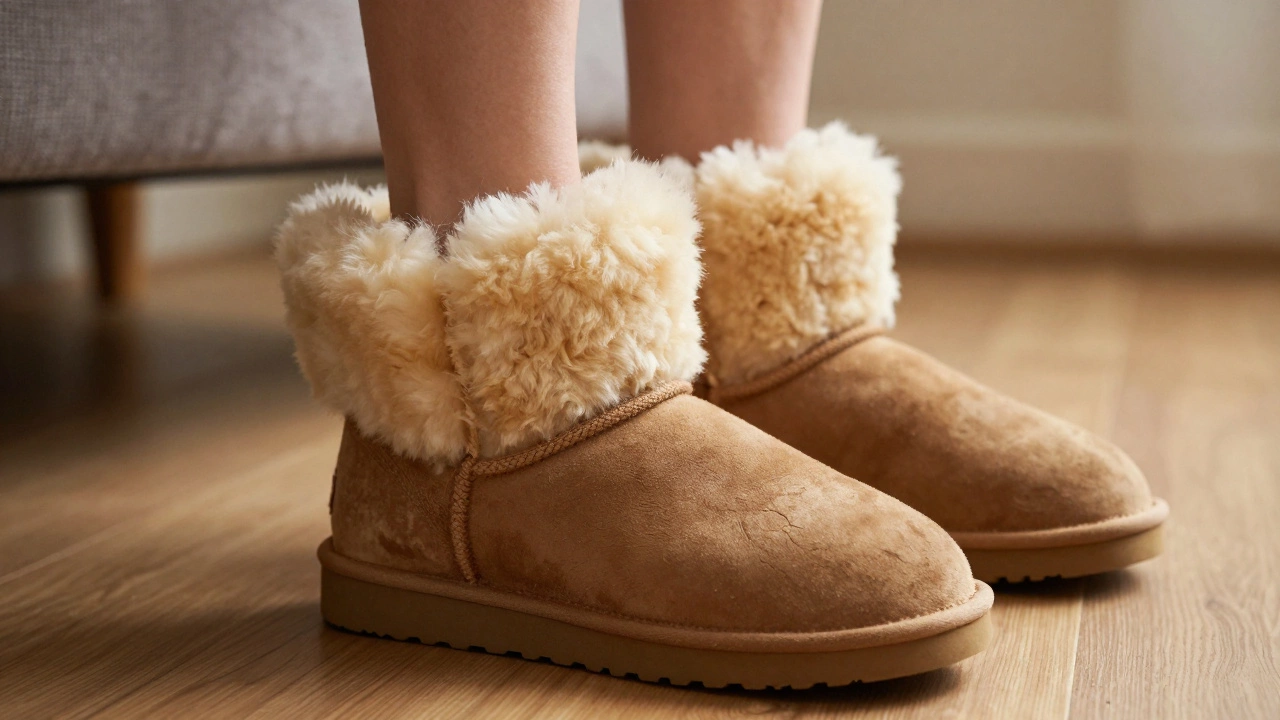
Have you ever slipped on a pair of UGGs, looked down, and wondered - why am I not wearing socks? It’s not that no one tries. You’ve probably bought a pack of ankle socks just to make it work. Then you put them on, wiggled your toes, and immediately felt the bunching, the sliding, the weird sweatiness. So you yanked them off. Welcome to the UGG paradox.
UGGs weren’t designed to be worn with socks. Not because of some fashion rule written in stone, but because of how they’re built. The original Australian sheepskin boots were made for warmth and comfort in harsh conditions. The fleece lining isn’t just decoration - it’s the whole point. It’s thick, soft, and naturally temperature-regulating. Add a sock, and you’re trapping heat, crushing the cushioning, and turning a cozy experience into a sweaty, cramped mess.
The Science of Sheepskin
Real UGGs use genuine Australian sheepskin. That means the wool is still attached to the hide, not glued on like synthetic faux fur. The wool fibers are crimped, which traps air between them. That’s what keeps your feet warm without overheating. Wool also wicks moisture away from your skin. It’s like nature’s built-in climate control. Put a cotton sock over that, and you block all of it. Cotton holds sweat. It doesn’t breathe. You end up with damp feet, cold toes, and the unmistakable odor of a forgotten gym bag.
There’s a reason Australian farmers and surfers in the 1970s started wearing these barefoot. They were practical. After a long day in the cold surf, they’d slip into UGGs and let their feet dry naturally. No socks. No hassle. Just warmth and dryness. That’s not a trend - it’s a functional design.
Why Socks Ruin the Fit
UGGs are cut to fit snugly around the ankle and calf. They’re not meant to be loose. The sheepskin molds to your foot over time, like a second skin. Add even a thin sock, and you’re forcing the boot to stretch beyond its intended shape. That’s why people who wear socks with UGGs often say their boots feel “off” after a few days. The heel slips. The arch doesn’t support. The boot doesn’t hug like it should.
Try this: Put on a pair of UGGs barefoot. Walk around your house for 10 minutes. Notice how your foot settles in? Now put on a pair of ankle socks and do the same. Feel the difference? The sock creates friction, changes pressure points, and makes the boot feel tighter. You’re not just adding fabric - you’re changing the entire biomechanics of how the boot works.
What About Cold Feet?
You’re not alone if you think, “But my feet get cold!” That’s the most common reason people try socks. But here’s the truth: if your feet are cold in UGGs, it’s not because they’re not warm enough - it’s because you’re wearing the wrong ones.
There are two types of UGGs: classic and insulated. Classic UGGs (the ones with the sheepskin lining) are meant to be worn barefoot. Insulated UGGs - the ones with synthetic lining and extra padding - are made for colder climates and can handle socks. If you’re in Vancouver and it’s -5°C outside, you might want the insulated version. But if you’re wearing classic UGGs indoors or in mild weather, socks are the problem, not the solution.
Pro tip: If you’re cold, try woolen insoles instead. They add warmth without bulk. Or wear thermal foot wraps - thin, moisture-wicking layers that fit under your toes without changing the fit. Socks? They’re too thick. Too stiff. Too wrong.
The Fashion Myth
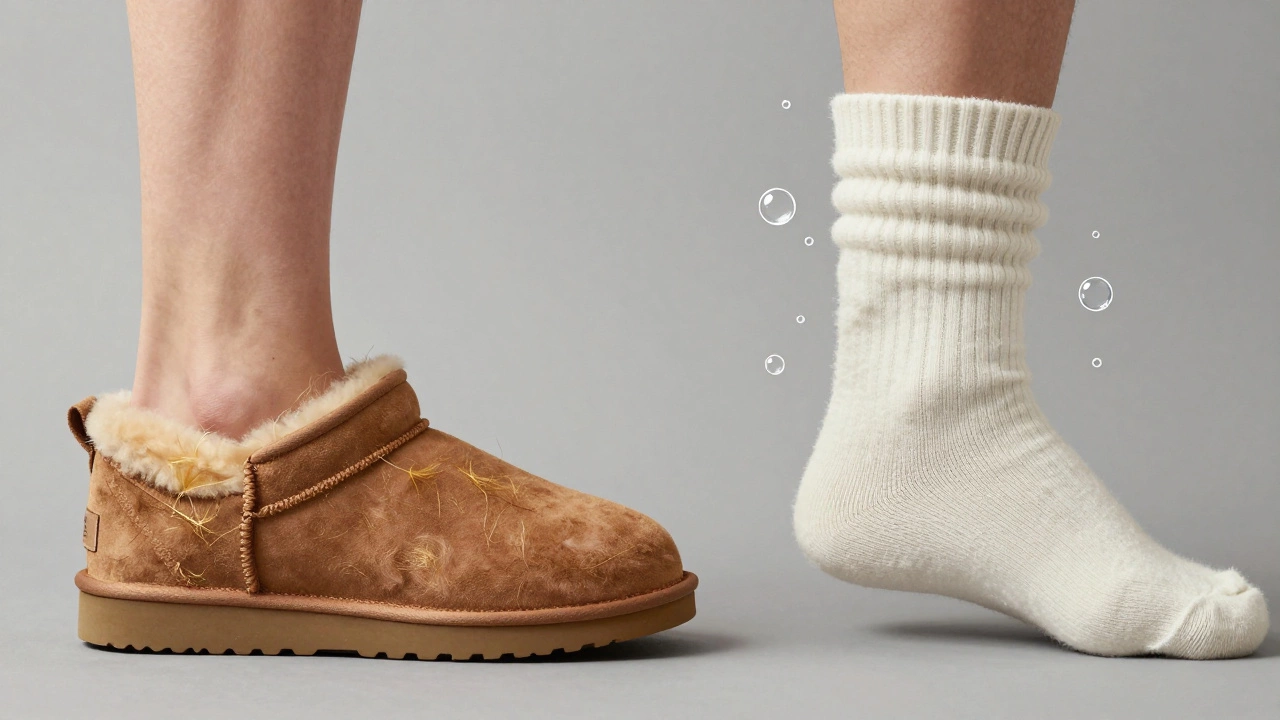
You’ve seen it on Instagram. Celebrities. Influencers. People walking down streets in UGGs with no socks. It’s become a look. But here’s the thing - it’s not just a look. It’s a necessity. The bare ankle is part of the design. The boot’s cuff is shaped to sit just below the ankle bone. Socks ruin that line. They create a visual break. A bulky, mismatched gap between boot and skin.
When UGGs became a fashion staple in the 2000s, brands started making thinner, more stylish versions. But they kept the same internal structure. That’s why even the slimmest UGGs still don’t work with socks. It’s not about fashion rules - it’s about physics.
What If You Really Want Socks?
Okay, you’re stubborn. You need socks. Maybe you have sensitive skin. Maybe you’re in a hospital. Maybe you just love the feel. Here’s what actually works:
- Use sheepskin-lined slippers instead - they’re designed for socks.
- Try ultra-thin merino wool socks - they’re breathable and compressible. Not cotton.
- Go for ankle socks with no heel tab. Anything with a ridge will dig in.
- Wear them only for short periods - like walking to your car. Don’t live in them.
But let’s be real: if you’re asking this question, you probably tried all of this already. And you’re here because it didn’t work. That’s because the answer isn’t in the sock. It’s in the boot.
What to Wear Instead
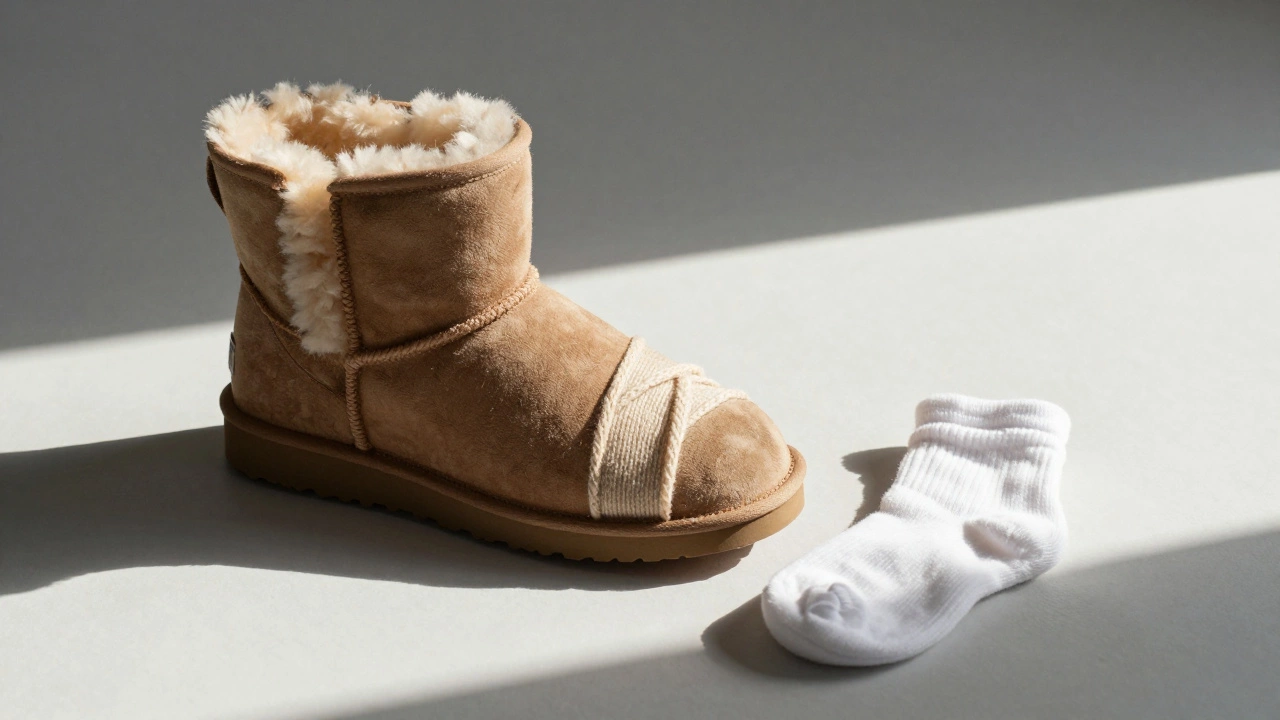
If you need socks with your boots, UGGs aren’t the right choice. Try these instead:
- Thermal hiking boots - designed for socks, with moisture-wicking linings.
- Insulated winter boots - like Sorel or Columbia - with removable insoles and room for thicker socks.
- Sheepskin-lined clogs - like those from L.L.Bean - that have a wider toe box and room for socks.
These are made for layered wear. UGGs are made for one thing: barefoot comfort. Trying to force them into a role they weren’t built for is like putting winter tires on a sports car. It might look okay, but it’s not going to perform.
The Bottom Line
There are no socks with UGGs because socks break the system. The warmth, the fit, the comfort - all of it depends on direct contact between your skin and the sheepskin. Add a layer, and you lose everything the boot was designed to do. It’s not a fashion choice. It’s a technical one.
Next time you slip into your UGGs, don’t reach for the sock drawer. Let your feet breathe. Let the wool do its job. You’ll be warmer, drier, and more comfortable than you ever were with socks.
Can I wear socks with UGGs if I have sweaty feet?
No - socks will make sweaty feet worse. UGGs use natural sheepskin that wicks moisture away. Socks trap that moisture, leading to dampness and odor. If your feet sweat, try moisture-wicking insoles or foot powder instead. Avoid cotton socks entirely.
Do all UGGs have sheepskin lining?
No. Classic UGGs have genuine sheepskin lining. But many newer styles, especially those sold in department stores, use synthetic fleece or foam insulation. These versions can handle socks better, but they lose the signature comfort of real sheepskin. Always check the product description - if it says "sheepskin," wear barefoot. If it says "synthetic lining," socks are fine.
Why do UGGs smell bad after wearing socks?
Sheepskin naturally resists odor because of lanolin, a natural oil in wool. Socks - especially cotton - trap sweat and bacteria. When you put socks on, you introduce moisture that the sheepskin can’t absorb, leading to odor buildup. The smell doesn’t come from the boot - it comes from the sock. Wash your socks, but don’t blame the UGGs.
Are there UGGs made specifically for wearing with socks?
Not officially. UGG brand doesn’t make a version designed for socks. But other brands like Bearpaw, Ecco, or Kamik offer similar styles with roomier fits and synthetic linings meant for sock wear. If you need socks, look for boots labeled "roomy fit" or "sock-compatible."
What’s the best way to break in UGGs?
Wear them barefoot for short periods at first - 30 minutes a day for a week. The sheepskin will soften and mold to your foot. Don’t use insoles or socks during this time. After a week, your feet will naturally fit perfectly. Forcing them with socks too soon can stretch the boot unevenly.