Who Makes the Highest Quality Leather for Shoes?
Leather Shoe Cost Comparison Tool
Premium Leather Shoes
Budget Leather Shoes
When you slip on a pair of leather shoes that feel like they were made to last a lifetime, you’re not just wearing footwear-you’re wearing craftsmanship. But not all leather is created equal. Some hides come from animals raised in ideal conditions, tanned with time-tested methods, and finished by artisans who’ve spent decades honing their craft. So who actually makes the highest quality leather for shoes?
Full-Grain Leather Is the Gold Standard
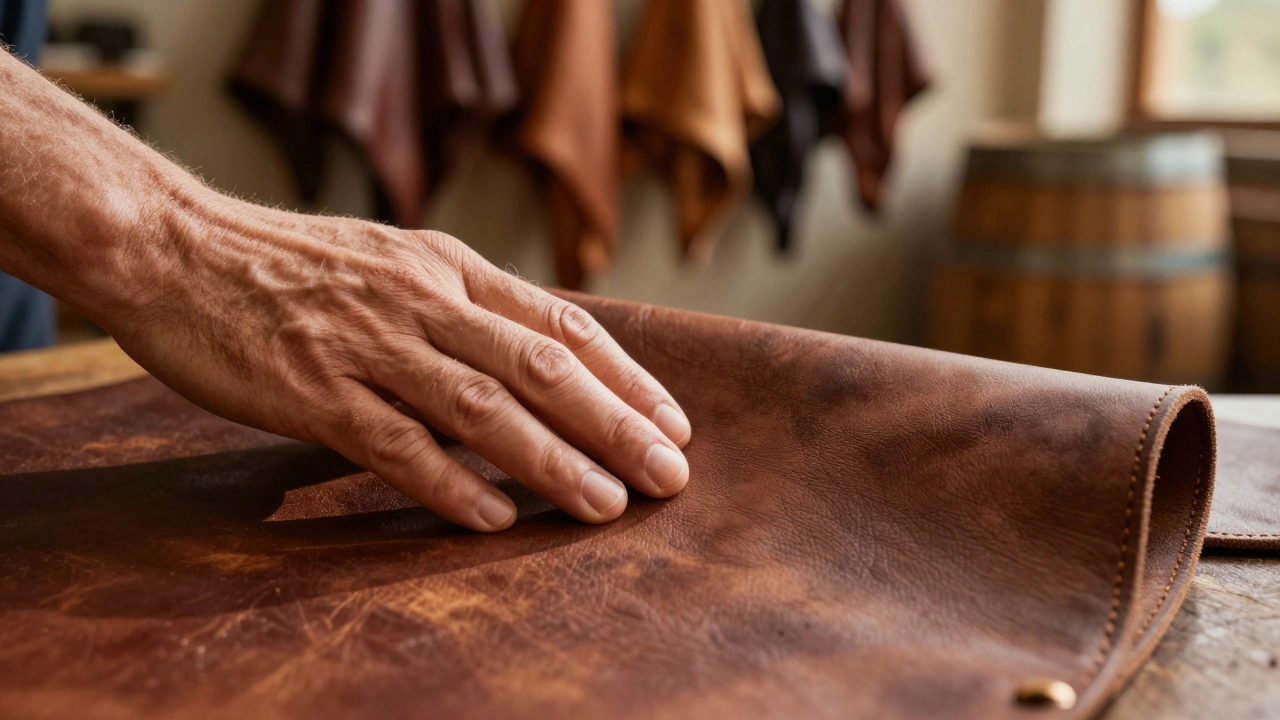
The highest quality leather for shoes starts with full-grain leather. This isn’t just a marketing term-it’s the top layer of the hide, untouched by sanding or buffing. That means all the natural grain, scars, and texture remain intact. Full-grain leather gets stronger with age, develops a rich patina over time, and breathes naturally. It doesn’t crack like corrected-grain leather, which has been sanded down and stamped with artificial grain to hide imperfections.
Real full-grain leather comes from hides that have been raised outdoors, exposed to natural elements, and cared for with minimal chemical interference. You’ll find it in shoes from makers like John Lobb, Allen Edmonds, and Crockett & Jones. These brands don’t just buy leather-they build relationships with tanneries that have been operating for over a century.
Italy’s Tanneries Set the Pace
When it comes to the finest leather for luxury footwear, Italy leads the world. The region of Tuscany, especially the town of Santa Croce sull’Arno, is home to some of the oldest and most respected tanneries on the planet. Companies like Conceria Walpier an Italian tannery founded in 1953, known for its vegetable-tanned full-grain hides used by top shoe makers, Vegan Leather a misnomer here-this tannery produces real, premium leather using traditional methods, and Conceria Neri a family-run tannery that supplies Hermès and Gucci with hand-dyed, slow-tanned leather have perfected the art of vegetable tanning.
Vegetable tanning uses natural tannins from tree bark, not harsh chemicals. It takes weeks-sometimes months-to tan a single hide. The result? Leather that smells like earth and oak, feels supple but firm, and ages like fine wine. This process is more expensive and slower than chrome tanning, which is why you’ll rarely find it in mass-market shoes.
Where the Cows Are Raised Matters
Leather starts with the animal. The best hides come from cattle raised in temperate climates with plenty of space to move. European cattle, especially from Italy, France, and Germany, produce hides with tighter, more uniform grain because they’re not exposed to constant sun, mud, or insect bites. American cattle, while abundant, often have more scars and marks from barbed wire, branding, and harsh weather-making their hides harder to work with for premium shoes.
That’s why brands like Red Wing Shoes an American company that sources premium hides from U.S. and European herds for its Iron Ranger and Beckman models and Church’s a British shoemaker that uses Italian leather from hides sourced from French and Italian cattle carefully select their raw materials. They don’t just buy leather by the ton-they inspect hides one by one, rejecting over 40% before tanning even begins.
The Tanning Process Is Where Quality Is Made or Broken
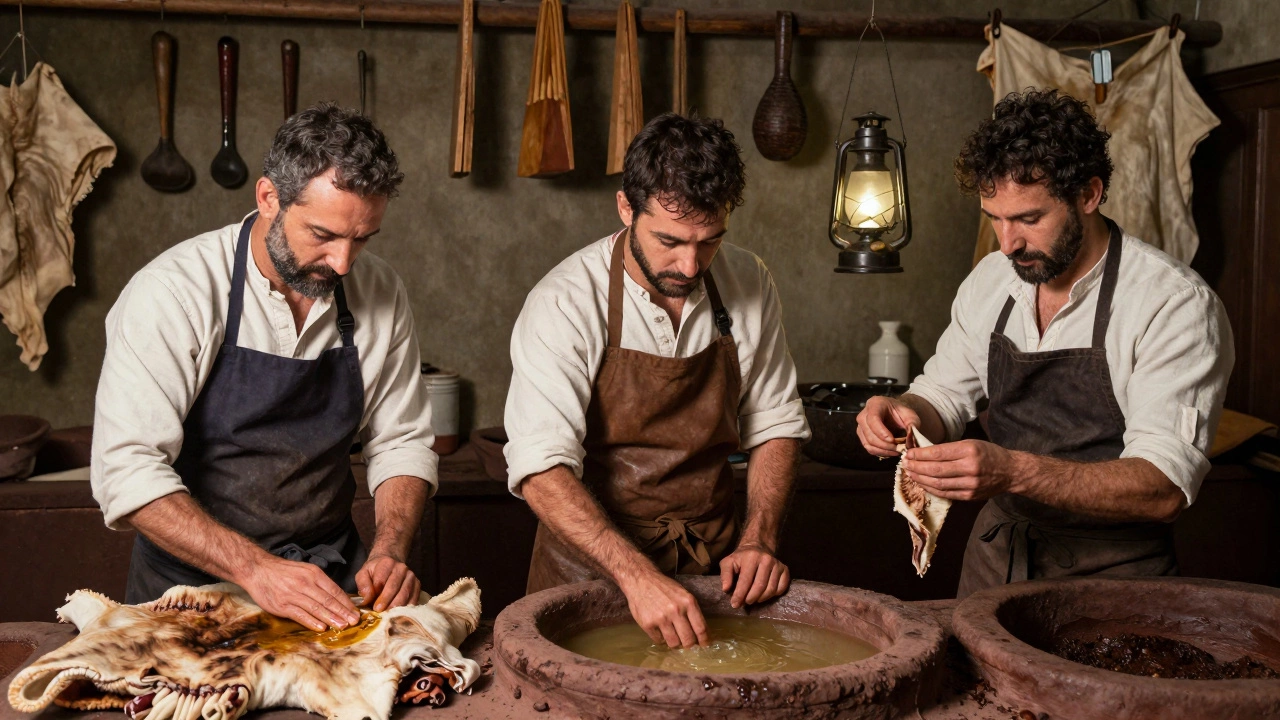
There’s a reason your great-grandfather’s shoes still look good. Traditional tanning methods take time. A modern chrome-tanned hide can be processed in 24 hours. A vegetable-tanned hide? It takes 30 to 60 days. During that time, the hide is soaked in natural tannin solutions, air-dried, and hand-rubbed with oils. Each step is done by skilled workers who can tell a hide’s quality by touch alone.
Chrome tanning, while faster and cheaper, leaves behind toxic residues and makes leather brittle over time. It also doesn’t develop a patina. You can’t polish chrome-tanned leather to bring out its natural character-it just fades. That’s why you’ll never see a luxury shoe made from chrome-tanned leather. The top makers use only vegetable-tanned, full-grain hides.
Who Actually Makes the Best Leather?
There’s no single company that owns the title. Instead, it’s a network of elite tanneries working with legendary shoemakers. Here are the top names behind the leather in the world’s best shoes:
- Conceria Walpier - Supplies Hermès, Louis Vuitton, and Berluti with vegetable-tanned calf leather.
- Conceria Neri - Known for hand-dyed, oil-finished leathers used by Gucci and Prada.
- Leather Manufacturer - A lesser-known but critical supplier in Tuscany that provides the full-grain leather for Allen Edmonds a U.S.-based shoemaker that sources its premium leather from Italian tanneries and handcrafts shoes in Wisconsin shoes.
- Horween Leather Company - Based in Chicago, this American tannery has been making leather since 1905. Their Chromexcel leather is used by Red Wing, Wolverine, and even luxury brands like Common Projects.
- Tanakura - A Japanese tannery that produces some of the most durable, water-resistant leather for high-end boots and dress shoes, using a blend of traditional methods and modern innovation.
These companies don’t sell leather to the public. You can’t buy a hide from Conceria Walpier on Amazon. They work exclusively with shoemakers who meet strict quality standards-like using hand-stitched Goodyear welting, lasting shoes on last molds for weeks, and finishing each pair with multiple layers of natural wax.
How to Spot Real Premium Leather
If you’re shopping for shoes and want to know if the leather is truly top quality, look for these signs:
- Texture - Real full-grain leather has natural imperfections. No two hides are identical. If it looks too perfect, it’s likely corrected-grain.
- Smell - High-quality leather has a rich, earthy scent. Chemical-tanned leather smells like plastic or solvents.
- Flex - Bend the leather. It should flex easily without cracking. Cheap leather will crease sharply and stay that way.
- Water test - Dab a drop of water on the surface. Premium leather will absorb it slowly and darken slightly. Cheap leather will bead up or leave a stain.
- Price - If a pair of leather shoes costs under $150, they’re not made with full-grain, vegetable-tanned leather. The raw material alone costs more than that.
Why This Matters for Your Shoes
Buying shoes made with the highest quality leather isn’t about luxury-it’s about value. A pair of shoes made with premium materials can last 10, 15, even 20 years if cared for properly. A cheap pair? You’ll replace them every 18 months. Over time, you’ll spend more on the low-quality option.
Think of it like this: a $400 pair of shoes made with Italian full-grain leather and hand-stitched soles might cost twice as much upfront, but if you wear them five days a week for 15 years, you’re paying less than $5 per year. A $100 pair that falls apart in two years? That’s $50 a year.
And then there’s the feel. Premium leather molds to your foot. It doesn’t just fit-it becomes part of you. The more you wear it, the better it feels. That’s not magic. That’s craftsmanship.
Final Answer: Who Makes the Highest Quality Leather?
The highest quality leather for shoes isn’t made by one company. It’s the result of centuries of tradition, passed down through generations of tanners in Italy, the U.S., and Japan. It’s the work of Conceria Walpier, Horween, and Tanakura-and the shoemakers who choose them. It’s not about branding. It’s about the hide, the tanning, and the hands that shape it.
If you want shoes that last, look for brands that name their tannery. If they don’t, they’re probably using commodity leather. The best don’t hide their sources-they brag about them.