When to Toss Your Leather Shoes: Signs It's Time for a New Pair
Leather Shoe Condition Evaluator
Check all the signs you see on your shoes to get a recommendation on whether to keep, repair, or toss them.
Structural Red Flags
Wear & Tear Signs
Verdict:
Quick Guide: Keep or Toss?
- Toss immediately: Holes in the sole, cracked leather that goes all the way through, or a detached heel.
- Take to a professional: Worn-down heels, loose stitching, or dry, fading leather.
- Keep and maintain: Superficial scuffs, slight creases, or a need for new insoles.
The Red Flags: When Repair Isn't an Option
Not every shoe can be saved. While a Cobbler is a miracle worker, some damage is structural. If the internal support system of the shoe has collapsed, no amount of polishing will fix it. Focus on the "bones" of the shoe.
First, look at the Midsole. This is the layer between the outer sole and the insole. In high-quality leather shoes, this is often made of leather or high-density rubber. When this layer compresses completely or rots away, your foot loses its arch support. If you feel the ground directly through the bottom of your shoe while wearing it, the structural integrity is gone. Replacing a sole is common, but if the midsole has disintegrated into a powdery mess, the shoe is a goner.
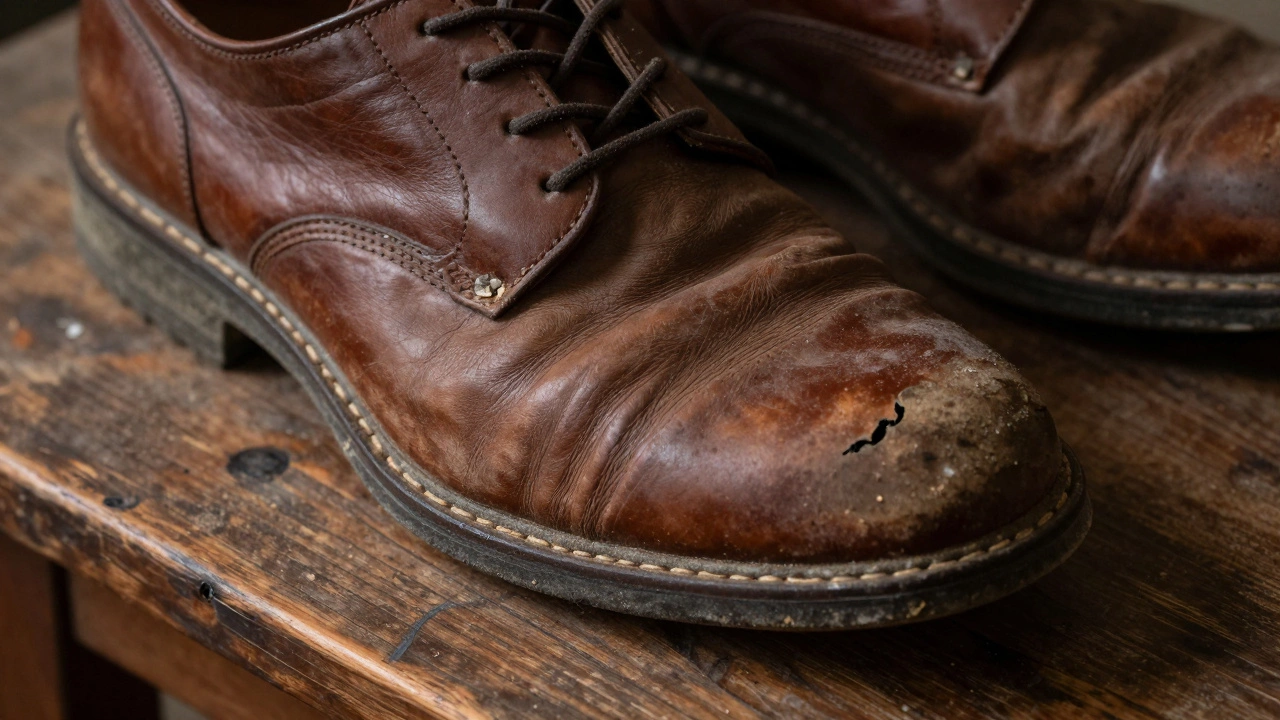
Then there's the leather itself. Full-Grain Leather is incredibly durable, but it isn't immortal. There is a huge difference between a "patina" (those cool aged lines) and "dry rot." If you see deep cracks that split open when you bend your foot, the leather has lost its natural oils permanently. Once the fibers snap, you can't "glue" them back together effectively. Water will seep in, and the shoe will lose its shape.
The Danger Zone: Health and Comfort Signs
You might think your shoes look fine, but your body knows better. Your feet are the foundation of your entire posture. When leather shoes lose their support, your ankles and knees take the hit. Have you noticed that your calves feel tighter than usual after a walk? Or maybe you're getting a dull ache in your lower back?
Check the inner lining. Many leather shoes use a mix of leather and synthetic fabrics inside. When the lining rips-usually at the heel or the toe-it creates friction points. This isn't just an annoyance; it leads to blisters and calluses. While a cobbler can patch a lining, if the shoe is also tilting inward or outward (known as overpronation or supination), the shoe has molded to your foot in a way that is now harmful. A shoe should support your foot, not just mirror its deformities.
If you find yourself adding multiple Orthotic Insoles just to make the shoe wearable, you've reached the limit. Insoles are great for a boost, but they can't fix a shoe that has physically tilted. If the heel is worn down on one side, it forces your ankle into an unnatural angle with every step.
Comparing Repair vs. Replacement
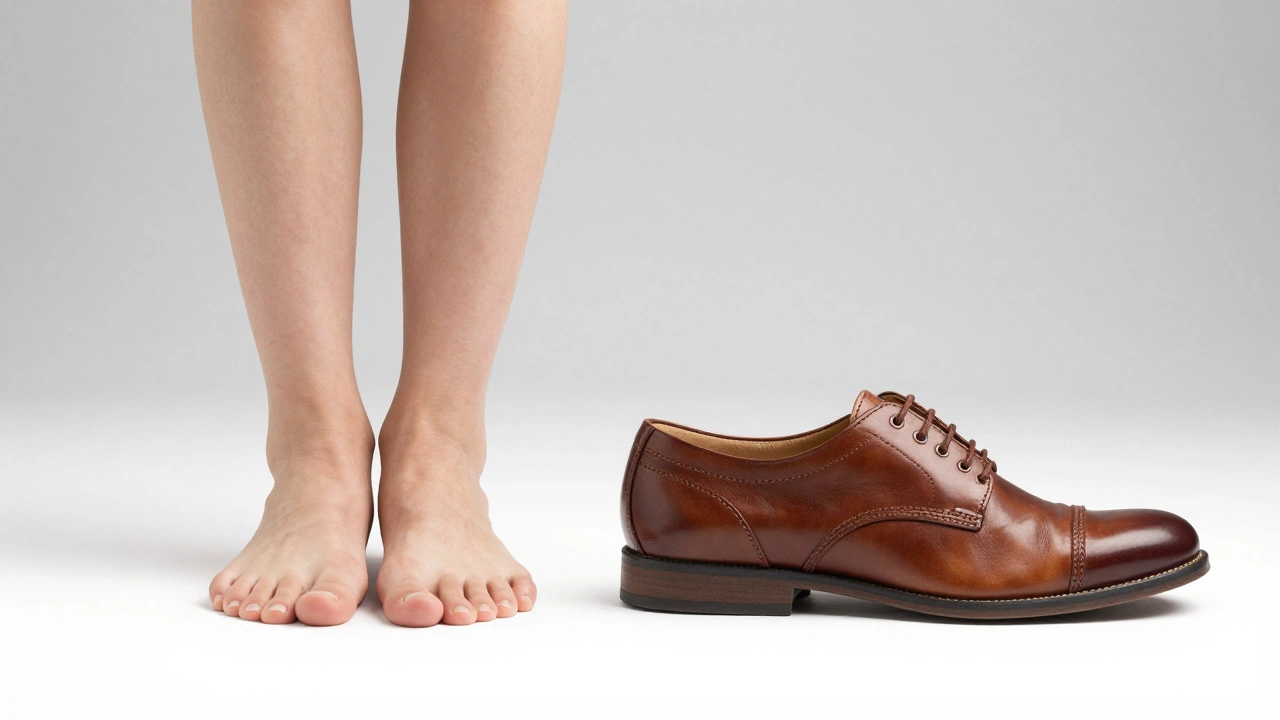
Deciding whether to spend $50 on a repair or $200 on a new pair is a math problem. Use this as a rule of thumb: if the repair cost is more than 30% of the original price of the shoe, and the leather is already heavily creased, it's time to shop.
| Damage Type | Repairability | Action | Expected Outcome |
|---|---|---|---|
| Worn Heel Caps | High | Repair | Extends life by 1-2 years |
| Deep Leather Cracks | Low | Replace | New structural integrity |
| Sole Separation | Medium | Repair | Restored water resistance |
| Collapsed Arch/Midsole | Low | Replace | Prevent joint pain |
| Faded Color/Scuffs | High | Maintenance | Visual refresh |
How to Spot 'Fake' Quality
One reason people struggle with when to toss shoes is that they bought Genuine Leather instead of full-grain. Don't let the name fool you; "Genuine Leather" is actually a low-grade marketing term for leather made from the leftovers of the hide, glued together with polyurethane. This material doesn't age-it peels.
If your shoes are peeling like a sunburned shoulder, they aren't actually "leather" in the traditional sense; they are coated in a plastic film. Once that film cracks, the shoe cannot be repaired. You can't condition plastic. If you see peeling on the toes or heels of "Genuine Leather" shoes, throw them out. There is no way to reverse the process.
In contrast, high-end leather developed with a Goodyear Welt construction can be resoled almost indefinitely. If your shoes have a visible stitch running around the perimeter of the sole, you have a goldmine. These are worth repairing even when the bottom is completely smooth, because the upper leather is designed to last a decade if cared for.
The Maintenance Checklist to Delay the Trash Bin
You can push the "toss date" back significantly by changing how you treat your shoes. Most people kill their leather shoes not through wear, but through neglect. The biggest killer? Wearing the same pair two days in a row.
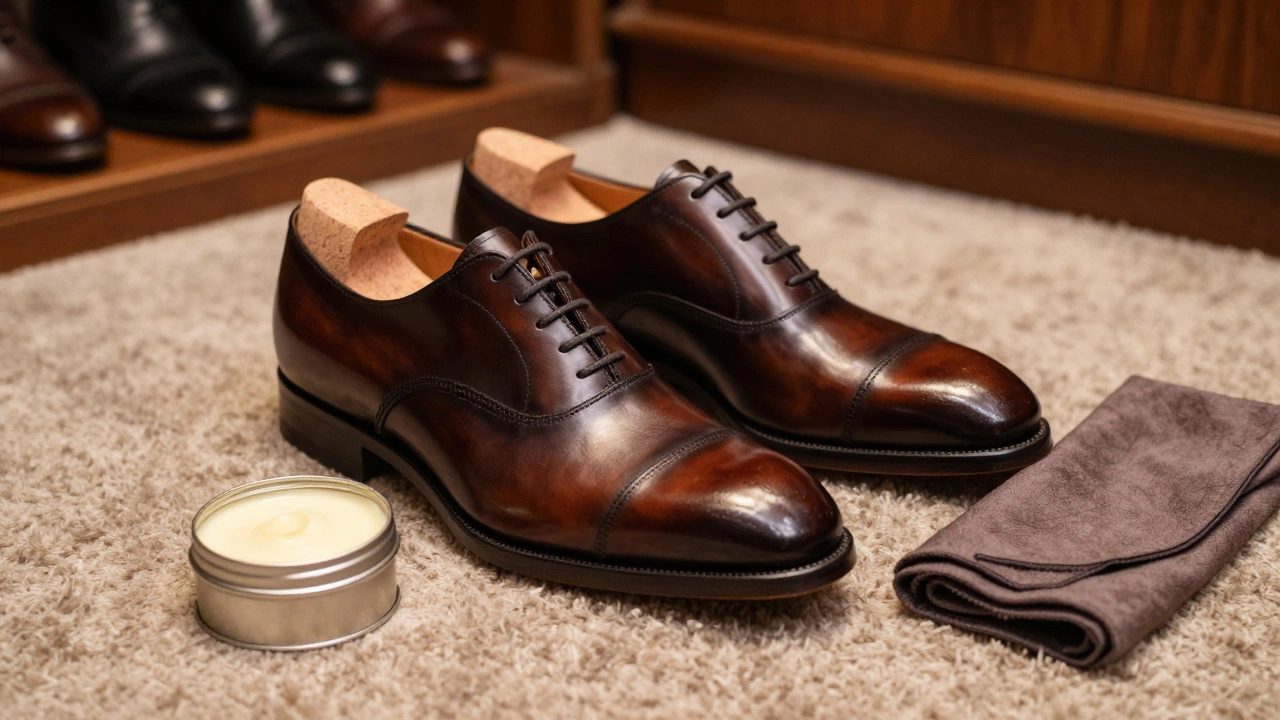
Leather is porous; it absorbs sweat. If you don't give the shoe 24 hours to dry out, the moisture weakens the fibers and causes the leather to stretch and sag. Use Cedar Shoe Trees. They don't just keep the shape; the cedar wood absorbs moisture and kills the bacteria that cause that "old shoe" smell. Without trees, the toe box will eventually curl upward, which is a sign that the shoe is nearing its end.
Also, stop using liquid polish for everything. Use a cream-based conditioner every few months. Think of it like moisturizer for your skin. If the leather stays supple, it won't crack. Once a crack forms, you're on a countdown to the garbage can.
Can you fix a hole in the sole of a leather shoe?
Yes, if the shoe is constructed with a stitched sole (like a Goodyear welt). A cobbler can remove the old sole and sew on a new one. However, if the shoe has a molded rubber sole that is glued on, a patch is only a temporary fix and usually isn't worth the cost.
How often should I replace my daily work shoes?
If you rotate two pairs and use shoe trees, high-quality leather shoes can last 5-10 years with a few resolings. Cheap "genuine leather" shoes usually last 1-2 years before the synthetic coatings begin to peel or the interior padding collapses.
Is it possible to fix cracked leather?
Superficial creases can be treated with leather conditioner. Deep cracks-where the leather has actually split-cannot be "healed." You can use a leather filler for cosmetic purposes, but the structural integrity is compromised, and water will leak through the crack.
Do I need to replace shoes if the inside is torn but the outside looks great?
It depends on where the tear is. A small rip in the tongue is fine. A tear at the heel counter (the back of the shoe) can cause severe blisters and change how your foot sits in the shoe. If the tear is causing pain or rubbing, it's either time for a professional lining repair or a new pair.
What is the best way to tell if the support is gone?
Place the shoe on a flat table and look at it from the back. If the shoe leans to the left or right, or if the heel looks crushed, the internal support is gone. You can also try the "twist test": gently try to twist the shoe. If it twists like a rag instead of resisting, the midsole has failed.
What to do next
If you've decided your shoes are toast, don't just toss them in the trash. Check if there is a textile recycling program in your city. Leather is a natural material, but the glues and rubbers in the soles are not. Some specialty recyclers can strip the components.
If you're heading out to buy a new pair, look for "Full-Grain Leather" and "Goodyear Welted" on the tag. It costs more upfront, but as we've seen, it's the only way to ensure you aren't repeating the same cycle of throwing away shoes every eighteen months. Invest in the quality that can be fixed, rather than the quality that's designed to be replaced.