What Qualifies as a Sundress? A Clear Guide to Style, Fabric, and Fit

Sundress Qualifier
Fabric & Breathability
Structure & Fit
Length & Style
Details & Ease
Result
A sundress isn’t just any dress you wear in summer. It’s a specific kind of garment built for warmth, ease, and breathability-and knowing what makes one a true sundress helps you pick the right one every time. If you’ve ever bought a dress labeled "summer style" only to find it’s too heavy, too tight, or too formal, you know the confusion. So what actually counts as a sundress? Let’s break it down with real-world examples and clear rules.
It’s Light, Not Just Short
Many people think a sundress is any short dress worn in hot weather. That’s not enough. A true sundress is made from lightweight, breathable fabrics like cotton, linen, rayon, or chambray. These materials don’t trap heat. They let air move through them, which keeps you cool even when the sun is high. You’ll rarely see a sundress made from thick denim, wool, or polyester blends that feel sticky against the skin.
Think about what you’ve worn on a 30°C day in Vancouver. You didn’t reach for a silk slip dress or a structured floral maxi with a lining. You reached for something loose, airy, and simple. That’s the sundress standard. It’s not about length-it’s about how the fabric behaves in heat.
Minimal Structure, Maximum Comfort
Sundresses avoid heavy tailoring. No boning. No padded shoulders. No fitted waistlines that dig in. Most have a relaxed silhouette: A-line, shift, or slip cuts. They hang loosely from the shoulders or have thin straps that don’t pinch. Even if it has a defined waist, it’s usually achieved with a soft tie or elastic, not darts or seams that create pressure.
Compare a sundress to a cocktail dress. One is meant to be worn for hours at a picnic. The other is meant to be admired for an hour at a dinner party. The sundress doesn’t need to hold its shape-it needs to move with you. That’s why you’ll often see them with adjustable straps, side slits, or gathered seams. They’re designed to breathe, not to impress.
Short or Midi, But Never Formal
Length doesn’t define a sundress, but context does. Most sundresses fall between knee-length and mid-calf. Shorter styles (above the knee) are common for beach days or casual outings. Midi lengths work well for garden parties or weekend errands. But if it’s floor-length, it’s usually not a sundress unless it’s made of ultra-light voile and has no train or embellishments.
And never mistake a formal maxi dress for a sundress. If it has lace overlays, sequins, a high neckline, or requires a slip underneath, it’s not a sundress. Sundresses are meant to be worn without layers. You don’t need to change after walking to the store. You just throw it on and go.
Prints and Colors That Feel Like Summer
Sundresses often feature bright or soft colors: pastel blues, sunflower yellows, coral pinks, or white with tiny florals. Bold stripes and tropical prints are common too. These aren’t just fashion choices-they’re psychological ones. Light colors reflect sunlight instead of absorbing it. Dark colors like black or navy, while stylish, defeat the purpose of a sundress unless they’re made from ultra-lightweight, open-weave fabric.
Patterns matter too. Small, scattered florals or gingham checks feel casual and airy. Large, dense prints can make the dress feel heavy visually, even if the fabric is light. Stick to prints that look like they were painted by sunlight, not printed in a factory.
No Zippers, No Buttons, No Fuss
A sundress is meant to be easy. Most slip on over the head. Some have side zippers, but they’re rare. Back zippers? Almost never. Buttons? Only if they’re decorative or minimal, like two tiny buttons at the neckline. The goal is to get dressed in under 10 seconds-no fumbling, no mirrors, no help needed.
If you’ve ever struggled to zip up a dress after a swim or a long walk, you know why this matters. A sundress should feel like putting on your favorite t-shirt, just longer. That’s why pull-on styles dominate. Elasticized necklines, smocked bodices, and wrap ties are all classic sundress features.
It’s Not a Beach Dress, But It Can Go There
There’s a difference between a sundress and a swimsuit cover-up. A beach cover-up is often sheer, oversized, or made of mesh. A sundress is meant to be worn on its own. You can wear a sundress to the beach, but you don’t need a towel or sarong over it. It’s modest enough for a walk to the ice cream stand and stylish enough for a casual dinner.
That’s why most sundresses have built-in lining. Not thick, not stiff-just enough to prevent transparency. You won’t find a sundress that requires a slip. That’s the whole point.
What Doesn’t Qualify
Here are three common mistakes people make:
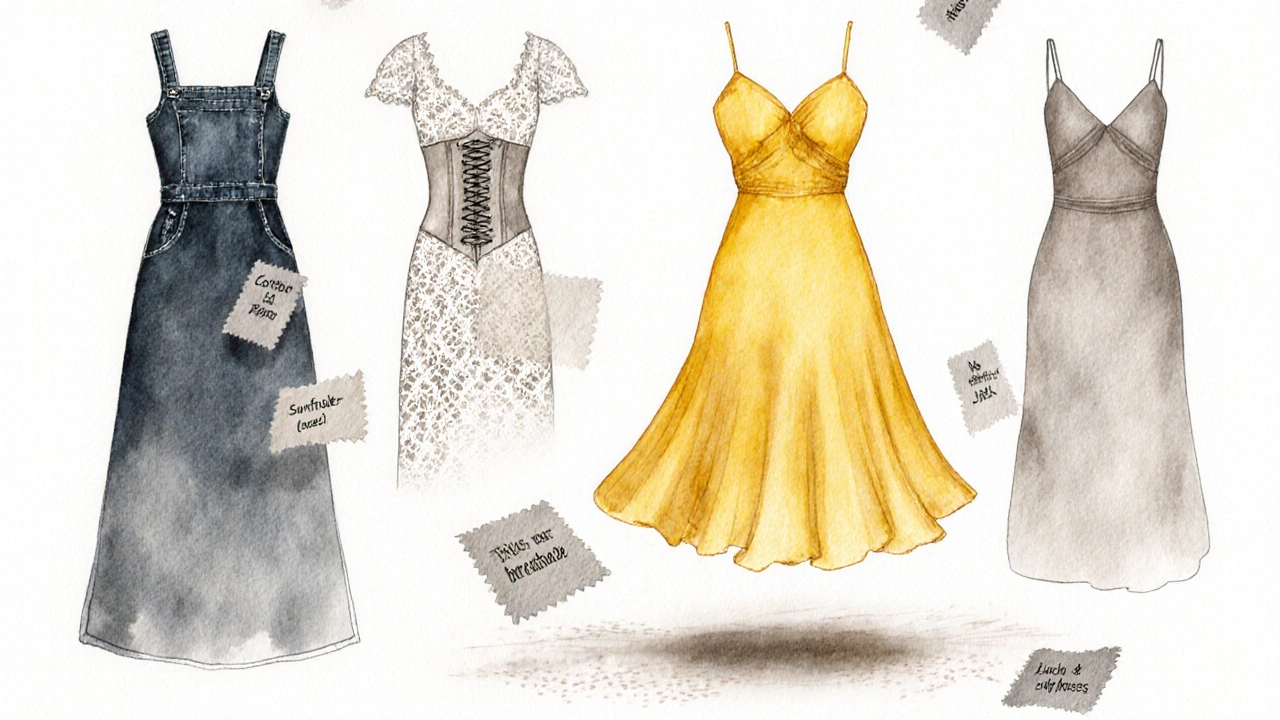
- A sleeveless blouse with a skirt isn’t a sundress. It’s two pieces. A sundress is one garment.
- A denim dress with buttons isn’t a sundress. Denim is too heavy and structured, even in summer.
- A lace dress with a corset back isn’t a sundress. Lace can be light, but structure kills the vibe.
Also, avoid anything labeled "summer evening dress" or "bridal sundress." Those are marketing terms, not real categories. A sundress is for daytime. That’s its job.
Real-World Examples
Let’s look at three actual dresses:
- A cotton A-line dress with thin spaghetti straps, a knee-length hem, and tiny daisies printed all over. It has no zipper. You can wear it with sandals and a straw hat. This is a sundress.
- A silk slip dress with thin straps and a slit up the thigh. It’s long, shiny, and requires a slip. You wear it to a rooftop bar. This is not a sundress.
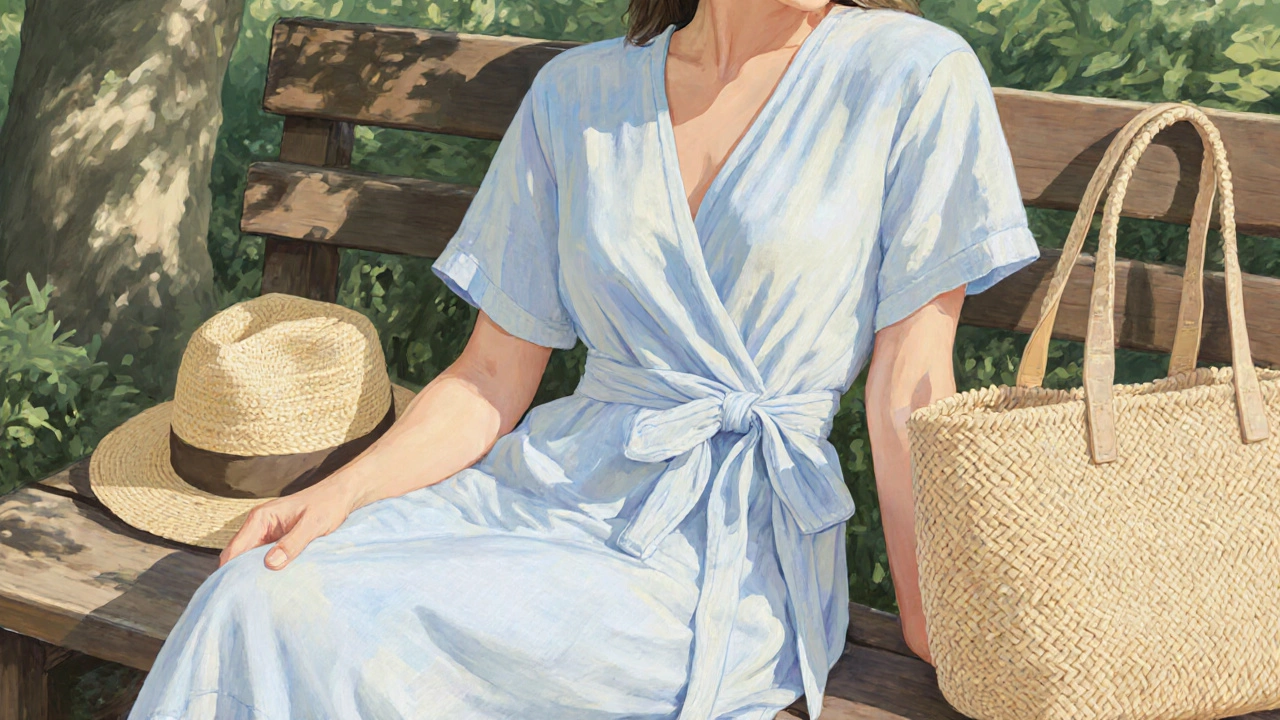
- A linen wrap dress with short sleeves, a mid-thigh hem, and a self-tie belt. It wrinkles easily but feels cool and moves with you. This is a sundress.
The difference isn’t subtle. One feels like freedom. The others feel like dressing up.
Why This Matters
Knowing what qualifies as a sundress helps you shop smarter. You won’t waste money on dresses that feel hot, restrictive, or awkward after two hours. You’ll build a summer wardrobe that works-no guesswork, no returns.
It also helps you understand fashion beyond trends. A sundress isn’t about being trendy. It’s about being practical. It’s one of the few garments that hasn’t changed much in 50 years because the need hasn’t changed: stay cool, stay comfortable, stay simple.
When you find the right one, you’ll know. It doesn’t need a label. It just feels right.
Can a sundress have sleeves?
Yes, a sundress can have short sleeves, cap sleeves, or even three-quarter sleeves. The key is the fabric. Lightweight cotton or linen sleeves are common in cooler summer mornings or for sun protection. What matters isn’t the sleeve length-it’s whether the fabric stays breathable and the cut stays relaxed.
Are sundresses only for women?
Traditionally, sundresses are marketed to women, but the style isn’t gender-specific. Men and non-binary people can wear similar garments-think linen shirts with loose shorts or unisex tunics. The term "sundress" is tied to women’s fashion history, but the function-lightweight, breathable, easy-applies to anyone.
Can you wear a sundress in the fall?
Yes, if the weather is still warm. In places like Vancouver, September can still feel like summer. Layering a sundress with a light denim jacket or cardigan extends its use. The dress itself doesn’t change-just how you style it. But once temperatures drop below 15°C, it’s no longer practical as a standalone piece.
Do sundresses need to be printed?
No. Solid colors like white, cream, pale blue, or soft green are classic sundress choices. In fact, many people prefer them because they’re easier to match and don’t fade as quickly. Prints are popular, but not required. The fabric and cut matter more than the pattern.
Is a maxi dress a sundress?
Only if it’s made of lightweight fabric, has no lining or structure, and feels easy to move in. A heavy, lined maxi with a high neckline and long sleeves isn’t a sundress-it’s a maxi dress. The length alone doesn’t make it one. Think of it this way: if you’d hesitate to walk to the grocery store in it, it’s probably not a sundress.