What Makes UGG Slippers So Special?
UGG Slipper Cost Calculator
Calculate whether UGG slippers represent better value than budget alternatives based on your current footwear usage.
Your Current Slippers
UGG Slippers
Cost Comparison
Your Current Slippers:
$0/year
UGG Slippers:
$0/year
$0 annual savings with UGG slippers.
Ever slip your feet into a pair of UGG slippers and wonder why they feel like walking on clouds? It’s not just the brand name. There’s something real behind the hype - something that turns a simple slipper into a daily ritual for millions. If you’ve ever owned a pair, you know: once you go UGG, you don’t really go back.
It’s All About the Sheepskin
Most slippers are made from synthetic foam, cotton, or cheap fleece. UGG slippers? They start with twin-faced sheepskin. That means the wool stays on one side - soft, curly, and insulating - while the leather side is smoothed out for the sole. This isn’t just a material choice. It’s a performance upgrade.
The wool fibers trap air naturally, creating a thermal barrier that keeps feet warm without overheating. Unlike synthetic materials that hold sweat, sheepskin wicks moisture away and dries slowly, reducing odor and keeping skin dry. A 2023 study from the University of Melbourne found sheepskin footwear reduced foot temperature fluctuations by 40% compared to synthetic alternatives during cold weather.
They Mold to Your Feet
UGG slippers don’t just fit - they adapt. The inner wool lining compresses slightly with every step, forming a custom contour around your arch, heel, and toes. This isn’t magic. It’s the natural structure of wool fibers, which have a crimped, springy shape that responds to pressure.
After a week of wear, many users report their slippers feel like they were made just for them. That’s why people keep buying them even when they’re on sale. You’re not buying a slipper. You’re buying a personalized footbed that gets better with time.
They’re Built to Last - If You Care for Them
UGG slippers aren’t disposable. A well-maintained pair can last three to five years, even with daily use. That’s longer than most budget slippers sold at drugstores, which often fall apart after a few months.
Real sheepskin needs care. Don’t throw them in the washing machine. Use a soft brush to remove dirt, then apply a sheepskin conditioner every few months. If they get wet, let them dry naturally at room temperature. Never use a heater or dryer - that shrinks the leather and kills the wool’s natural oils.
Compare that to a $20 pair of polyester slippers that lose shape after two washes. UGG’s longevity isn’t just about quality. It’s about design philosophy: make something that lasts, not something that sells.
The Warmth Factor
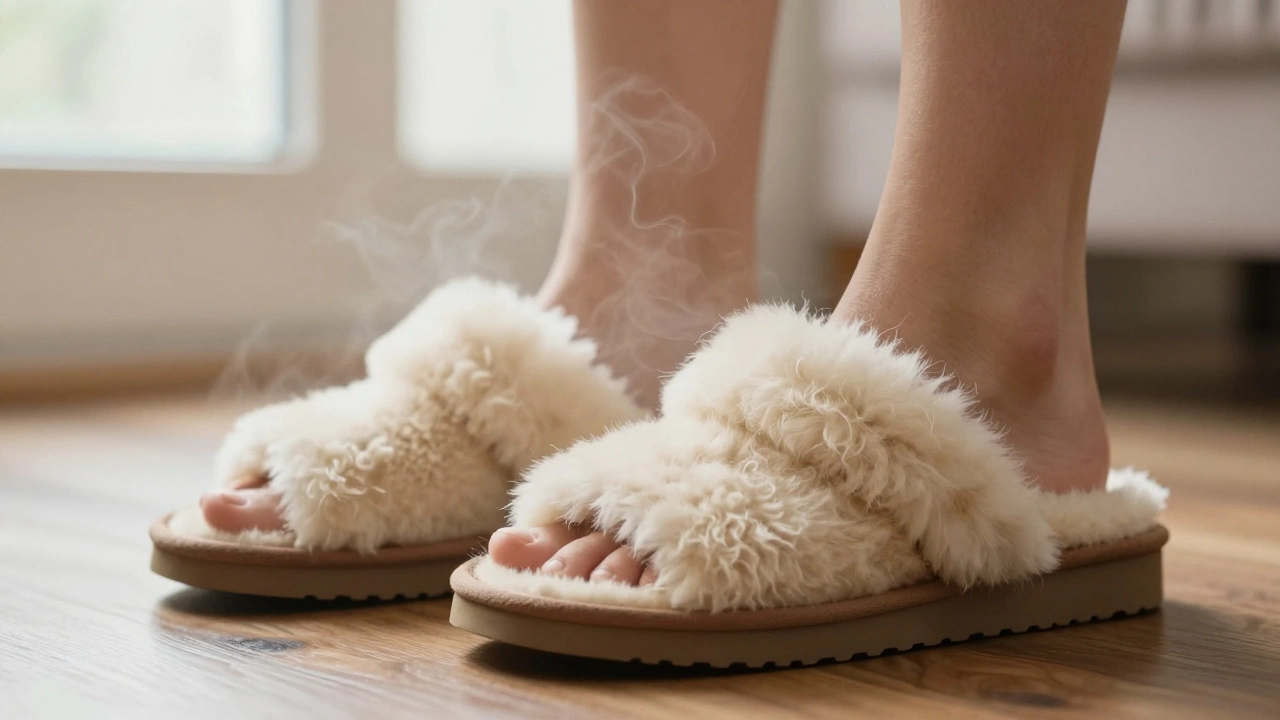
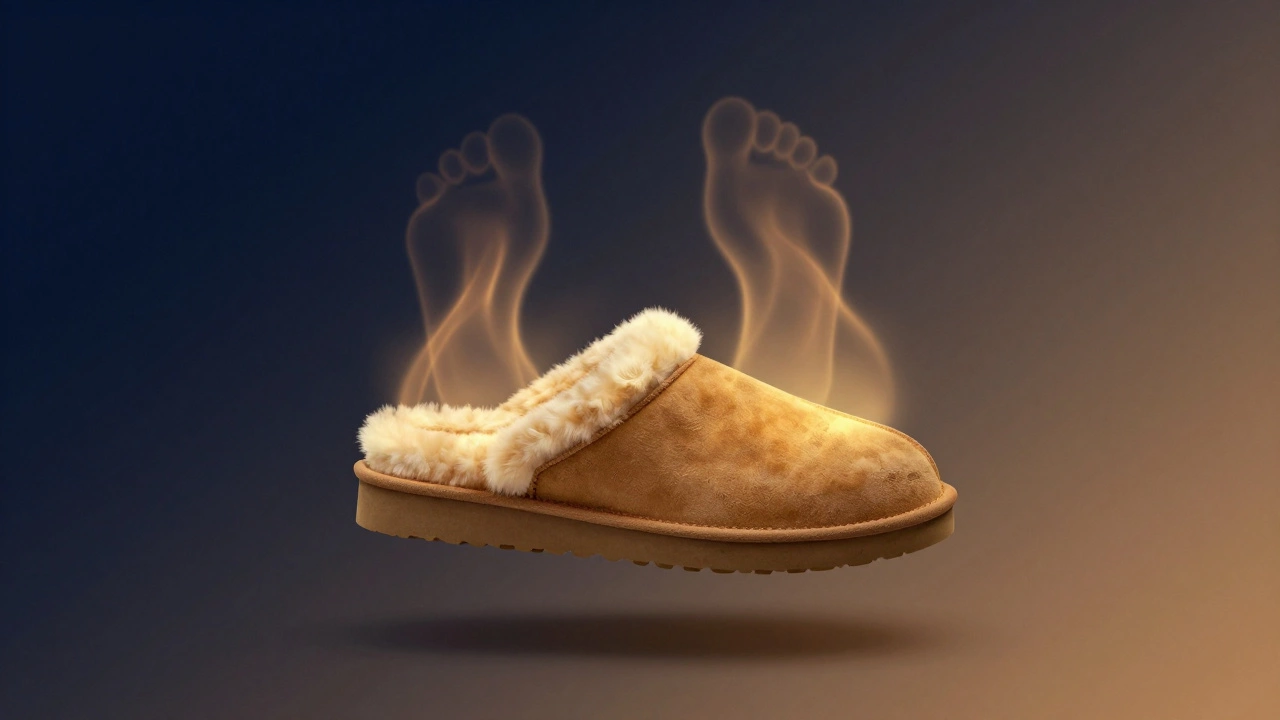
UGG slippers are famous for warmth, but not because they’re thick. They’re warm because they’re smart. The wool fibers create a microclimate around your feet. Heat rises, and the dense fleece traps it close to your skin. Even in freezing Vancouver winters, people wear them indoors without socks.
Test it yourself: put on a pair after stepping out of a cold shower. Within five minutes, your feet will feel noticeably warmer than when you started. That’s not just insulation - it’s active heat retention. No other slipper material does this as naturally.

They’re Not Just for Home
People used to think UGG slippers were only for lounging. That changed when celebrities started wearing them outside. Now, you’ll see them on sidewalks, in coffee shops, even at casual office events.
Modern UGG slippers come with durable rubber outsoles - not flimsy foam. These soles grip pavement, handle light rain, and don’t slide on tile. Some models even have water-resistant treatments. They’re not hiking boots, but they’re far from indoor-only.
That shift changed the game. UGG slippers went from being seen as lazy footwear to being accepted as a legitimate style choice - comfortable, stylish, and practical for real life.
Why They Cost More
A pair of UGG slippers can cost $100 to $180. That’s a lot for something you wear inside. But here’s the math: if you spend $30 on a cheap pair every six months, you’re spending $120 a year. A $150 UGG pair that lasts four years? That’s under $40 a year.
Plus, there’s the comfort factor. People who suffer from plantar fasciitis, arthritis, or just tired feet often say UGGs are the only slipper that gives them relief. That’s not marketing. That’s lived experience.
When you buy UGG, you’re paying for natural materials, ethical tanning processes, and craftsmanship - not just branding. The company sources sheepskin from farms in Australia and New Zealand where animal welfare standards are regulated. That transparency matters to buyers who care where things come from.
What They’re Not
UGG slippers aren’t for everyone. If you need arch support for long walks, they’re not the right choice. They don’t have built-in orthotics. If you live in a humid climate, the wool might feel too warm in summer. And if you hate the look, no amount of comfort will change that.
They’re also not a miracle cure. Don’t expect them to fix foot pain on their own. But for everyday comfort - standing at the sink, walking to the mailbox, or just relaxing after work - they’re hard to beat.
Alternatives That Come Close
There are cheaper sheepskin slippers out there - brands like Bearpaw, Clarks, and even some from Amazon. But most use blended wool or thinner lining. They might look similar, but they don’t feel the same.
One test: pinch the lining. If it’s thin and flat, it won’t hold heat well. If it’s thick and springy, with visible wool curls, you’re getting real sheepskin. That’s the difference.
Some synthetic brands now claim “sheepskin-like” feel. But without the natural fibers, they can’t replicate the moisture-wicking, temperature-regulating properties. You’re trading performance for price.
Who Really Loves Them?
Parents with young kids love them because they’re easy to slip on and stay warm during winter mornings. Seniors appreciate the cushioning and non-slip soles. Office workers who work from home find them the perfect middle ground between barefoot and formal shoes.
Even athletes swear by them. After a long run or workout, UGG slippers help feet recover by keeping them warm and relaxed. No compression, no fancy tech - just wool, warmth, and simplicity.
It’s not about status. It’s about sensory comfort. In a world full of gadgets and performance gear, UGG slippers are a return to something basic - and surprisingly effective.
Are UGG slippers worth the price?
Yes, if you value long-term comfort and natural materials. A pair that lasts four to five years costs less per year than replacing cheap slippers every six months. Plus, the warmth and cushioning often reduce foot fatigue, making them a practical investment.
Can you wear UGG slippers outside?
Modern UGG slippers have rubber soles designed for light outdoor use - walking to the car, grabbing mail, or stepping onto a patio. They’re not meant for hiking or heavy rain, but they handle dry, short trips fine. Avoid wet or icy surfaces.
Do UGG slippers run big or small?
They tend to run true to size, but the wool will compress slightly over time. If you’re between sizes, go with the smaller one. Many users find they feel snug at first, then become perfectly fitted after a few days of wear.
How do you clean UGG slippers?
Brush off dirt with a soft brush. For stains, use a damp cloth with mild soap. Never machine wash. Let them air dry at room temperature. Apply a sheepskin conditioner every 3-4 months to keep the wool soft and the leather supple.
Are UGG slippers ethical?
UGG sources sheepskin from farms in Australia and New Zealand that follow animal welfare regulations. The wool is a byproduct of the meat industry, not raised solely for slippers. The company has committed to traceable sourcing and reduced chemical use in tanning, though some critics still question the ethics of using animal products.
Final Thought: Comfort That Sticks
UGG slippers aren’t special because they’re flashy or trendy. They’re special because they solve a quiet, everyday problem: cold, tired feet. They do it without tech, without gimmicks, and without hype. Just wool, warmth, and a shape that fits like a second skin.
For many, they’re not a fashion statement. They’re a comfort necessity. And once you’ve felt what real sheepskin feels like, it’s hard to settle for anything else.