What Makes an Evening Dress? Key Elements That Define Elegance
Evening Dress Checker
Determine if your dress qualifies as an authentic evening dress based on the key elements discussed in the article. Select all that apply to your dress to see if it meets the criteria for true evening elegance.
Length
Fabric
Fit & Structure
Details
Purpose & Presentation
Not all fancy dresses are evening dresses. You’ve seen them at galas, weddings, and award nights - shimmering, flowing, and unforgettable. But what exactly turns a dress into an evening dress? It’s not just the fabric or the length. It’s a mix of design, purpose, and detail that makes it stand apart from cocktail dresses, party wear, or even formal daywear.
Length Matters - But Not Just Because It’s Long
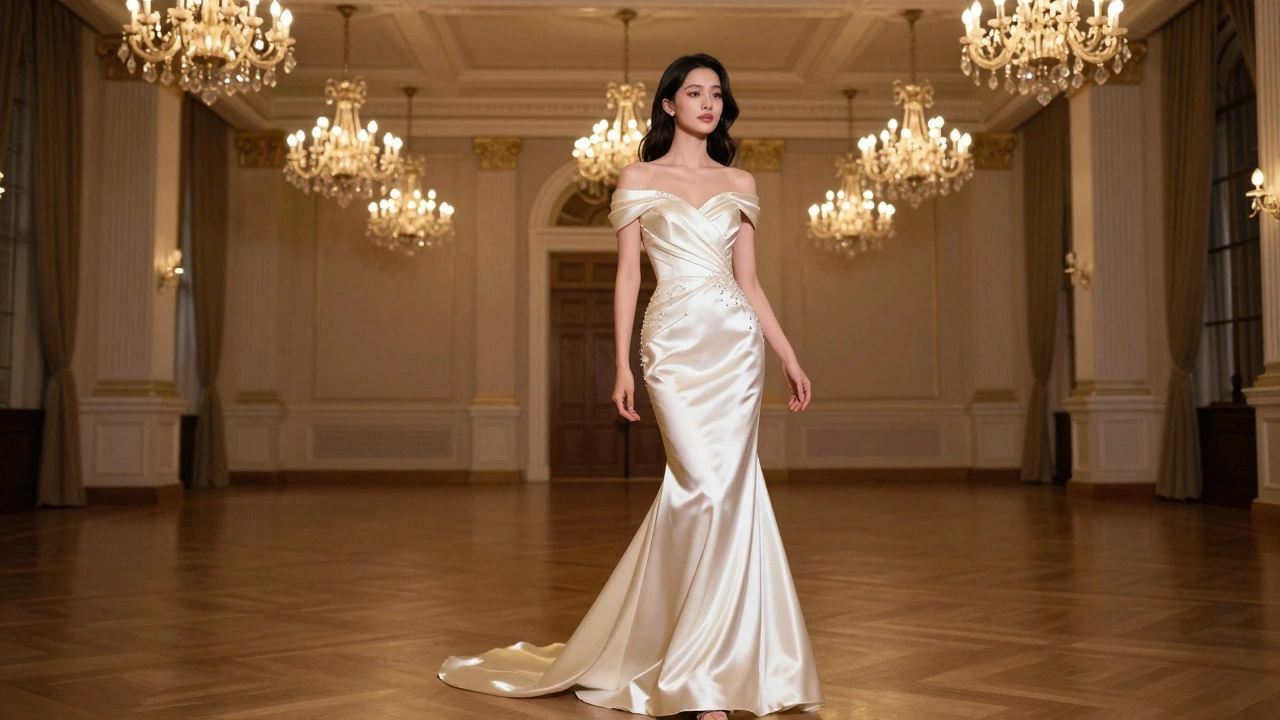
Evening dresses are typically floor-length, but that’s not the full story. A dress that drags on the floor without structure looks sloppy. A true evening dress has a clean, intentional hemline that grazes the floor or pools slightly behind the wearer. Think of it like a well-tailored coat - the length isn’t random; it’s calculated for movement and grace. Many evening gowns include a subtle train, especially for events like weddings or red carpets, but it’s never bulky. The train should flow, not stumble.
Shorter evening dresses - like those just above the ankle - do exist, but they’re exceptions. They need strong structure, luxe materials, and high-end detailing to still feel evening-appropriate. Without those, they’re just fancy cocktail dresses.
Fabric Tells the Story
Forget cotton or polyester blends. Evening dresses are built for light, movement, and luxury. Think silk satin, charmeuse, velvet, taffeta, or organza. These fabrics catch the light differently than everyday materials. Silk satin doesn’t just shine - it glows. Velvet doesn’t just look rich - it feels deep, almost three-dimensional. Taffeta has that crisp, rustling quality that adds drama with every step.
Layering is common. An evening dress might have a sheer organza overlay over a satin slip, or lace appliqués on a structured bodice. The fabric choices aren’t just about beauty - they’re about how the dress behaves under lighting. A dress that looks stunning in daylight might look flat under chandeliers. That’s why designers test fabrics under real event lighting.
Fit and Structure Are Non-Negotiable
Evening dresses don’t hang loosely. They’re sculpted. The bodice is often boned, lined, or reinforced to hold shape. A well-made evening gown doesn’t shift or sag. It stays put, even when you’re dancing or standing for hours. This is why many are custom-fitted or require professional alterations.
The waistline is usually defined - either with a natural waist, empire cut, or dropped hip. This isn’t just about flattery; it’s about balance. A dress that flows from the wrong point on the body looks off. Think of it like architecture: the foundation must support the beauty above.
Shoulders matter too. Off-the-shoulder, strapless, one-shoulder, or illusion necklines are common. But bare shoulders aren’t just a style - they’re a statement. They draw attention upward, toward the face and jewelry. That’s intentional.
Details Are the Difference
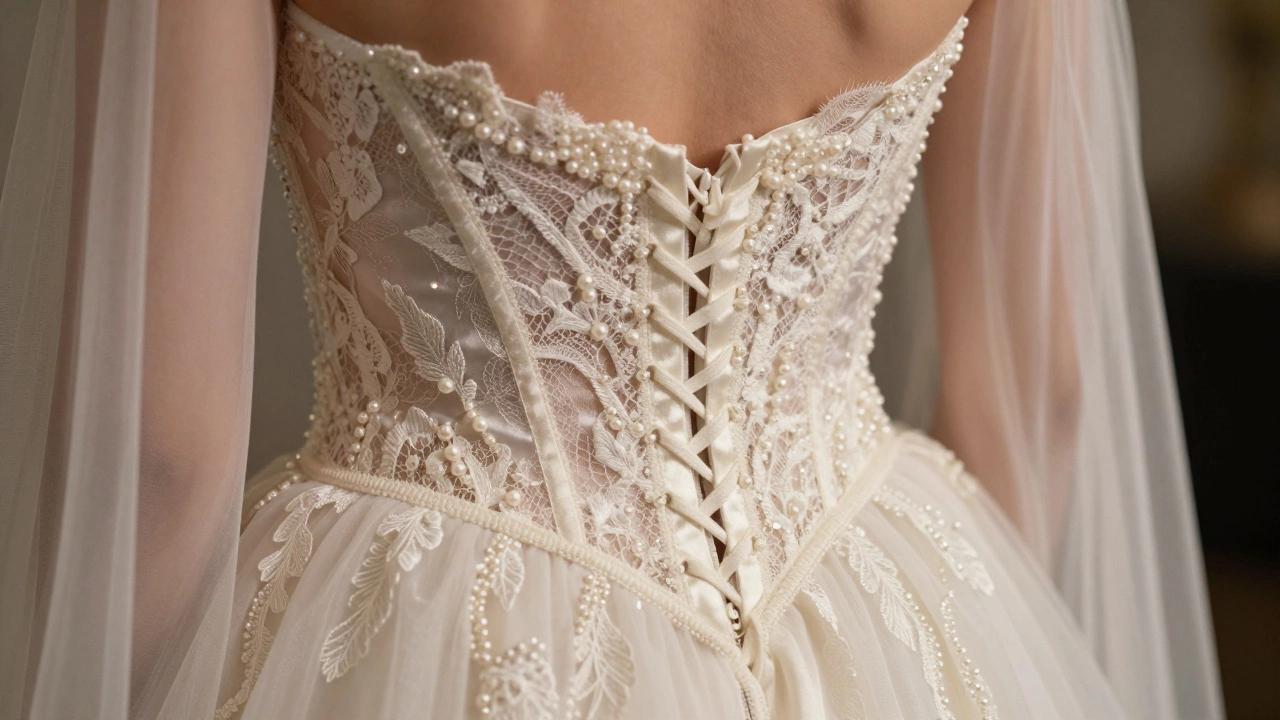
What separates an evening dress from a fancy dress? The details. Hand-sewn beading, tiny seed pearls, crystal embroidery, or metallic threadwork. These aren’t glued on - they’re stitched by hand, often taking dozens of hours. A single gown can have over 5,000 beads.
Backs are just as important as fronts. Many evening dresses feature low backs, lace-up closures, or delicate straps that create a silhouette you can’t ignore. The back is often where the dress reveals its craftsmanship - a hidden zipper, a hidden corset, a row of tiny buttons.
Even the lining matters. A good evening dress has a silk or satin lining that glides against the skin. Cheap linings cause static, stick, or create uncomfortable friction. That’s why you’ll never see a high-end evening gown with a polyester lining.
Color and Embellishment Follow Rules - But Bend Them
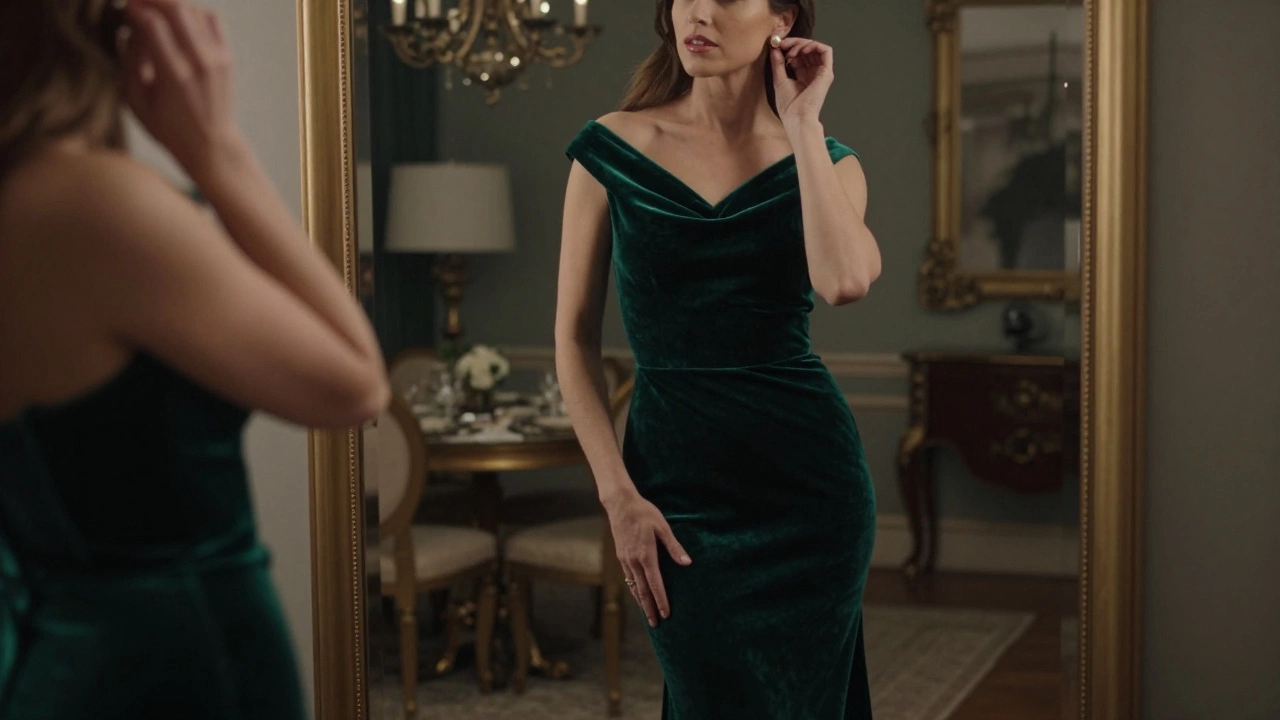
Traditionally, evening dresses were black, navy, deep red, or metallic. That’s still the safe choice. But today, jewel tones - emerald, sapphire, plum - are just as common. Pastels? Rare. Neon? Almost never. Even when colors are bold, they’re muted in tone. A bright fuchsia won’t work - but a deep rose with a hint of purple? That’s perfect.
Embellishments aren’t random. Sequins are used in patterns, not slapped on everywhere. Beading follows curves - along the waist, down the hips, or framing the neckline. Too much sparkle turns a gown into a costume. The goal is elegance, not a disco ball.
It’s Designed for a Moment
Unlike everyday dresses, evening dresses aren’t meant for running errands or coffee dates. They’re made for one thing: being seen. That’s why they’re often heavier, more complex, and harder to move in. They’re not designed for comfort - they’re designed for impact.
That’s why you’ll see bridesmaids in simple gowns, but the bride in a full evening dress. It’s not about cost - it’s about role. The evening dress marks a moment. It says: this is important. This is memorable.
What Doesn’t Belong
Let’s clear up some myths. A dress with sneakers? Not an evening dress. A dress with a hoodie? Never. Even a dress with a casual belt or visible undergarment lines breaks the illusion. Evening dresses are about total immersion - no compromises.
Also, avoid anything that looks like it came from a costume shop. Sequins that look plastic, rhinestones that are too big, or fabrics that shimmer too uniformly? Those scream "party store," not "red carpet."
Real-World Examples
Look at what women wear to the Met Gala. Those aren’t just dresses - they’re engineered. The structural corsetry, the hand-embroidered silk, the way the fabric moves with the body - every choice is deliberate. Even if the design is avant-garde, the underlying rules are still there: length, fabric, fit, detail.
Or think of classic Hollywood - Audrey Hepburn in Breakfast at Tiffany’s. Her black Givenchy gown wasn’t flashy. But every element - the off-the-shoulder neckline, the sleek lines, the satin finish - made it unforgettable. That’s what an evening dress does: it turns a person into a moment.
How to Choose One
- Match the dress to the event’s formality - a black-tie gala needs more than a simple sheath.
- Try it with the shoes you’ll wear. A floor-length dress looks different with heels than flats.
- Check the back. If it’s plain or poorly finished, walk away.
- Feel the fabric. If it’s stiff, scratchy, or cheap-feeling, it won’t last.
- Don’t ignore the lining. A good one should feel smooth against your skin.
There’s no single formula. But when all these elements come together - the right length, the right fabric, the right fit, and the right detail - you don’t just wear an evening dress. You become part of its story.