What Makes a Dress an Evening Dress? Key Features That Define Formal Evening Wear

Evening Dress Checker
Determine Your Dress's Formality
Select your dress features and event type to see if it qualifies as an evening dress.
Your dress qualifies!
It meets all formal evening wear standards for your event type.
Not suitable for this event
Ever looked at a dress and wondered why it’s called an evening dress? It’s not just about the color or the length. There’s a whole set of unwritten rules that turn a regular dress into something meant for nights out under chandeliers, gala dinners, or black-tie weddings. An evening dress isn’t just fancy-it’s designed for a specific moment, with details that scream formality without saying a word.
Length Matters More Than You Think
One of the first things that signals an evening dress is its length. While a midi dress might work for a dinner date, true evening wear almost always hits the floor. Floor-length gowns are the gold standard, especially for black-tie events. But it’s not just about dragging the hem-there’s intention behind it. The way the fabric pools slightly at the feet, the way it moves as you walk, even the slight lift when you step up a curb-all of it is part of the drama. Shorter evening dresses exist, like tea-length or knee-length styles for cocktail parties, but those are exceptions, not the rule. If you’re invited to a formal evening event and you’re wearing something above the knee, you’re probably not following the dress code.
Fabric Tells the Story
Not every fabric belongs on the red carpet. Evening dresses are made from materials that catch light and hold shape. Think silk satin, velvet, chiffon, taffeta, or lace with structured underlays. These fabrics don’t just look luxurious-they feel different. They drape, they shimmer, they hold a silhouette. A cotton dress might be comfortable, but it won’t turn heads at a charity gala. The texture of the fabric matters too. A matte finish might work for daytime elegance, but evening wear leans toward gloss, sheen, or subtle sparkle. Even a small amount of metallic thread or beadwork can elevate a dress from ordinary to extraordinary.
Structure and Silhouette Are Non-Negotiable
Evening dresses are built, not just sewn. They often have internal structure-boning, padding, lining, or corsetry-that shapes the body in a way casual clothes never do. Think of the way a ball gown flares from the waist, or how a sheath dress hugs every curve with precision. These aren’t accidents. Designers use tailoring techniques that come from couture traditions. The neckline matters too. Off-the-shoulder, halter, deep V, or illusion lace-all of these are common in evening wear because they draw attention to the shoulders, collarbone, or décolletage, areas that are traditionally highlighted in formal settings. A simple crew neck? That’s more likely to belong on a work blouse than a gala.
Details Are the Difference
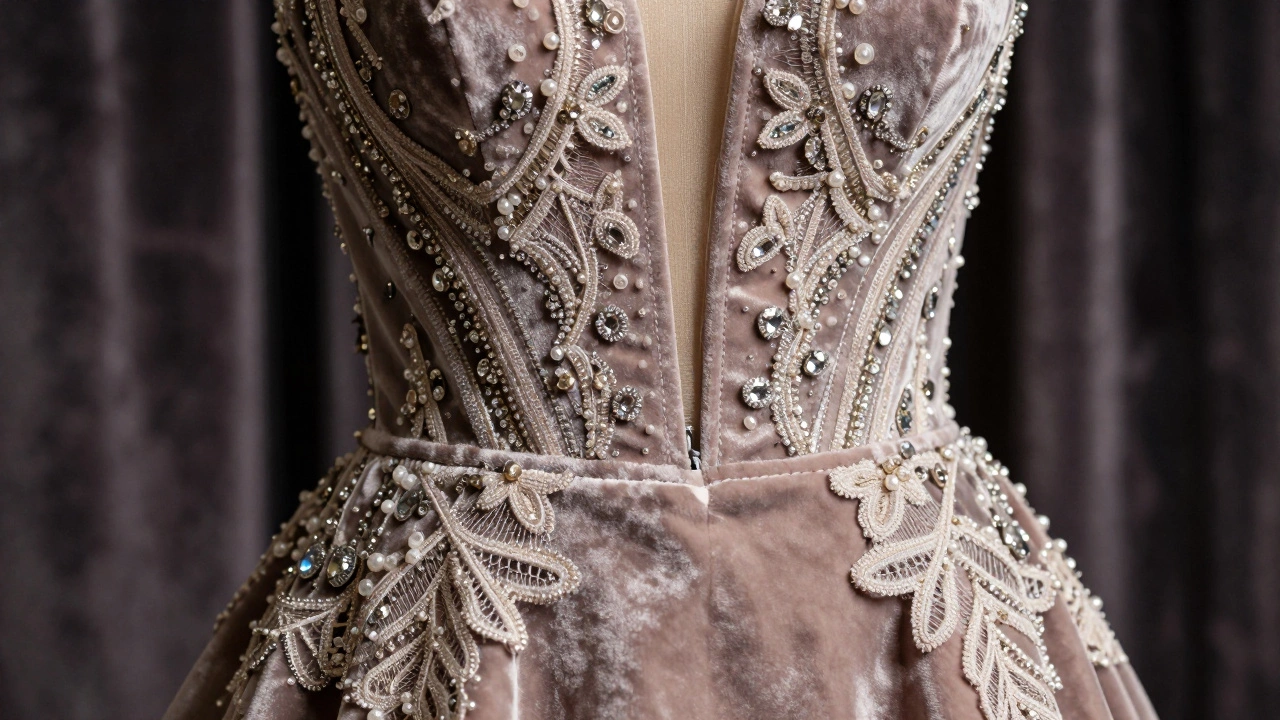
It’s the little things that make an evening dress unmistakable. Hand-sewn beading, embroidery, sequins, appliqués, or lace overlays aren’t just decoration-they’re signals. A dress with 200 hand-sewn crystals on the bodice isn’t trying to be flashy. It’s saying, “This was made for tonight.” Even the back of the dress matters. A low back, open shoulders, or a dramatic tie detail can turn a simple silhouette into something unforgettable. Zippers? They’re usually hidden. Seams? They’re French-sewn or bound for a clean finish. You won’t see raw edges or loose threads on a true evening dress. The construction is as refined as the design.
Color Isn’t Just About Preference
While black is the classic choice, evening dresses come in deep jewel tones: emerald, sapphire, ruby, plum, or charcoal. These colors read as sophisticated under low lighting. Bright neons, pastels, or loud prints? Those belong to daytime or themed parties, not formal evenings. White is tricky-it’s often reserved for brides or very specific cultural events. Metallics like gold, silver, or bronze are acceptable, but they need to be done with restraint. A dress that glitters from every angle can look costumey, not classy. The goal is elegance, not a disco ball.
Accessories Complete the Look
An evening dress doesn’t stand alone. It’s part of a system. High heels, clutch bags, fine jewelry-these aren’t optional extras. They’re part of the dress’s identity. A simple pair of drop earrings or a delicate bracelet can balance the formality. A statement necklace might be perfect if the neckline is modest. But if your dress has a high collar and long sleeves, avoid piling on too much jewelry. The dress itself should be the star. And let’s not forget shoes: stilettos, strappy sandals, or elegant pumps are expected. Flats? Only if the event is explicitly casual, which rarely happens for evening wear.
When Is It Okay to Break the Rules?
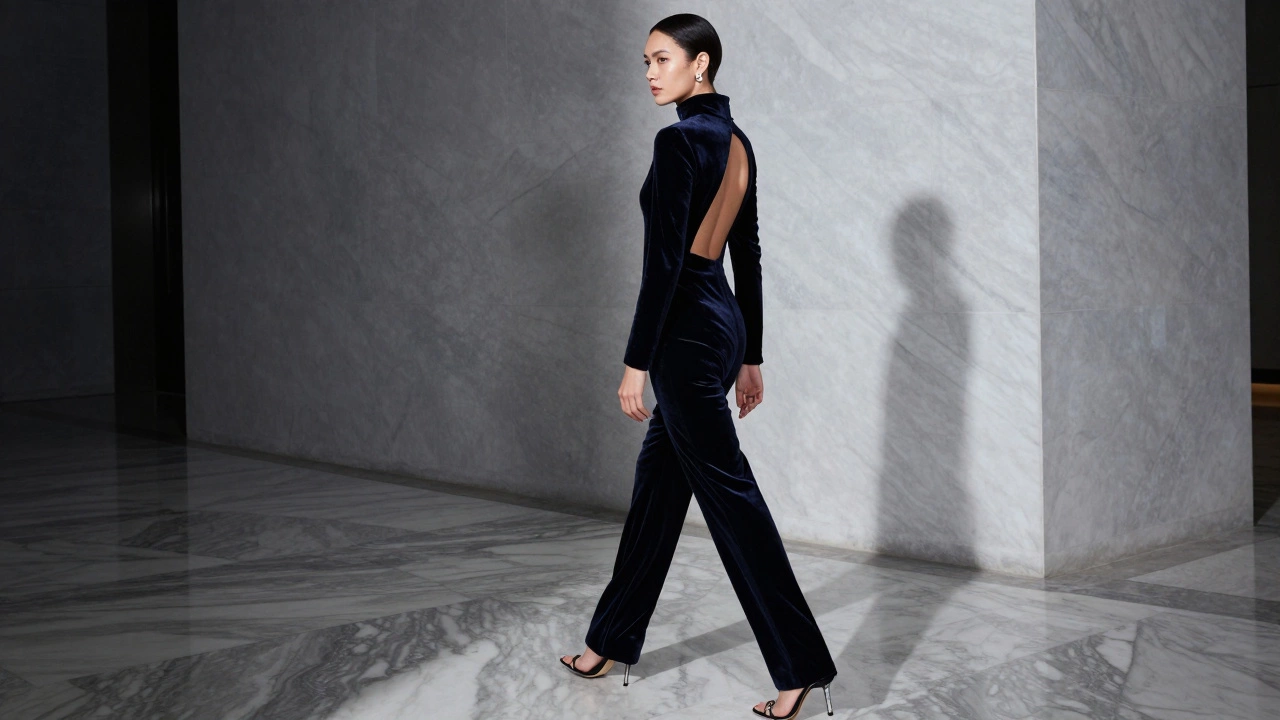
Rules exist, but they’re not laws. Modern evening wear has softened over the years. A sleek jumpsuit with a long, flowing pant leg and a satin top can pass as an evening dress at many events today. A tailored pantsuit in velvet or silk can work for black-tie occasions if the cut is sharp and the fabric is rich. Designers like Stella McCartney and Alexander McQueen have redefined evening wear without losing its essence. The key? It still needs to feel intentional. If you’re wearing something unconventional, make sure every other element-fabric, fit, finish-matches the level of formality expected.
How to Tell If You’re Wearing an Evening Dress
Ask yourself these questions: Does the dress feel heavier than your usual clothes? Does it require help to put on? Does it make you walk differently? Does it need special care to store? If you answered yes to most of these, you’re likely wearing an evening dress. It’s not about the price tag-it’s about the thought behind it. A $200 dress made with silk and hand-beading can be more evening-appropriate than a $1,000 dress made of polyester with glued-on rhinestones.
At the end of the day, an evening dress isn’t just something you wear. It’s something you step into. It’s designed to make you feel powerful, elegant, and unforgettable. It’s the dress you put on when you want to be seen-not just noticed, but remembered.
Can a midi dress be considered an evening dress?
Yes, but only in specific contexts. A midi-length dress can work for cocktail parties or semi-formal evening events, especially if it’s made from luxurious fabric like silk or velvet, has structured tailoring, and features elegant details like beading or a dramatic neckline. However, for black-tie or formal galas, floor-length is still the standard. If the invitation says "black tie optional," a well-designed midi dress is acceptable-but never a casual cotton or knit style.
Is black the only color for evening dresses?
No, black is classic, but not required. Deep, rich colors like navy, emerald, burgundy, and plum are equally appropriate and often more striking under low lighting. Metallics like gold and silver also work well when used tastefully. Avoid bright colors like neon pink, lime green, or pastel shades-they read as too casual or costume-like for formal evening settings.
Can you wear an evening dress to a wedding?
It depends on the wedding’s dress code. If it’s black tie or formal evening, then yes-an evening dress is expected. For daytime or garden weddings, a shorter, lighter dress in a softer fabric may be more appropriate. Always check the invitation. And never wear white unless you’re the bride. Even off-white or ivory can be seen as disrespectful in many cultures.
Do evening dresses always need a train?
No, trains are dramatic but not necessary. Most modern evening dresses don’t have trains unless they’re designed for a red carpet or wedding. A floor-length gown without a train is perfectly formal. Trains are more about tradition and spectacle than function. For most events, a clean, flowing hem is more practical and just as elegant.
What’s the difference between an evening dress and a cocktail dress?
The main difference is formality and length. Evening dresses are typically floor-length and made from luxurious, structured fabrics like silk or velvet. Cocktail dresses are shorter-usually knee-length or just below-and can be made from lighter materials like lace or chiffon. Cocktail dresses are for events like office parties or dinners, while evening dresses are for galas, award shows, or formal weddings. Think of it as a spectrum: cocktail = semi-formal, evening = fully formal.