What Is the Most Common Uniform Color? The Global Data on Navy, Black, and White
School Uniform Color Selector & Analyzer
Navy Blue
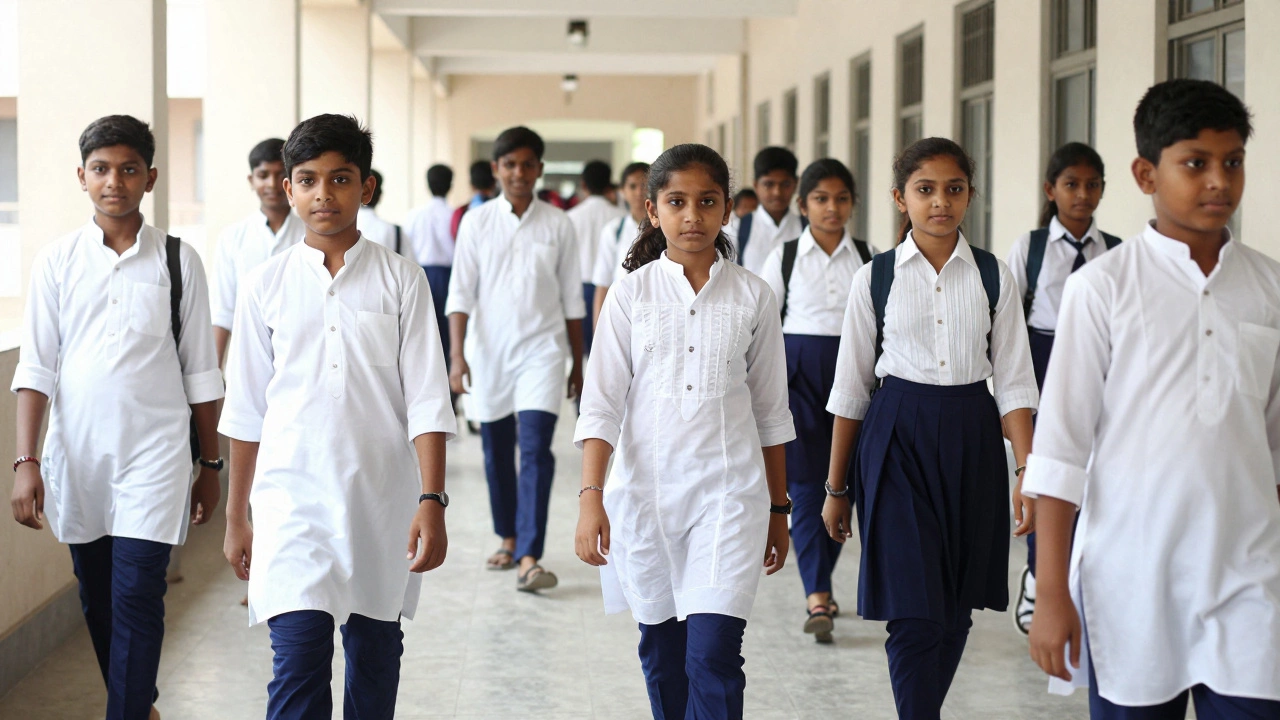
The Undisputed KingWalk into any primary school in London, Tokyo, or Sydney, and you will likely see a sea of navy blue. It is not just a coincidence; it is a calculated choice made by thousands of school boards over the last century. If you are asking what the most common uniform color is, the answer isn't a single shade but a hierarchy dominated by dark neutrals. While white shirts remain the universal constant for tops, the bottom half of the uniform-trousers, skirts, and blazers-is overwhelmingly navy blue, followed closely by black and grey.
This preference isn't random. It stems from practical concerns about laundry, durability, and psychology. Schools want clothes that hide chalk dust, grass stains, and ink spills. They also want colors that look professional without being as severe as all-black attire. Understanding why these specific colors dominate helps parents, designers, and administrators make better choices for their institutions.
The Dominance of Navy Blue
Navy blue is the undisputed king of school uniform colors globally. In the United Kingdom, Australia, and many parts of Asia, navy is the standard for trousers, skirts, and jumpers. Why has this deep shade won out?
The primary reason is utility. Navy blue is a "forgiving" color. Unlike black, which can show lint and light-colored dust easily, or bright colors that fade rapidly under UV exposure, navy maintains its appearance with minimal care. A study on textile maintenance in educational settings noted that dark blues retain their chromatic integrity longer than lighter shades when subjected to frequent industrial washing cycles common in schools.
Psychologically, navy blue is associated with trust, stability, and calm. For a learning environment, this matters. Research in environmental psychology suggests that cool tones like blue can lower heart rates and reduce anxiety compared to warmer, more aggressive colors like red or orange. When students wear navy, they subconsciously adopt a demeanor of focus and order. This makes it an ideal compromise between the strictness of black and the casualness of khaki.
In terms of versatility, navy pairs well with almost every accent color. Whether a school chooses red ties, yellow socks, or green badges, navy serves as a neutral canvas that allows for institutional branding without clashing. This flexibility explains why so many private and public schools have standardized on navy for their main garments.
The Role of White: The Universal Top
If navy rules the bottoms, white rules the tops. The white shirt is perhaps the most ubiquitous item in global school uniforms. From the crisp button-downs in American high schools to the polo shirts in European academies, white is the default base layer.
White signals cleanliness and discipline. Historically, wearing white required effort because it showed every stain. By mandating white shirts, schools enforced a standard of personal hygiene and attention to detail. Today, while synthetic fabrics make white shirts easier to maintain, the symbolic value remains. A clean white shirt implies a student is ready to learn and respects the institution's standards.
However, white comes with challenges. It requires more frequent washing to prevent yellowing at the collar and cuffs. It also offers less warmth than darker colors, which is why schools often mandate cardigans, blazers, or sweaters over white shirts during colder months. Despite these drawbacks, no other color matches the visual clarity and formal authority of white in a school setting.

Black and Grey: The Modern Alternatives
While navy leads, black and grey are strong contenders, particularly in urban environments and higher education. Black is often chosen for its sleek, modern aesthetic. It is the color of business suits, and schools aiming to prepare students for corporate careers may opt for black trousers or skirts to mimic professional attire.
Yet, black has significant downsides. It absorbs heat, making it uncomfortable for students in warmer climates or during summer months. It also shows lint, pet hair, and light-colored dirt more readily than navy. As a result, many schools that initially choose black switch to charcoal grey or navy after finding the maintenance costs too high.
Grey, specifically charcoal or slate, has gained popularity as a middle ground. It is softer than black but still formal enough for academic settings. Grey blends well with both navy and black accessories, allowing for mixed-and-match uniform policies that extend the life of a student's wardrobe. In recent years, grey has become the second-most common color for secondary school trousers, offering a contemporary look that feels less rigid than traditional navy.
Regional Variations and Cultural Influences
Uniform colors are not monolithic across the globe. Cultural norms and climate play significant roles in determining what is considered "standard."
In Japan, school uniforms (seifuku) traditionally feature navy blue sailor-style tops for girls and grey or navy blazers for boys. The influence of military and naval dress codes in the late 19th century cemented these colors as symbols of discipline and national pride. Similarly, in India, many schools use white kurtas or shirts paired with navy blue or maroon trousers/skirts, reflecting a blend of traditional modesty and Western formality.
In contrast, some African nations incorporate brighter colors into their uniforms. Green, yellow, and red are common, often reflecting national flags or local cultural significance. These colors boost morale and create a sense of community identity. However, even in these regions, the underlying structure often relies on darker bases like navy or black to ensure durability and ease of maintenance.
Climate also dictates color choices. In hotter countries, lighter colors like beige, cream, or light grey are preferred for tops to reflect sunlight and keep students cool. Darker colors are reserved for outer layers or cooler seasons. This practical adaptation ensures that uniforms serve their functional purpose regardless of geographic location.
| Color | Durability | Maintenance | Psychological Effect | Common Use |
|---|---|---|---|---|
| Navy Blue | High | Low (Hides stains) | Calm, Trustworthy | Trousers, Skirts, Blazers |
| White | Medium | High (Shows dirt) | Clean, Disciplined | Shirts, Polos |
| Black | High | Medium (Shows lint) | Formal, Serious | Suits, Outerwear |
| Grey | High | Low | Neutral, Modern | Trousers, Sweaters |
| Khaki/Beige | Medium | Medium | Casual, Approachable | Pants, Shorts |

The Psychology of Color in Education
Beyond practicality, color influences behavior. Schools are increasingly aware of how their dress codes affect student mood and performance. Bright colors like red can increase energy but also agitation. Yellow promotes creativity but can be overwhelming in large doses. Neutral colors like navy, grey, and white promote focus and reduce visual distraction.
When students wear uniform colors, they experience a reduction in "decision fatigue." They do not spend morning time choosing outfits, which reduces stress and social comparison. The uniformity creates a level playing field, minimizing socioeconomic disparities visible through clothing brands or styles. This psychological benefit is a key driver behind the persistence of uniform policies worldwide.
Furthermore, color consistency fosters group cohesion. When everyone wears the same shade of navy, individuals feel part of a larger community. This sense of belonging is crucial for adolescent development, helping students navigate social hierarchies with less pressure to conform to fashion trends.
Trends and Future Directions
As we move through 2026, uniform trends are shifting slightly towards comfort and sustainability. Traditional wool and cotton are being replaced by moisture-wicking synthetics and recycled materials. This shift affects color availability. Some sustainable fabrics have limited dye options, leading to a rise in earth tones like olive green and rust alongside traditional navy.
Additionally, there is a growing movement towards "smart uniforms" that integrate technology. While still niche, these garments often require darker colors to hide sensors and wiring. Navy and black remain the preferred bases for these innovations due to their ability to conceal technical components seamlessly.
Despite these changes, the core palette remains stable. Schools are conservative institutions by nature, resistant to rapid change. The cost of replacing entire wardrobes discourages frequent color shifts. Therefore, navy blue, white, and grey are likely to remain the dominant uniform colors for the foreseeable future.
Why is navy blue the most common school uniform color?
Navy blue is popular because it hides stains better than black, resists fading, and conveys a sense of calm and professionalism. It is versatile, pairing well with various accent colors, and is durable enough for daily wear by active students.
Is white really the most common top color?
Yes, white shirts and polos are nearly universal in school uniforms globally. White symbolizes cleanliness and discipline, providing a crisp, formal look that contrasts well with darker bottoms like navy or grey trousers.
How does climate affect uniform color choices?
In hotter climates, schools often prefer lighter colors like white, beige, or light grey for tops to reflect heat and keep students cool. Darker colors like navy and black are typically reserved for cooler weather or outer layers to avoid overheating.
Are there any schools using bright colors for uniforms?
Some schools, particularly in Africa and South America, incorporate bright colors like green, yellow, or red to reflect national identity or boost morale. However, these are usually accents rather than the primary base color, which remains dark for practicality.
What are the benefits of grey uniforms?
Grey offers a modern, less rigid alternative to black and navy. It is easy to maintain, hides dirt reasonably well, and pairs effortlessly with other colors. Charcoal grey is especially popular for secondary schools seeking a sophisticated yet comfortable look.