What Is the Fashion Term for Athletic Wear? Understanding Sportswear Today

Ever walked into a store looking for workout pants and ended up staring at a wall of labels-sportswear, activewear, performance wear, gym clothes? You’re not alone. The fashion world has turned what was once just sweatpants and a t-shirt into a whole language of its own. So what’s the real term for athletic wear? The answer isn’t simple, and that’s the point.
Sportswear Is the Original Term
Sportswear has been around since the 1920s, when women started wearing separates for tennis and golf instead of full skirts and corsets. Back then, it meant clothing designed specifically for physical activity-running, swimming, skiing. The fabric was cotton, the fit was loose, and the goal was function, not fashion. Today, sportswear still refers to clothing made for sports, but the line between gym and street has blurred. You’ll see ‘sportswear’ used by brands like Nike and Adidas in their official product lines, especially when talking about gear for actual competition-running shoes, swimwear, track jackets.
Activewear Took Over the Street
If you’re wearing leggings to the grocery store, yoga pants to a coffee shop, or a hoodie to a meeting, you’re not in sportswear-you’re in activewear. This term exploded in the 2010s, thanks to brands like Lululemon and Athleta turning workout clothes into everyday fashion. Activewear doesn’t have to be worn during exercise. It’s designed to be comfortable, stretchy, and stylish enough for daily life. The key difference? Sportswear is for performance. Activewear is for lifestyle. A pair of compression tights might be sportswear if you’re training for a marathon. The same pair, in a pastel color with a subtle logo, becomes activewear when you wear them to brunch.
Performance Wear Is the Tech Layer
Performance wear is where science meets fabric. It’s not just about comfort-it’s about moisture-wicking, temperature regulation, UV protection, and muscle support. Think of a runner’s compression shirt with seamless stitching, or a cyclist’s jersey made with aerodynamic panels. This category is often used by professional athletes and serious trainers. Brands like Under Armour, Decathlon, and even high-end ski gear fall under performance wear. It’s the most technical of the three, and it’s usually labeled with terms like ‘breathable,’ ‘4-way stretch,’ or ‘antibacterial treatment.’ If your clothes have a technical spec sheet, you’re looking at performance wear.

Why the Confusion? The Market Changed
The lines between these terms got messy because the market changed. In 2020, global activewear sales hit $370 billion. People weren’t just buying clothes to work out-they were buying them to look good while doing nothing. Retailers started using ‘athletic wear’ as a catch-all, and now it’s often used interchangeably with sportswear and activewear. But if you dig into product descriptions, you’ll notice a pattern: brands use ‘sportswear’ for gear tied to specific sports, ‘activewear’ for casual fitness fashion, and ‘performance wear’ for high-tech gear. The confusion isn’t accidental-it’s marketing.
What Do You Call It in Real Life?
In Vancouver, where I live, people say ‘gym clothes’ when they mean leggings and a tank top. In New York, they say ‘activewear.’ In Germany, they say ‘Sportbekleidung.’ The truth? Most people don’t care about the technical term. But if you’re shopping online, the word you use changes what you see. Search ‘athletic wear’ and you’ll get a mix of everything. Search ‘sportswear’ and you’ll see more running shoes and swim trunks. Search ‘activewear’ and it’s all leggings, hoodies, and cropped tops. If you’re looking for something to wear to a yoga class, ‘activewear’ is your best bet. If you’re training for a triathlon, ‘performance wear’ is what you need.
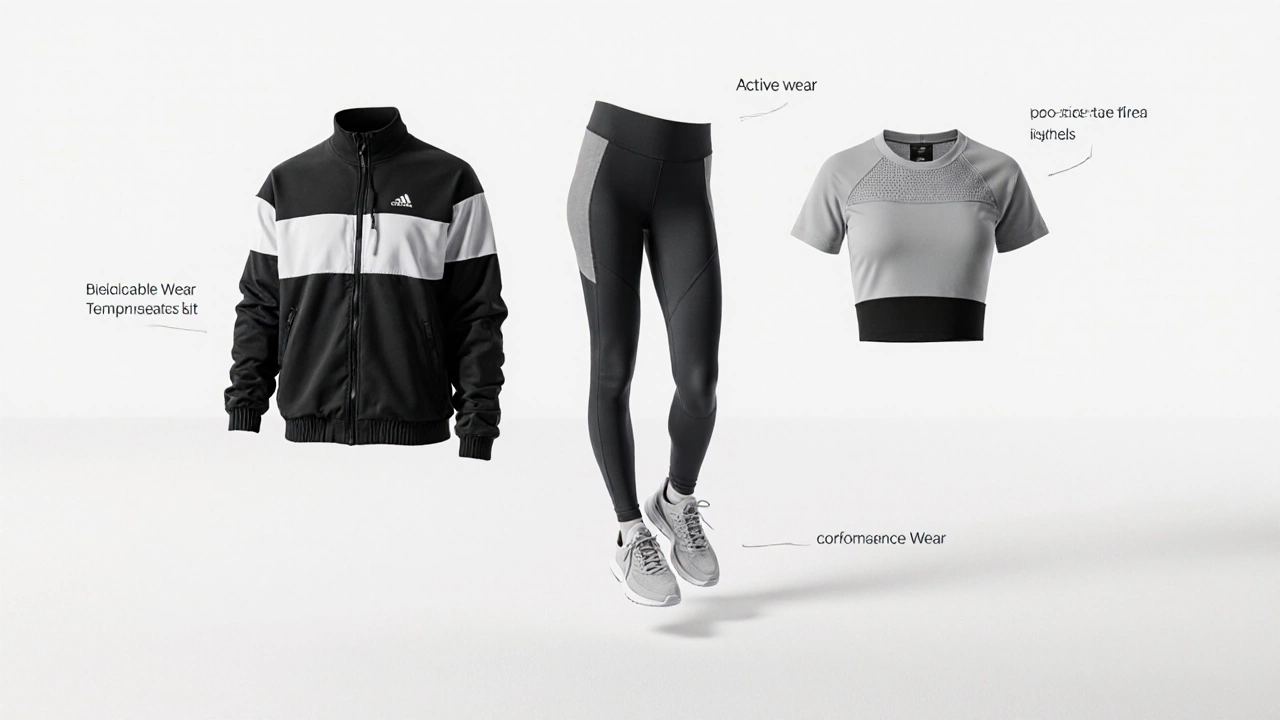
What’s the Right Term to Use?
There’s no single ‘correct’ term anymore. But here’s how to pick the right one:
- Use sportswear if you’re talking about gear for a specific sport-soccer cleats, tennis skirts, swim caps.
- Use activewear if you’re wearing it outside the gym-on the bus, at the office, running errands.
- Use performance wear if the fabric has tech features-moisture-wicking, compression, breathability-and you’re doing serious training.
And if someone asks you what you’re wearing? Just say ‘my workout clothes.’ No one’s going to correct you.
What’s Next for Athletic Wear?
The future is blending. New brands are creating ‘hybrid’ pieces-leggings that work for yoga and Zoom calls, jackets that repel rain but still stretch during a sprint. Sustainability is pushing innovation too: recycled polyester, plant-based dyes, biodegradable seams. The next big term might be ‘sustainable activewear’ or ‘smart sportswear’-clothes that track your movement or adjust temperature automatically. But for now, the three terms still hold. Know them, use them right, and you’ll never buy the wrong thing again.
Quick Summary
- Sportswear = gear made for specific sports like running, swimming, or cycling.
- Activewear = stylish, comfortable clothing meant for both exercise and everyday life.
- Performance wear = high-tech fabrics with functions like moisture-wicking, compression, or temperature control.
- ‘Athletic wear’ is a general term that overlaps all three.
- Choose your word based on context: what you’re doing and where you’re wearing it.
Is sportswear the same as activewear?
No. Sportswear is designed for actual sports and physical performance-think running shoes, swimwear, or track jackets. Activewear is made for comfort and style, meant to be worn both during exercise and in daily life, like leggings and hoodies. The key difference is intent: sportswear is for doing, activewear is for being.
What’s the difference between performance wear and activewear?
Performance wear focuses on technical fabric features: moisture-wicking, compression, UV protection, or breathability. It’s often used by athletes in training or competition. Activewear prioritizes comfort and fashion over tech specs. You can wear activewear to the grocery store. Performance wear is usually worn only during workouts or sports because it’s built for function, not casual style.
Can I call all athletic wear ‘sportswear’?
You can, but you’ll be imprecise. Calling your yoga leggings ‘sportswear’ isn’t wrong, but it’s not accurate. Sportswear implies gear tied to a specific sport. Yoga leggings are activewear unless you’re competing in a yoga tournament. Language matters when shopping online-searching ‘sportswear’ won’t show you the same results as ‘activewear.’
Why do brands use so many different terms?
Because each term targets a different customer. ‘Performance wear’ appeals to serious athletes. ‘Activewear’ targets lifestyle shoppers who want to look good while being comfortable. ‘Sportswear’ keeps the heritage feel for traditional sports fans. Using multiple terms lets brands sell the same product to different audiences at different price points.
What should I look for when buying athletic wear?
First, ask yourself: Where will I wear this? If it’s the gym and then the café, go for activewear with stretch and soft fabric. If you’re running 10Ks or lifting heavy, look for performance wear with moisture-wicking and support. Check the fabric content-polyester, nylon, or spandex blends work better than cotton. Avoid anything that feels stiff or doesn’t move with your body. And don’t be fooled by logos-function matters more than branding.