What Is the Best Quality for a T-Shirt? A Practical Guide to Fabric, Fit, and Longevity
T-Shirt GSM Quality Calculator
The ideal t-shirt fabric weight is 180-220 GSM (grams per square meter). Too thin? It's see-through and wears out fast. Too heavy? It feels like a sweatshirt. Enter your t-shirt's GSM to see if it meets quality standards.
Quality Assessment
Not all t-shirts are created equal. You’ve probably bought one that shrank in the wash, faded after three washes, or stretched out so badly it looked like a hand-me-down from your brother. That’s not just bad luck-it’s bad quality. The best quality for a t-shirt isn’t about brand names or price tags. It’s about the fabric, how it’s woven, how heavy it is, and how it’s finished. If you want a t-shirt that lasts years, not months, here’s what actually matters.
Start with the Fabric: 100% Cotton Is Still King
The best t-shirts are made from 100% cotton. Not blends. Not polyester mixes. Real cotton. Why? Because cotton breathes. It absorbs sweat. It feels soft against your skin. And when it’s high-quality, it gets even softer with every wash.
But not all cotton is the same. Look for long-staple cotton-like Pima, Egyptian, or Supima. These fibers are longer, which means fewer ends sticking out. Fewer ends mean less pilling, less fuzz, and a smoother feel. A t-shirt made from Supima cotton won’t turn into a fuzzy ball after six washes like a cheap cotton blend might.
Brands that use long-staple cotton often say so right on the tag. If you see "100% cotton" with no mention of fiber type, it’s likely short-staple cotton, which is cheaper and less durable. You can tell the difference by touch. A high-quality cotton t-shirt feels dense and smooth, not thin and scratchy.
Weight Matters: 180-220 GSM Is the Sweet Spot
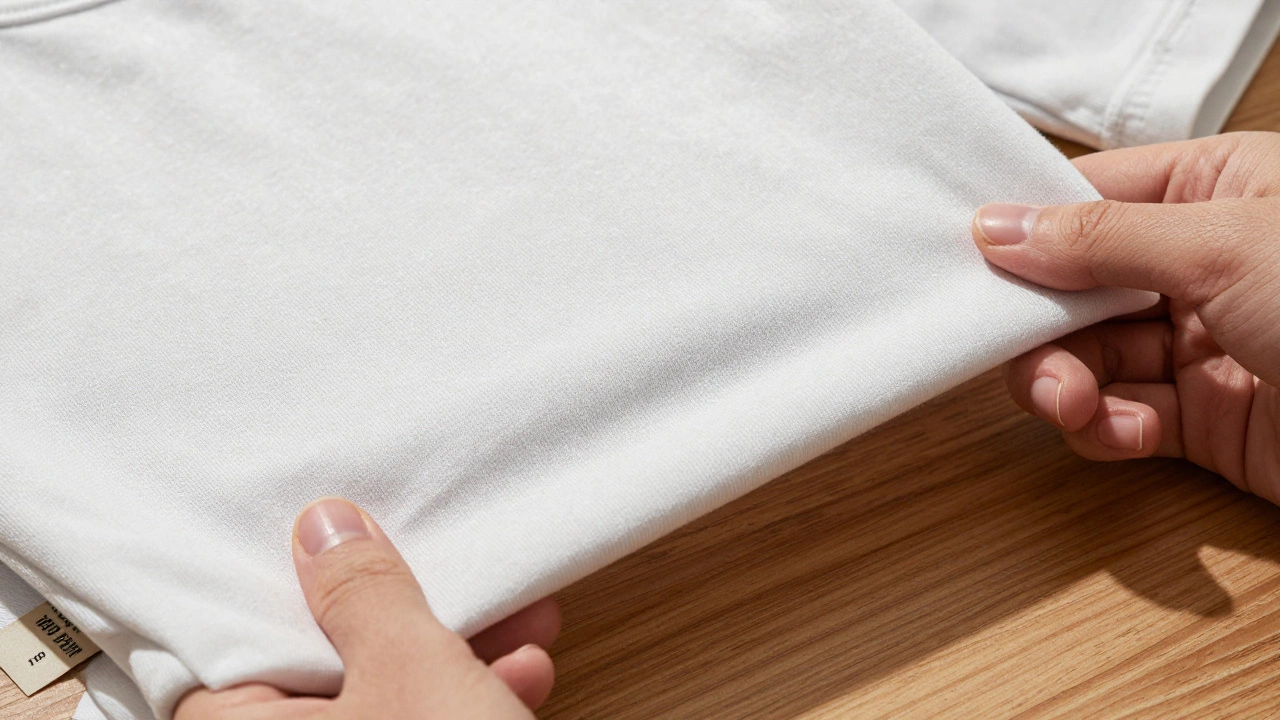
Garment weight is measured in grams per square meter (GSM). This tells you how thick the fabric is. Too light, and it’s see-through. Too heavy, and it feels like a blanket.
The ideal range for everyday wear is 180-220 GSM. That’s thick enough to hold its shape, not cling awkwardly, and not show your chest hair or undershirt. A 150 GSM t-shirt? That’s a disposable shirt-great for festivals, bad for your wardrobe. A 250 GSM t-shirt? That’s more like a sweatshirt. It’s warm, but it’s not a t-shirt anymore.
Try this test: Hold the fabric up to the light. If you can clearly see your fingers through it, it’s too thin. If it’s opaque but still flexible, you’ve found a good weight. Brands like Uniqlo’s U series, Everlane, and Bella+Canvas use this range consistently.
Construction: Stitching, Neckline, and Hems Make the Difference
A t-shirt can be made from perfect cotton and still fall apart if the construction is sloppy. Look for these details:
- Double-stitched hems on the bottom and sleeves. Single stitching will unravel after a few washes.
- Reinforced neck ribbing made from cotton or a cotton-spandex blend. Cheap t-shirts use thin, stiff ribbing that loses elasticity fast.
- Flatlock seams on the shoulders. These lie flat against your skin instead of rubbing or chafing.
- Side seams that are straight and even. If they’re crooked or puckered, the shirt will twist when you wear it.
These aren’t luxury features-they’re basic standards. If a t-shirt doesn’t mention these details, assume it doesn’t have them. You’ll notice the difference after just a few wears. A well-constructed t-shirt stays put. It doesn’t ride up. It doesn’t sag. It doesn’t make you feel like you’re wearing a burlap sack.
Fit: How It Feels on Your Body
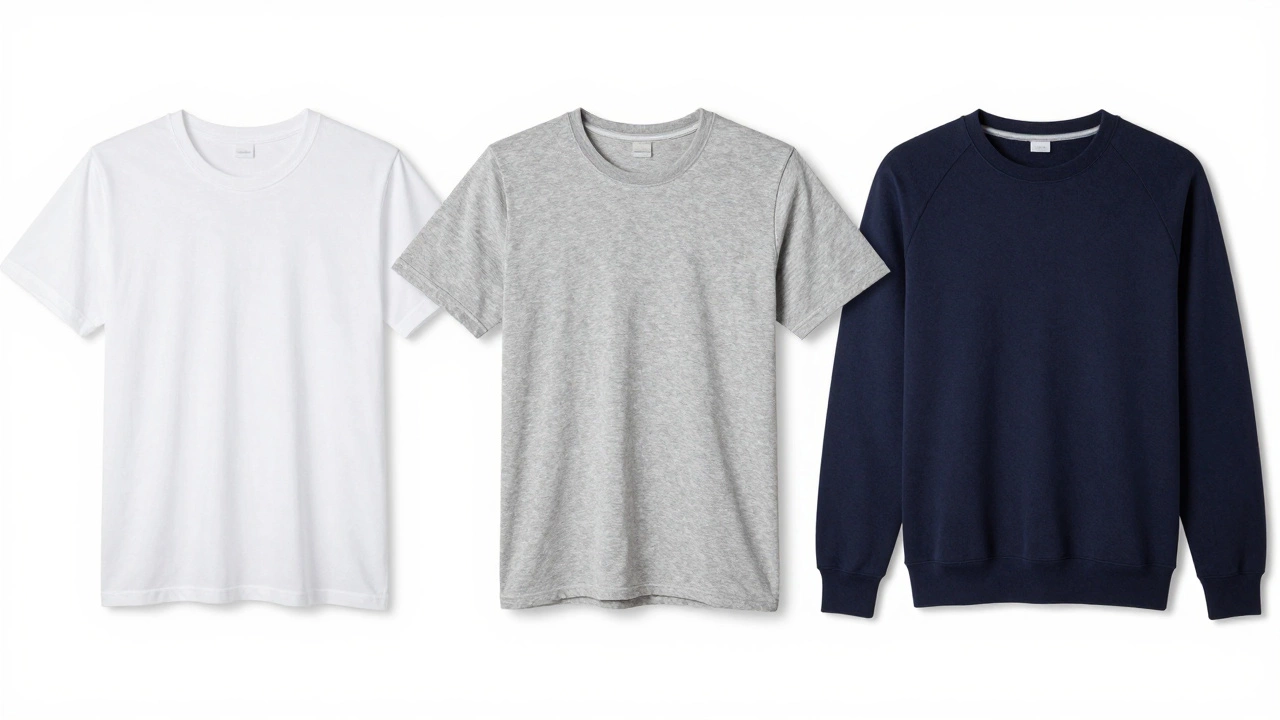
Quality isn’t just about materials. It’s about fit. A high-quality t-shirt should fit like it was made for you-not too tight, not too loose.
Modern fits vary, but here’s what works for most people:
- Shoulders should sit right at the edge of your natural shoulder line. If they hang over your arms, it’s too big.
- Sleeves should end halfway between your armpit and elbow. Too long? It looks sloppy. Too short? It looks like a child’s shirt.
- Body length should cover your waistband when you raise your arms. If you see your stomach when you reach up, it’s too short.
Brands that care about fit offer multiple cuts: classic, slim, relaxed. Don’t just grab your usual size. Check the size chart. T-shirt sizing varies wildly. A medium in one brand might be a large in another.
Color and Dye: Fade Resistance Is Key
A white t-shirt that turns gray after three washes isn’t just ugly-it’s a waste of money. The same goes for dark colors that bleed onto your other clothes.
High-quality t-shirts use reactive dyes, not pigment dyes. Reactive dyes bond chemically with the cotton fibers. They don’t sit on top like paint. That means they don’t crack, flake, or fade quickly.
Look for brands that mention "colorfast" or "low-impact dye." If the tag says "pre-washed," that’s a good sign. It means the fabric has already shrunk, so it won’t shrink in your laundry. Also, avoid t-shirts that smell strongly of chemicals. That’s a sign of poor rinsing after dyeing.
Price vs. Value: Pay Once, Wear for Years
A $5 t-shirt from a gas station isn’t a bargain. It’s a $5 mistake. You’ll buy three of them before you replace one high-quality t-shirt.
Compare this:
- Low-quality t-shirt: $8, lasts 6 months → $16/year
- High-quality t-shirt: $35, lasts 5+ years → $7/year
That’s not just savings. That’s less waste. Less clutter. Less frustration.
Some brands charge more because they use ethical factories, organic cotton, or small-batch production. That’s worth paying for. But you don’t need to buy luxury. You just need to avoid the trash.
Try this: Next time you’re shopping, pick up two t-shirts-one cheap, one mid-range. Feel them. Stretch them. Look at the seams. Wash them both the same way. After three washes, you’ll know exactly what quality means.
What to Avoid
Here are the top three red flags:
- 95% cotton, 5% polyester - The polyester makes it feel stiffer and less breathable. It defeats the purpose of cotton.
- Tagless labels - If the brand uses printed labels instead of sewn-in tags, they’re cutting corners. Those printed labels often itch and peel off.
- Unbranded, no-origin info - If you can’t find where it was made or what cotton was used, it’s likely mass-produced with low standards.
Top 3 Brands That Get It Right
These aren’t endorsements. They’re examples of brands that consistently deliver on quality:
- Bella+Canvas 3001 - Used by countless small businesses and print shops. 100% combed and ring-spun cotton, 4.3 oz (146 GSM), perfect for layering.
- Uniqlo U Series - Japanese precision. 100% cotton, 180-200 GSM, minimalist fit, washed for softness.
- Everlane The Crew - Supima cotton, double-stitched, 220 GSM. Feels like a custom tailor made it for you.
You don’t need to buy all three. But if you buy one of these, you’ll know what a good t-shirt feels like. And you’ll never go back.
Final Tip: Wash It Right
No matter how good the t-shirt is, you can ruin it in the wash.
- Turn it inside out before washing.
- Use cold water.
- Wash with similar colors.
- Air dry whenever possible. Tumble drying shrinks cotton and weakens fibers.
- Don’t use fabric softener. It coats the fibers and reduces breathability.
That’s it. No magic. No secret formulas. Just smart choices.
What GSM is best for a t-shirt?
The best GSM range for a daily wear t-shirt is 180-220. This weight is thick enough to be durable and opaque, but light enough to be comfortable. Anything below 160 GSM is too thin for regular use. Above 240 GSM starts feeling more like a sweatshirt than a t-shirt.
Is 100% cotton always the best choice?
Yes, for everyday wear. 100% cotton breathes better, feels softer, and lasts longer than blends. Blends with polyester or rayon may wrinkle less or dry faster, but they trap heat and sweat, and they tend to pill or stretch out faster. Only consider blends if you need moisture-wicking for intense workouts-then look for performance fabrics designed for sport, not casual wear.
Why do some t-shirts shrink after washing?
T-shirts shrink because cotton fibers relax when exposed to heat and water. Pre-washed t-shirts have already gone through this process, so they won’t shrink much in your laundry. Unwashed cotton will shrink 3-5% the first time you wash it. Always check if the tag says "pre-washed" or "sanforized"-that means it’s been treated to minimize shrinkage.
What’s the difference between ring-spun and combed cotton?
Combed cotton removes short fibers and impurities, leaving only the longest, strongest strands. Ring-spun cotton is then spun into a finer, smoother yarn. Together, they create a softer, more durable fabric. Most high-quality t-shirts use both. If a shirt says "combed and ring-spun cotton," that’s a sign of premium quality.
Are expensive t-shirts worth it?
If you wear t-shirts often, yes. A $35 t-shirt that lasts five years costs less per wear than a $10 t-shirt that falls apart in six months. Quality t-shirts also look better-they hold their shape, don’t fade, and don’t pill. You’ll feel more confident wearing them, and you’ll waste less money and clothing over time.