What Are Chinese Slippers Called? The Real Names and Types You Need to Know
Chinese Slipper Authenticity Checker
Check if your slippers match the authentic Chinese slipper features described in the article. Select all criteria that apply to your pair to see how authentic they are.
Walk into any market in Beijing, Shanghai, or even a small town in Guangdong, and you’ll see them-flat, soft-soled shoes with a slightly upturned toe, often in bright red or embroidered with dragons and flowers. These aren’t just casual footwear. They’re part of daily life for millions of Chinese people, worn indoors, in temples, and even in some workplaces. But what are they actually called? The answer isn’t one word-it’s a few, depending on region, material, and history.
They’re Not All Called ‘Slippers’
The English word ‘slippers’ doesn’t capture the full picture. In Chinese, these shoes have specific names tied to their design and use. The most common term you’ll hear is 拖鞋 (tuōxié), which literally means ‘drag shoe.’ It’s used for any slip-on shoe, whether it’s plastic flip-flops at the beach or silk slippers in a palace. But that’s just the broad category. The real cultural gems are the traditional types.
One of the most iconic is the 布鞋 (bùxié)-literally ‘cloth shoe.’ Made from layers of cotton or linen stitched together with a thick sole, these were worn by ordinary people for centuries. They’re lightweight, breathable, and quiet on wooden floors. Older generations still wear them at home, especially in northern China where winters are cold and heating is uneven. You’ll find them in rural markets, often hand-stitched and dyed with natural pigments.
The Royal Slipper: Qixie
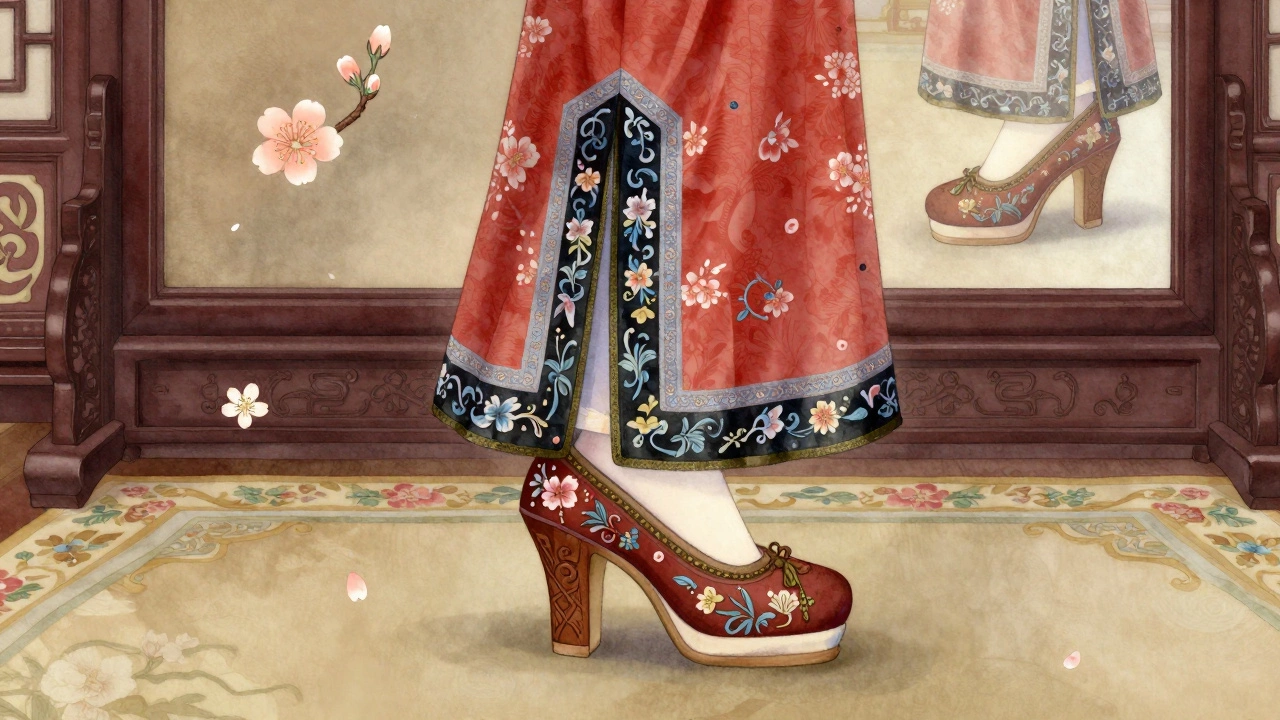
Then there’s the 旗鞋 (qíxié), or ‘Manchu shoe,’ worn by women during the Qing Dynasty (1644-1912). Unlike the flat bùxié, these had a high wooden heel shaped like a horse’s hoof-sometimes up to 10 centimeters tall. They weren’t meant for walking far. Instead, they were fashion statements, worn with long robes to create an elegant, swaying gait. The heel was often carved with floral patterns and covered in silk or brocade. Today, you’ll only see qíxié in historical dramas or museum exhibits, but they’re still the most recognizable Chinese slipper in the West.
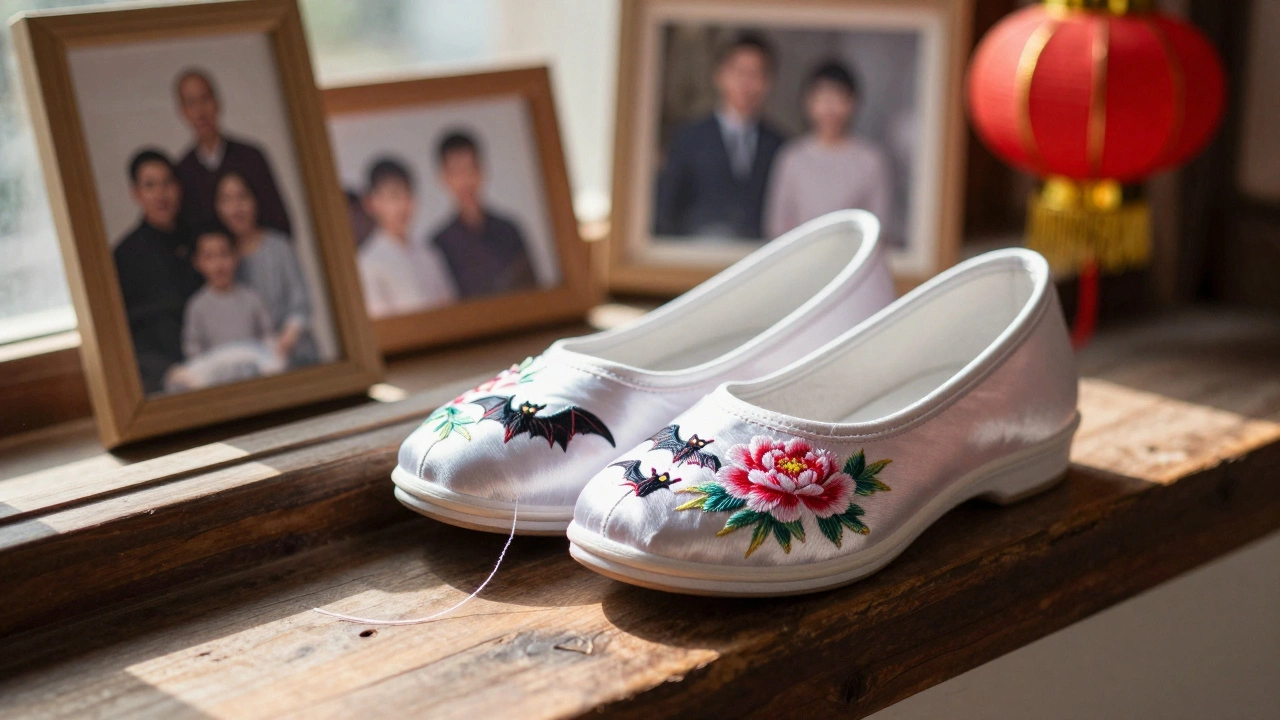
Don’t confuse qíxié with the 绣花鞋 (xiùhuāxié)-‘embroidered shoe.’ These are flat, soft-soled slippers made of silk or satin, decorated with intricate needlework. Common motifs include peonies (for wealth), bats (for good fortune), and lotus flowers (for purity). They were traditionally given as wedding gifts, especially in southern China. Some families still pass them down as heirlooms. Modern versions are sold as decorative items or worn during Lunar New Year celebrations.
Modern Variants and Regional Differences
In southern China, especially around Guangzhou and Hong Kong, you’ll find 木屐 (mùjī)-wooden clogs. These aren’t the noisy beach sandals you might picture. Traditional mùjī are low, flat, and made from paulownia wood, which is light and resistant to moisture. They’re perfect for humid climates and were once common in rice paddies and wet markets. Today, they’re mostly worn by older people or used in tea houses and traditional shops to keep floors clean.
In northern regions like Shanxi and Inner Mongolia, people often wear 棉鞋 (miánxié)-‘cotton shoes.’ These are padded with wool or cotton batting and lined with fur, sometimes even rabbit or sheepskin. They’re designed for temperatures that drop below freezing. The soles are thick and stitched with strong hemp thread. You won’t find these in city malls, but if you visit a village in Hebei during winter, you’ll see them everywhere.
Why Do Chinese People Wear Them Indoors?
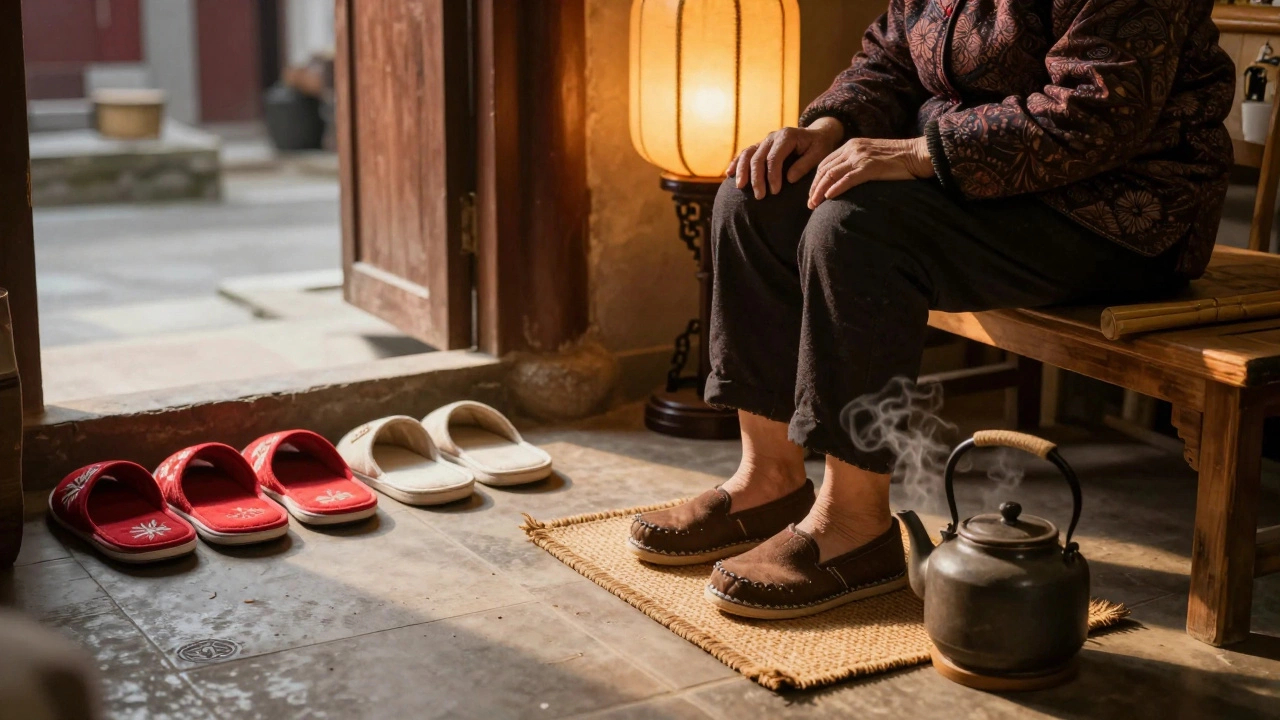
It’s not just tradition-it’s practical. In most Chinese homes, floors are made of tile, wood, or stone. In winter, they get cold. In summer, they get damp. Slippers keep feet warm and dry. More importantly, removing outdoor shoes before entering the home is a deep-rooted cultural norm. It’s about cleanliness, respect, and hygiene. Even in modern apartments in Shanghai, you’ll find a row of slippers by the door-some for guests, some for family, some for the bathroom.
It’s also about comfort. Chinese homes often have low furniture-floor cushions, low tables, and tatami-style mats. Flat slippers make it easy to sit cross-legged or kneel without discomfort. You’ll rarely see someone in socks indoors. Socks alone don’t provide grip or protection on smooth floors. Slippers do.
Where to Find Authentic Chinese Slippers Today
If you want to buy real Chinese slippers, don’t settle for the plastic ones sold in tourist shops. Look for markets that specialize in traditional crafts. In Beijing, the Panjiayuan Antique Market has stalls selling hand-embroidered xiùhuāxié. In Hangzhou, silk workshops offer custom-made bùxié with natural dye patterns. Online, platforms like Taobao and 1688.com have thousands of sellers offering authentic versions, but read reviews carefully-many listings use the word ‘Chinese’ just to sound exotic.
Look for these signs of authenticity:
- Hand-stitched soles (not glued)
- Use of natural materials: cotton, silk, wood, wool
- Subtle, not overly bright colors
- Embroidery that’s detailed, not printed
- Price over $15-cheap ones are usually machine-made imports
What They’re Not
Don’t call them ‘papasan slippers’-that’s a Western misnomer. Papasan chairs are Indonesian, and the term has nothing to do with Chinese footwear. Also, avoid calling them ‘Chinese clogs’ unless you mean wooden ones like mùjī. Most traditional Chinese slippers aren’t clogs at all-they’re flat, flexible, and soft.
And no, they’re not the same as Japanese geta or Korean beoseon. While they look similar at a glance, each has distinct construction, materials, and cultural meaning. Chinese slippers are about quiet comfort and family tradition. Japanese geta are about height and formality. Korean beoseon are woven and worn with hanbok during ceremonies.
Are They Still Worn Daily?
Yes-more than you think. In cities, younger people might wear trendy foam slippers with cartoon characters, but they’re still slippers. In towns and villages, the old styles persist. Grandparents wear bùxié to the market. Teachers wear them in classrooms. Even in offices, some people keep a pair under their desk to change into after removing their work shoes.
During Lunar New Year, it’s common for families to buy new slippers as a symbol of fresh beginnings. Red is the most popular color-it represents luck. Some even buy them as gifts for elders, knowing they’ll be worn daily for months.
What to Look for When Buying
If you’re shopping for authentic Chinese slippers, here’s what matters:
- Material: Cotton or silk for warmth and breathability. Avoid synthetic blends-they trap sweat.
- Sole: Thick, stitched soles last longer. Glued soles peel after a few months.
- Fit: They should be snug but not tight. Feet swell in warm rooms, so leave a little room.
- Design: Embroidery is a sign of quality. Simple patterns mean it’s handmade; mass-produced ones have printed designs.
- Smell: Real silk and cotton have a faint, natural scent. Chemical smells mean cheap dyes or plastic.
Wear them barefoot. That’s how they’re meant to be worn. No socks. The fabric molds to your foot over time, becoming more comfortable with each use.
Why This Matters Beyond Fashion
Chinese slippers are more than footwear. They’re a quiet expression of cultural identity. In a world of fast fashion, they represent slow, handmade living. They’re passed down, repaired, reused. They don’t need logos. They don’t need to be trendy. They just need to fit.
When you wear a pair of real bùxié or xiùhuāxié, you’re not just keeping your feet warm. You’re connecting to centuries of domestic life, family rituals, and quiet dignity. That’s why, even in 2025, millions still choose them over expensive imported brands.
What are Chinese slippers called in Chinese?
The most common general term is 拖鞋 (tuōxié), meaning ‘drag shoe.’ But traditional types have specific names: 布鞋 (bùxié) for cloth slippers, 绣花鞋 (xiùhuāxié) for embroidered slippers, 木屐 (mùjī) for wooden clogs, and 棉鞋 (miánxié) for padded winter slippers.
Are Chinese slippers the same as Japanese geta?
No. Chinese slippers are mostly flat, soft-soled, and worn indoors. Japanese geta are wooden clogs with elevated soles, worn outdoors in wet weather. They’re designed for different climates and cultural practices.
Can you wear Chinese slippers outside?
Traditional ones like bùxié or xiùhuāxié aren’t meant for outdoor use-they’re too soft and delicate. But modern versions with rubber soles are designed for short trips outside, like walking to the mailbox or stepping into a courtyard.
Why are Chinese slippers often red?
Red symbolizes luck, happiness, and prosperity in Chinese culture. It’s especially popular during Lunar New Year and weddings. People buy new red slippers to start the year with good fortune.
Do Chinese people still wear slippers at home today?
Yes, absolutely. Even in modern cities, removing outdoor shoes and wearing slippers indoors is the norm. It’s a hygiene practice, a comfort habit, and a cultural tradition that hasn’t faded.
Where can I buy authentic Chinese slippers online?
Look on Taobao or 1688.com and search for 布鞋 or 绣花鞋. Filter by seller ratings and check for photos of hand-stitched soles and natural materials. Avoid listings with generic stock images or prices under $10.