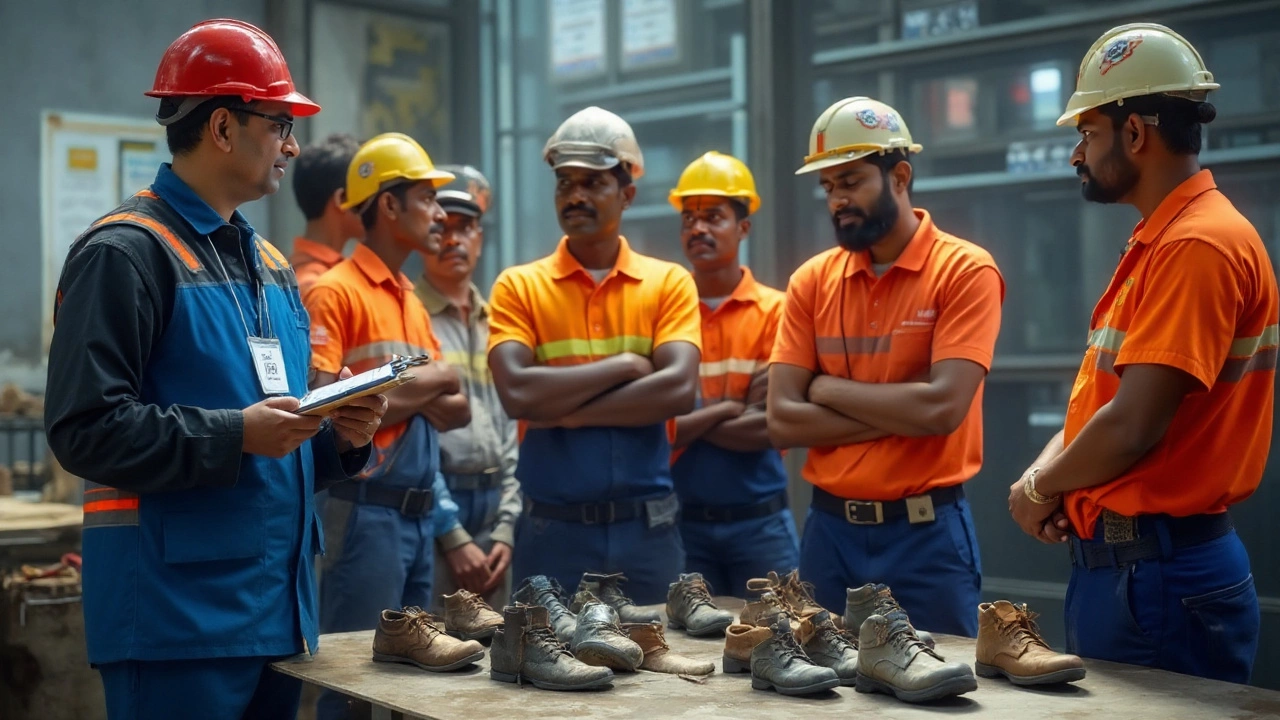
Workplace Safety Footwear: What It Is, Why It Matters, and What to Look For
When you step into a construction site, warehouse, kitchen, or factory, your feet aren’t just exposed to dirt—they’re at risk of heavy objects, sharp tools, hot surfaces, and slips. That’s where workplace safety footwear, specialized shoes or boots designed to protect feet from job-related hazards. Also known as safety shoes or protective footwear, it’s not optional—it’s required by law in many industries. These aren’t just tough-looking boots. They’re engineered with steel toes, puncture-resistant soles, slip-resistant treads, and sometimes even electrical hazard protection. If your job involves lifting, walking on wet floors, or handling machinery, this gear isn’t a luxury—it’s your first line of defense.
Not all safety footwear is the same. A welder needs heat-resistant soles, while a nurse needs slip-resistant soles for hospital floors. A warehouse worker might need a steel toe to handle pallets, but a chef needs a non-slip sole to avoid falls on greasy tiles. The work boots, heavy-duty footwear built for durability and protection in industrial settings you choose should match your exact risks. Look for labels like ASTM F2413 or EN ISO 20345—they tell you what standards the shoe meets. And don’t ignore fit. Even the best safety shoe won’t protect you if it’s too tight or too loose.
Some people think safety footwear is bulky and uncomfortable. That used to be true. But today’s models are lighter, breathable, and designed with cushioning that actually feels good after a 12-hour shift. Brands now make safety footwear that looks like regular shoes—so you don’t have to sacrifice style for safety. Whether you’re on your feet all day or just working around machinery, the right pair reduces fatigue, prevents injuries, and keeps you on the job.
What you find below are real guides on the types of protective footwear people actually use—from the materials that last longest to the features that make a difference on the ground. You’ll see what separates a basic work boot from true safety footwear, how to tell if your current shoes are still protecting you, and why some brands are trusted more than others. These aren’t ads. They’re clear, no-fluff breakdowns from people who’ve worn these shoes in the real world. If you need footwear that doesn’t just look tough but actually works, you’ll find what you need here.