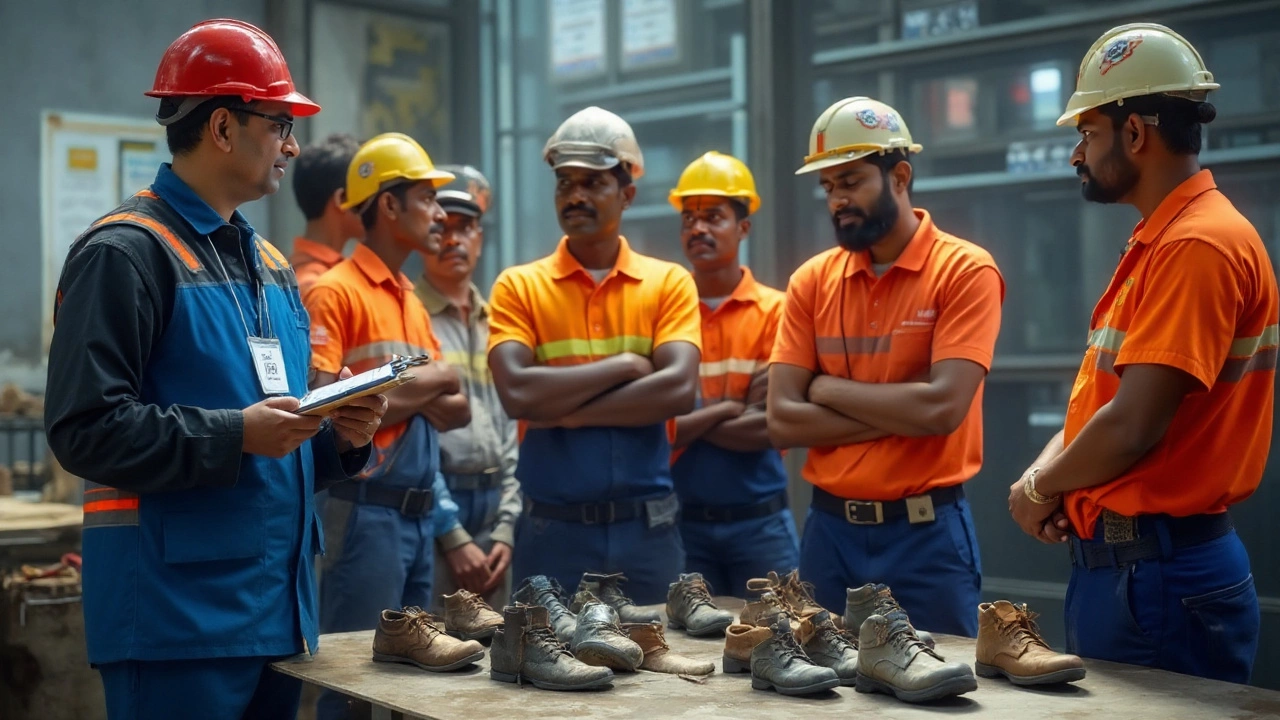
Safety Footwear Policy: What It Means and Why It Matters
When we talk about a safety footwear policy, a formal set of rules requiring protective footwear in hazardous work environments. Also known as PPE footwear guidelines, it's not about fashion—it's about keeping feet alive. This isn’t optional in construction, warehouses, factories, or even kitchens with wet floors. If your job involves heavy objects, sharp tools, electrical risks, or slippery surfaces, your shoes aren’t just footwear—they’re your first line of defense.
A safety footwear policy doesn’t just say "wear boots." It defines what counts as safe: steel toes, slip-resistant soles, puncture-resistant midsoles, electrical hazard ratings, and sometimes even metatarsal guards. These aren’t marketing buzzwords—they’re standards set by OSHA, ISO, and other safety bodies. A boot labeled ASTM F2413-18 means it passed real-world impact and compression tests. A shoe without that label might look tough, but it won’t protect you if a 50-pound tool drops on your foot.
Companies don’t enforce these policies because they’re strict—they do it because injuries cost money, time, and lives. A single crushed toe can mean weeks off work. A slip on a greasy floor can lead to a broken hip. And once someone gets hurt, the ripple effect hits morale, productivity, and insurance rates. That’s why the best safety footwear policies don’t just list rules—they train people, offer free replacements, and listen to feedback. If your boots hurt, you’ll find a way to ditch them. Good policies fix that.
What you’ll find in the posts below isn’t a list of brands or prices. It’s real talk about the gear that actually works: what makes a boot truly protective, how to tell if your soles are worn out, why some "safety shoes" are just marketing, and how to pick the right pair without breaking your back—or your budget. These aren’t theoretical guides. They’re written by people who’ve stood on concrete all day, climbed ladders with steel toes, and learned the hard way what keeps their feet safe.