How to Identify Leather Shoes: Real vs Fake, Types, and Signs You Can Trust
When you buy leather shoes, a durable, breathable footwear option made from animal hide that ages well and molds to your foot. Also known as genuine leather footwear, it’s one of the few things in fashion that gets better with time. But too many people pay premium prices for shoes that look like leather but aren’t. The truth? Fake leather is everywhere—cheap synthetics dressed up to fool you. You don’t need a degree in materials science to spot the difference. Just a few simple checks will tell you if you’re holding real leather or plastic with a fancy label.
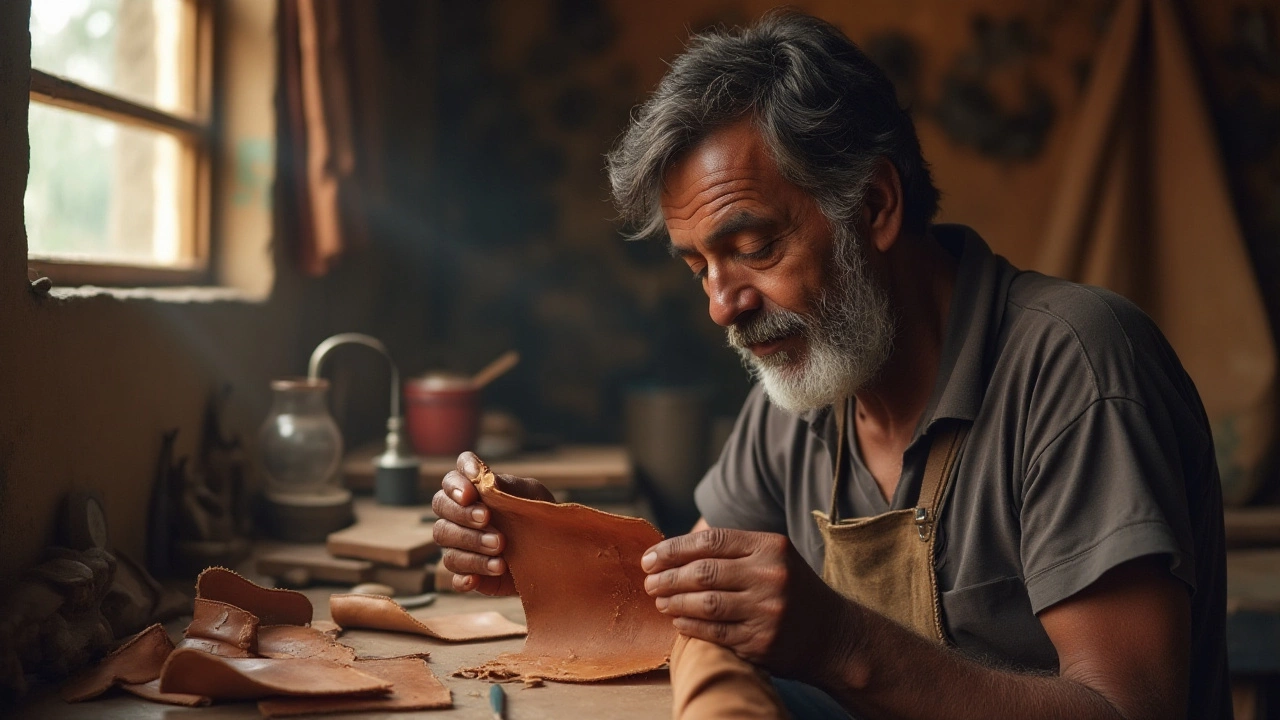
Start with the smell, the natural, slightly earthy scent that only real animal hide produces. Real leather has a distinct odor—not chemical, not plastic-y. If it smells like new sneakers or air freshener, it’s likely synthetic. Next, touch the surface. Real leather feels warm and slightly uneven, with tiny pores and natural marks. Fake leather feels cold, smooth, and too perfect, like a plastic sheet. Press your fingernail into it. Real leather will leave a temporary dent that slowly fades. Fake leather won’t move at all. Look at the edges. Real leather shows layers—fibers that look like tangled threads. Fake leather has a uniform, painted edge that looks like it was stamped out.
Another big clue is water absorption, how leather reacts when it gets wet. Drop a small amount of water on the shoe. Real leather will soak it in slightly and darken the spot. Fake leather will bead it up like a raincoat. Over time, real leather develops a patina—light scratches fade, color softens, and it takes on character. Fake leather cracks, peels, or turns shiny in spots. Check the sole and stitching too. Brands that use real leather often pair it with sturdy soles and tight stitching because they expect it to last. Cheap synthetics? They’re glued together and fall apart fast.
You’ll also see different types of leather used in shoes—full-grain, top-grain, corrected-grain, and bonded. Full-grain leather, the highest quality, keeps the natural surface intact and is the most durable, is what you want for long-term wear. Top-grain is sanded down and coated, still good but less breathable. Bonded leather? That’s scraps glued together with a thin leather surface. Avoid it unless you’re okay with shoes that won’t last a year.
And don’t trust the word "genuine" on the tag. That’s marketing speak. In the U.S., "genuine leather" can mean the lowest grade of real leather. Look for "full-grain" or "top-grain" instead. If the brand doesn’t say, ask. Reputable sellers will tell you. You can also check the product code online—some brands list material specs there.
Real leather shoes cost more upfront, but they last years. They breathe, they mold to your feet, and they don’t stink after a long day. Fake ones might look the same on day one, but by month three, they’re warped, cracked, and smelling like a gym bag. The difference isn’t subtle—it’s obvious once you know what to look for.
Below, you’ll find real-world guides that break down exactly how to test leather, compare types, spot fakes in stores, and even what to do if you’ve already bought a fake pair. No fluff. Just what works.