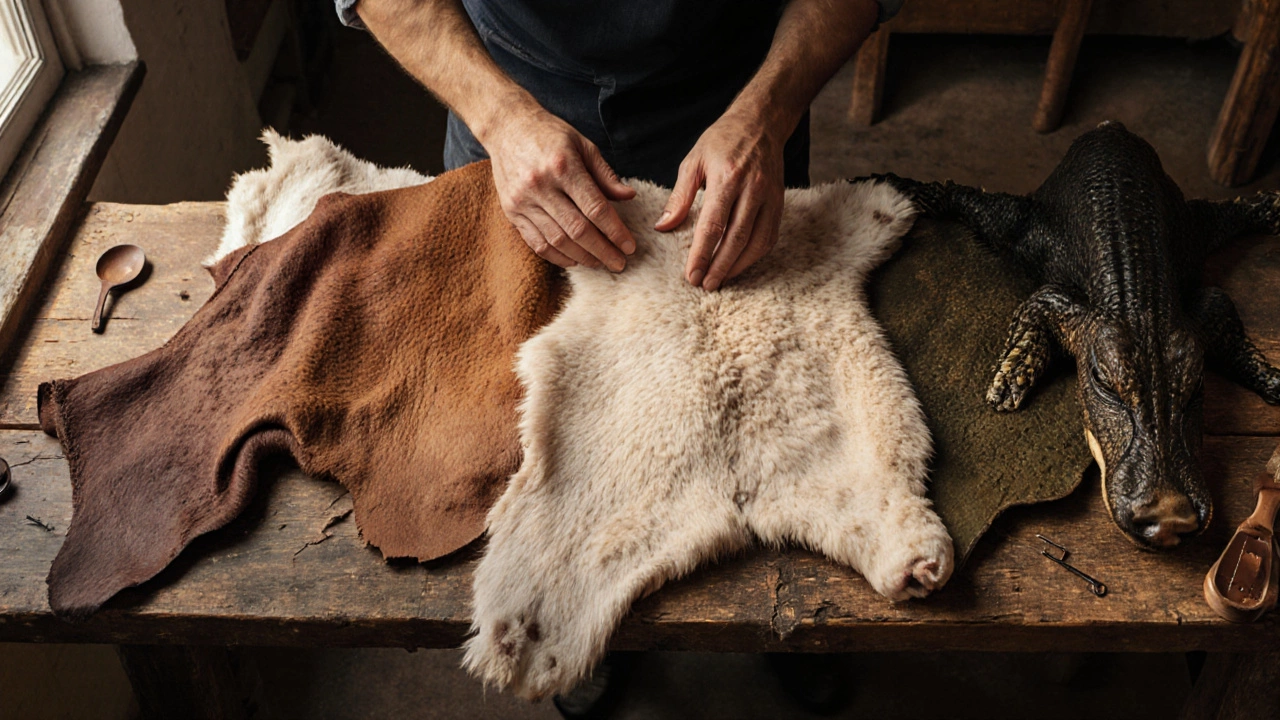
Best Animal Leather for Shoes: Cow, Goat, Pig, Sheep & Exotic Options Compared
Discover which animal leather ranks best for shoes by comparing durability, breathability, cost, and style-from cow and goat to exotic ostrich and alligator.
When you hear goat leather, a type of animal hide tanned for its strength and flexibility, often used in footwear and accessories. Also known as kidskin, it's the go-to material for people who want something that feels good and lasts longer than synthetic options. Unlike cowhide, which is thick and stiff, goat leather is naturally thin, supple, and breathable. It’s the reason your favorite pair of boots molds to your foot over time instead of rubbing blisters. And unlike sheepskin, which can tear easily, goat leather holds up to daily wear without losing its shape.
What makes goat leather special isn’t just how it feels—it’s how it’s made. The fibers in goat skin are tightly packed in a unique crisscross pattern, giving it natural resistance to tearing and water. That’s why you’ll find it in high-end gloves, wallets, and motorcycle jackets. It’s also lighter than cow leather, which is why it’s the top choice for shoes that need to be comfortable all day. If you’ve ever worn a pair of boots that felt broken-in from day one, chances are they were made with goat leather.
Not all leather is created equal. Real goat leather has a slightly pebbled texture—think small, uneven bumps across the surface. Fake versions look too smooth or have a plastic-like shine. You can test it by bending the material: genuine goat leather will crease naturally and feel warm to the touch. Synthetic leather won’t. And if you smell it? Real goat leather has a rich, earthy scent. Chemical smells? That’s a red flag.
It’s also one of the most sustainable choices among leathers. Goats require less land and water than cows, and their hides are often a byproduct of the meat industry. That means you’re not adding extra demand—just making better use of what’s already there. Plus, goat leather ages beautifully. It darkens slightly over time, developing a patina that tells a story. A bag or jacket made from real goat leather doesn’t just look good—it looks lived-in in the best way.
And if you’re shopping for leather items, knowing what you’re getting matters. A $50 wallet labeled "genuine leather" could be cowhide. But if it says "goat leather" and feels soft, lightweight, and slightly textured, you’re likely holding something built to last years. Look for brands that specify the leather type—not just "premium" or "top-grain." Those terms mean nothing without knowing the source.
Below, you’ll find real guides on how to care for goat leather, how to spot fake versions, and which products actually use it well. Whether you’re buying boots, a jacket, or just want to understand why some leather lasts longer than others, these posts give you the facts—not the fluff.
Discover which animal leather ranks best for shoes by comparing durability, breathability, cost, and style-from cow and goat to exotic ostrich and alligator.