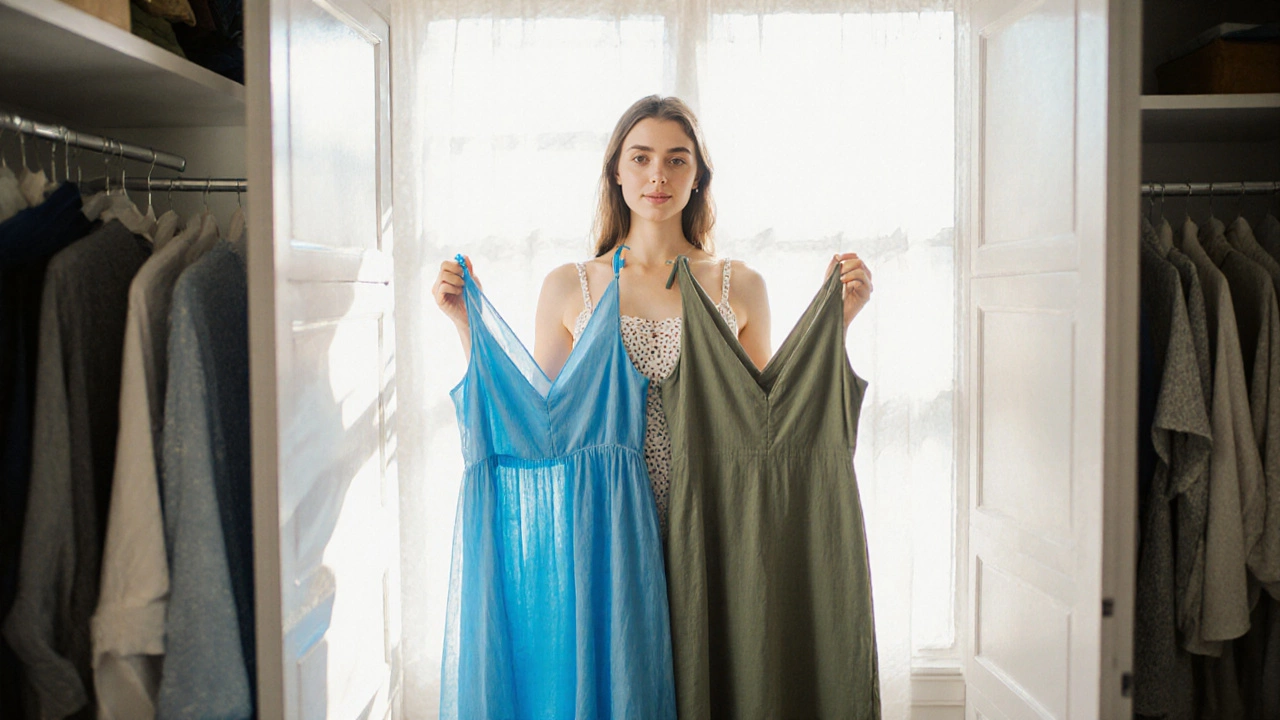
What Color Ages You? Uncover the Best Summer Dress Shades to Look Younger
Discover which summer dress colors make you look older or younger, learn the science behind color psychology, and get practical tips for choosing youthful hues.
When you see a faded denim jacket or a sun-bleached cotton shirt, you're not just seeing wear—you're seeing color aging, the natural process where dyes break down over time due to light, washing, and friction. Also known as fabric fading, it’s not always a flaw. In fact, many people seek it out because it adds character, tells a story, and signals real, lived-in quality. This isn’t just about old clothes looking worn—it’s about how different materials react to time. A 100% cotton hoodie, for example, fades gently and evenly, while synthetic blends often crack or peel unnaturally. The way a dress loses its color after a summer of sun exposure tells you more about its fabric than any label ever could.
Color aging connects directly to how you care for your clothes and what you value in them. If you’ve ever wondered why some jeans look better after years of wear while others just look dirty, the answer lies in the dye and weave. Natural dyes fade softer; synthetic ones can turn patchy. Wash frequency, water temperature, and sunlight exposure all play a role. That’s why a vintage jacket, a garment typically over 20 years old with distinct style cues and proven durability. Also known as classic outerwear, it often shows color aging as a sign of authenticity is prized—not because it’s old, but because it survived. The same logic applies to your everyday pieces. A well-made sundress made from breathable, tightly woven cotton won’t just fade—it’ll soften, breathe better, and hold its shape longer than a cheap polyester version that turns stiff and bleached in just a few washes.
Color aging also ties into how we define style today. Athleisure and activewear brands now design clothes to fade intentionally, mimicking the look of well-loved gear. Fashion sportswear doesn’t just need to perform—it needs to age well. That’s why brands focus on pigment quality, not just brightness. If you’re buying a hoodie or a pair of long boots, ask yourself: Will this look better in two years, or just worse? The answer starts with the fabric. Cotton, linen, and quality wool fade gracefully. Polyester, acrylic, and cheap blends turn brittle or streaky. Even leather, as you’ll see in guides about animal leather for shoes, develops a patina—not just a stain. That’s the difference between aging and decay.
What you’ll find below isn’t just a list of articles—it’s a collection of real, practical insights into how your clothes change over time. From how often to wash a jacket to why a polo shirt keeps its collar shape longer than a T-shirt, each post helps you read the signs your wardrobe is giving you. You’ll learn what makes a sundress last through seasons, why some hoodies get softer with age, and how to tell if faded color is a sign of quality or cheap construction. No fluff. Just clear, honest answers about what really happens to your clothes after you buy them—and how to make sure they age with you, not against you.
Discover which summer dress colors make you look older or younger, learn the science behind color psychology, and get practical tips for choosing youthful hues.