How to Tell If a Hoodie Is High Quality: 7 Key Signs You Can't Ignore
Hoodie Quality Estimator
How to Use This Tool
Answer the questions below about your hoodie. We'll calculate a quality score based on the article's key criteria.
Note: For fabric weight, look for the care label showing grams per square meter (gsm).
For reference: 80-100 = Premium, 60-79 = Good, 40-59 = Average, <40 = Poor
Not all hoodies are created equal. You’ve probably bought one that felt great at first-soft, cozy, maybe even stylish-but after a few washes, it started to pill, stretch out, or lose its shape. By the time winter rolled around again, it was barely wearable. That’s not just bad luck. It’s a sign you didn’t know how to spot quality when you saw it.
Check the Fabric Weight and Feel
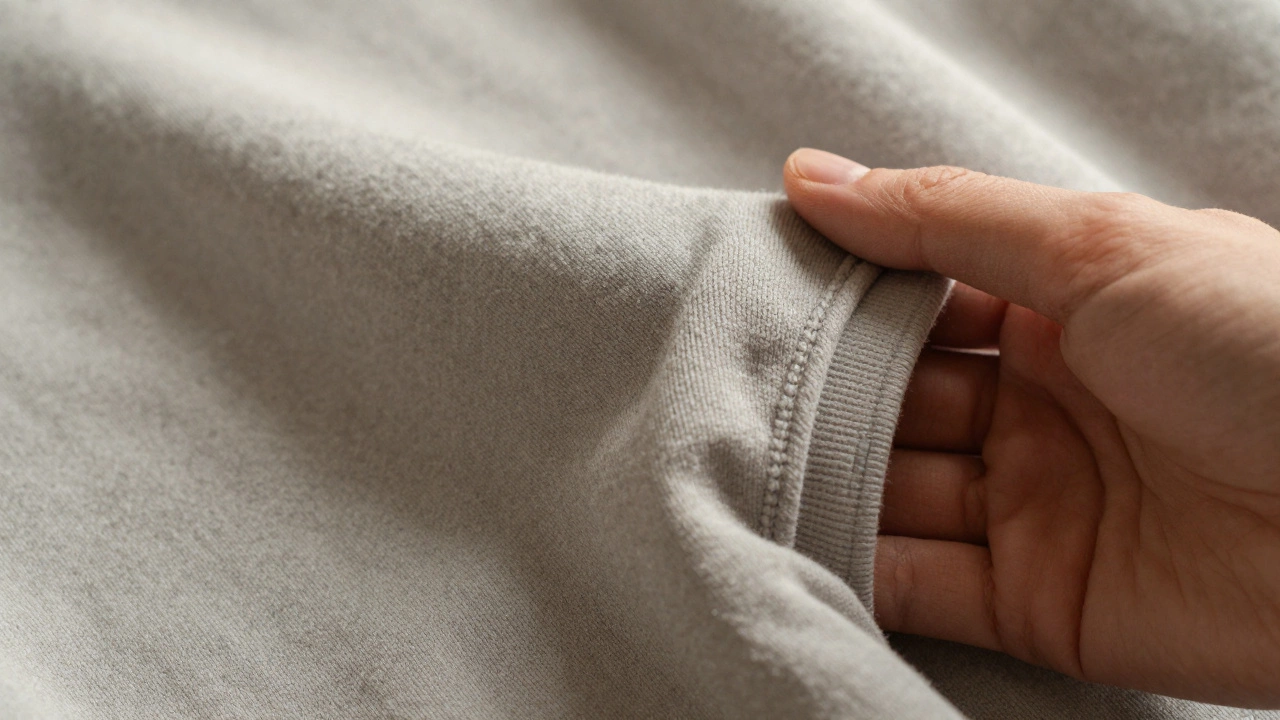
A high-quality hoodie starts with the fabric. Most decent hoodies use a blend of cotton and polyester, but the ratio matters. Look for at least 80% cotton with 20% polyester. Pure cotton can shrink too much, and too much polyester makes it feel plasticky. The best hoodies use a French terry or fleece weave. French terry is smoother on the outside and slightly looped on the inside-this gives it a soft, warm feel without being too heavy. Fleece is thicker and better for colder climates, like Vancouver winters.Hold the fabric between your fingers. If it feels thin and flimsy, it’ll pill after a few washes. If it has real heft-like it’s dense and substantial-it’s likely made with better yarns. A good hoodie should feel like it’s built to last, not just to look good on a hanger.
Look at the Stitching
Stitching is where cheap hoodies fall apart. Check the seams, especially around the shoulders, hood, and cuffs. High-quality hoodies use double or even triple stitching in high-stress areas. You should see neat, tight rows of thread with no loose ends sticking out. If you see skipped stitches or uneven spacing, walk away.Also, pay attention to the hood lining. A well-made hoodie often has a reinforced hood seam that prevents stretching. Some brands even use bar tack stitching-a small X-shaped stitch-at the corners of the hood and pockets. It’s a small detail, but it stops the fabric from tearing under pressure.
Examine the Drawstrings and Cords
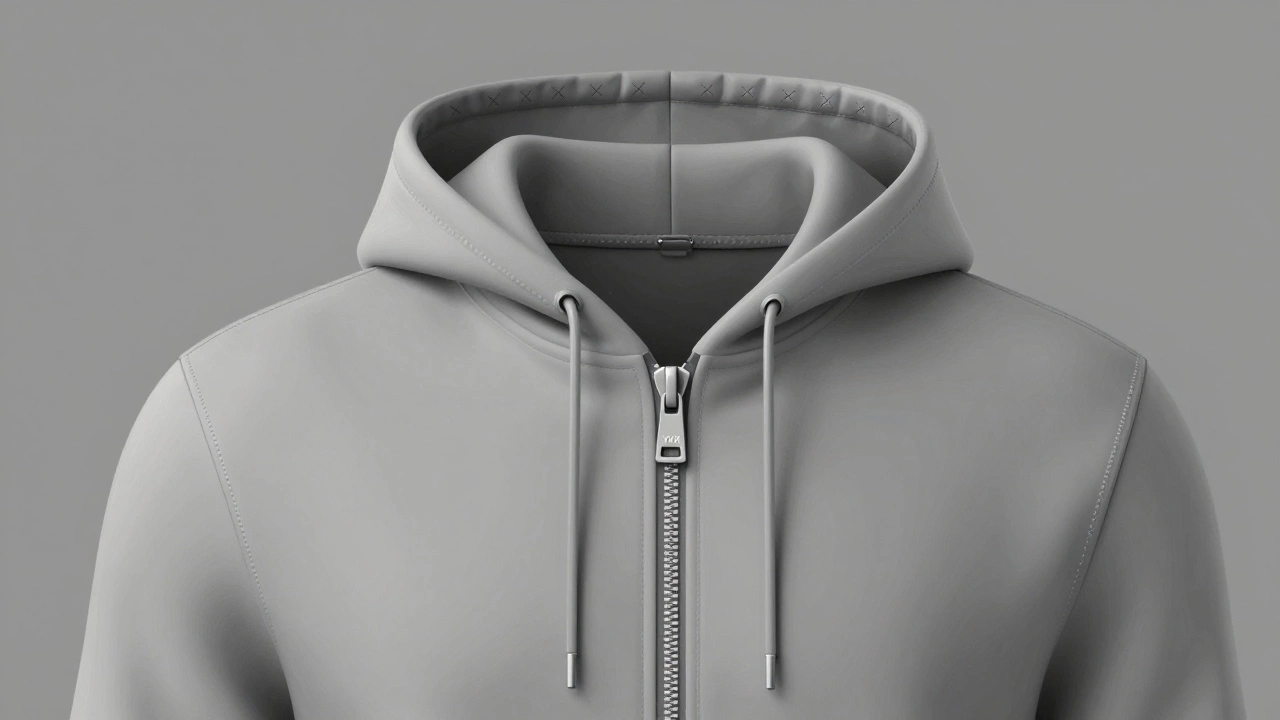
This is a detail most people overlook. A cheap hoodie will have thin, flimsy drawstrings that fray after a few uses. A quality one uses a thicker, braided cord made of polyester or a cotton-poly blend. The ends should be tipped with plastic or metal aglets (those little caps on shoelaces) that don’t come off easily.Try pulling the drawstring through the channels. It should glide smoothly without catching. If it’s stiff or gets stuck, the channels were poorly sewn. Also, check if the drawstring is threaded through a separate casing or stitched directly into the hood. The former is better-it lets you replace the cord if it breaks.
Feel the Interior Lining
The inside of the hoodie tells you a lot. A high-quality hoodie usually has a brushed or fleece-lined interior. This isn’t just for warmth-it’s about comfort and durability. Run your hand over the inside. If it feels rough or like it’s shedding fibers, it’s low-grade material. The best hoodies have a soft, consistent nap that doesn’t come off on your skin or other clothes.Some premium brands even use a dual-layer fleece: one layer for warmth, another for moisture-wicking. You won’t feel the difference right away, but after a few cold mornings, you’ll notice your hoodie doesn’t cling to you when you sweat.
Inspect the Pockets and Zippers
Pockets on a hoodie should be deep enough to hold your phone or keys without sagging. Look for reinforced pocket openings-often with an extra layer of fabric or stitching. If the pocket is just a simple slit, it’ll stretch out fast.For zippered hoodies, check the zipper pull. It should be sturdy and easy to grip. A metal zipper is better than plastic, especially if you live somewhere with cold weather. Plastic zippers crack in freezing temps. Also, make sure the zipper slides smoothly without catching. A high-quality zipper will have a branded slider-brands like YKK are industry standards.
Check the Brand and Manufacturing Details
You don’t need to pay $200 for a hoodie, but you should expect transparency. Look for a care label that lists exact fabric percentages-not just “polyester blend.” Reputable brands also state where the hoodie was made. While not every hoodie made in the USA or Canada is automatically better, factories in those countries usually follow stricter quality controls than low-cost offshore manufacturers.Some brands even include a small tag with the fabric weight-like “320gsm” (grams per square meter). That’s a professional detail. Hoodies under 250gsm are usually lightweight and meant for mild weather. 300gsm and above are winter-ready.
Wash Test Before You Commit
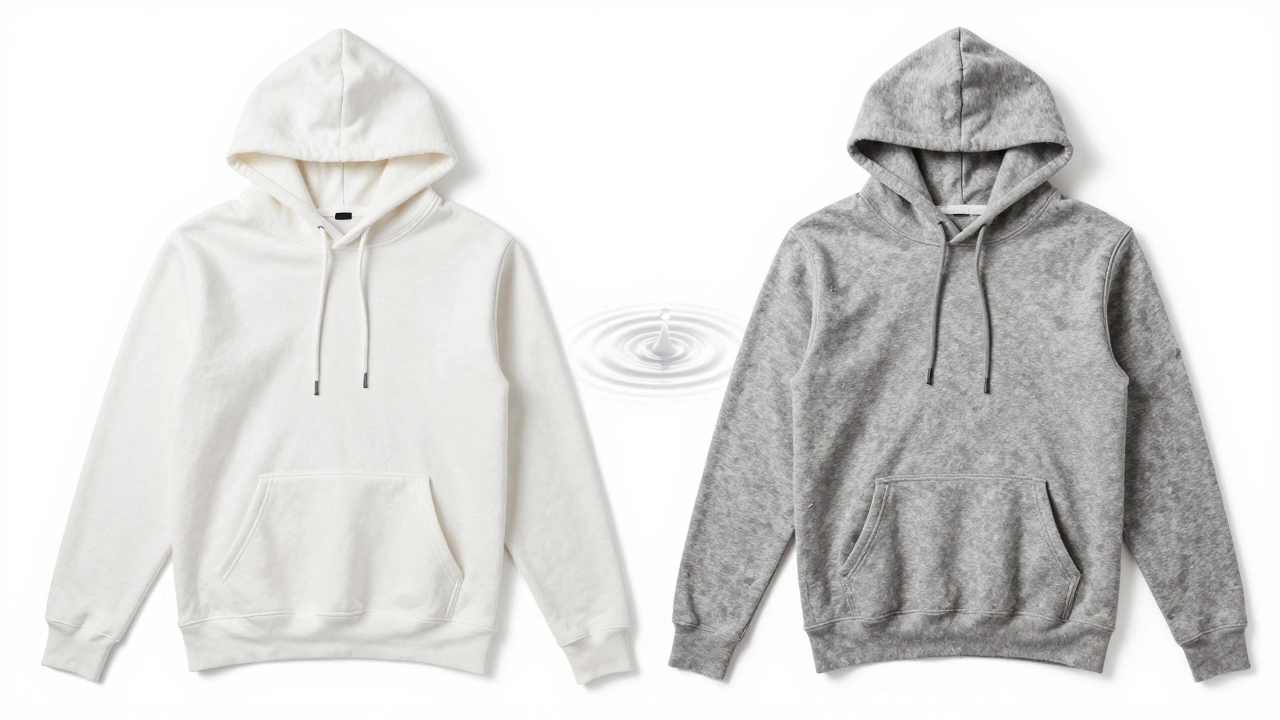
Here’s a trick most people don’t know: wash the hoodie before you judge it. Take it home, throw it in the wash on cold with similar colors, and tumble dry on low. Come back in 24 hours. If it’s shrunk unevenly, the seams are pulling, or the fabric looks fuzzy, it’s not built to last.Good hoodies hold their shape. They might soften up a bit, but they shouldn’t lose their structure. If the hood sags, the cuffs stretch, or the body looks baggy after one wash, you’re better off spending a little more on something that won’t turn into a rag.
High-quality hoodies cost more upfront-but they last years. I’ve had one from a local Vancouver brand that I’ve worn for six winters. It’s faded, sure, but it still fits perfectly. The stitching is intact, the drawstring still works, and the inside hasn’t started shedding. That’s what you’re looking for.
Don’t buy hoodies based on logos or trends. Buy them based on how they’re made. The right one will become your go-to-not just for winter, but for lazy Sundays, early morning runs, and everything in between.
Can a hoodie be too heavy to be comfortable?
Yes, but it depends on your climate and how you plan to wear it. Hoodies over 400gsm are meant for extreme cold and layering under a coat. If you’re wearing it indoors or in milder weather, anything above 320gsm might feel bulky. Most people find 280-320gsm ideal for year-round use. Heavier isn’t always better-comfort and mobility matter too.
Do expensive hoodies always mean better quality?
Not always. Some luxury brands charge more for the logo, not the construction. You can find high-quality hoodies from smaller brands or direct-to-consumer companies for under $80. Look for the same details: fabric weight, stitching, zipper quality, and care labels. A $120 hoodie with thin fabric and plastic zippers isn’t worth it. A $75 hoodie with French terry, YKK zipper, and double stitching is.
What’s the difference between French terry and fleece?
French terry has a smooth outer surface and a lightly looped inner surface. It’s breathable and good for layering. Fleece is thicker, brushed all over, and traps more heat. French terry is better for spring, fall, and mild winters. Fleece is for deep cold. Both can be high quality-just choose based on your climate.
Is cotton better than polyester for hoodies?
Cotton feels better and breathes well, but it shrinks and holds moisture. Polyester resists shrinking and dries faster, but it can feel synthetic. The best hoodies use a blend-usually 80% cotton and 20% polyester. That mix gives you softness, durability, and shape retention. Pure cotton hoodies are rare for good reason-they don’t hold up well in the wash.
Should I avoid hoodies with printed designs?
Not necessarily, but be picky. Screen-printed designs that feel stiff or crack after washing are low quality. Look for designs printed with water-based inks or heat-transfer vinyl that’s flexible. If the print feels like plastic on the fabric, it’ll peel. High-quality prints should move with the fabric and feel like part of it, not stuck on top.