How to Survive a 12-Hour Shift on Your Feet: The Ultimate Guide to Comfort and Recovery
Shift Survival Readiness Calculator
Assess Your Setup
Your Shift Readiness
Adjust the sliders and check your habits to see how prepared you are for a 12-hour shift.
Twelve hours. That is half a day spent upright, often moving constantly, bearing your full body weight on two small areas of contact. For nurses, retail workers, chefs, and warehouse staff, this isn't just a long day; it is a physical endurance test that can leave you exhausted before you even clock out. If you are looking for ways to make those shifts bearable, the answer lies in a combination of gear, strategy, and recovery.
We aren't talking about pushing through pain until you collapse. We are talking about smart adjustments that reduce fatigue, protect your joints, and keep you energized from the first minute to the last. Here is exactly how to survive-and thrive-during a 12-hour shift on your feet.
The Foundation: Choosing the Right Work Shoes
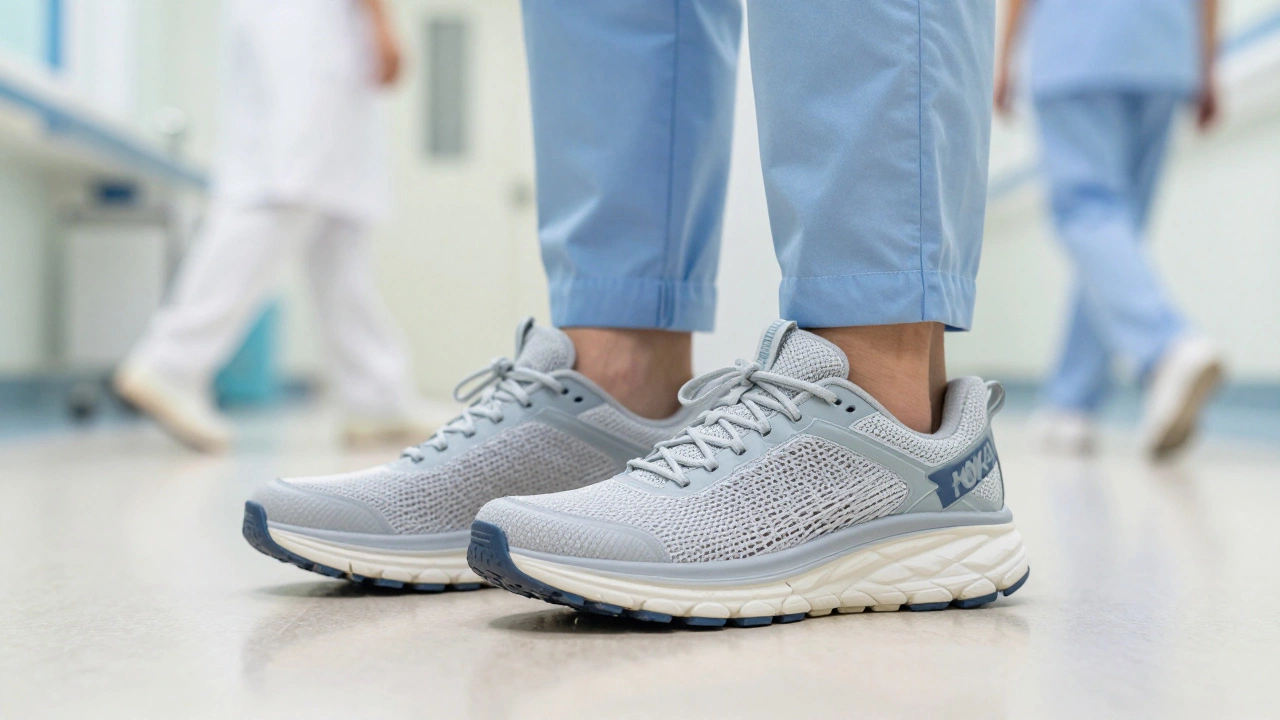
Your shoes are the single most important factor in how your body handles prolonged standing. Most people buy shoes based on looks or brand name, but for a 12-hour shift, function must come first. You need footwear that offers three specific things: cushioning, support, and breathability.
Cushioning absorbs the shock every time your heel strikes the floor. Without it, that impact travels up your legs, causing knee and back pain. Look for midsoles made from high-rebound foams like EVA (Ethylene-Vinyl Acetate) or polyurethane. Brands like Hoka One One are known for their maximalist cushioning, which feels like walking on clouds. Alternatively, Brooks offers excellent stability for those who overpronate.
Support keeps your arches aligned. Flat feet or high arches can cause significant strain if unsupported. Consider custom orthotics or shoe inserts designed for all-day wear. A good rule of thumb: if your feet feel tired after just one hour in new shoes, they lack proper support.
Breathability prevents sweat buildup, which leads to blisters and fungal infections. Leather and mesh materials allow air circulation. Avoid synthetic plastics that trap heat. Remember, hot feet are swollen feet, and swollen feet hurt more.
| Shoe Type | Best For | Key Feature | Average Lifespan |
|---|---|---|---|
| Running Shoes | Mixed movement & standing | High cushioning & flexibility | 6-8 months |
| Clogs | Static standing (e.g., chefs) | Rigid sole & arch support | 1-2 years |
| Work Boots | Heavy lifting & rough terrain | Ankle support & durability | 1-3 years |
The Secret Weapon: Compression Socks
If shoes are the foundation, compression socks are the reinforcement. Many healthcare professionals swear by them, and for good reason. These tight-fitting garments apply gentle pressure to your legs, improving blood flow back to the heart.
When you stand still for long periods, gravity pulls blood down into your lower legs and feet. This pooling causes swelling, heaviness, and varicose veins. Compression socks counteract this by squeezing the calf muscles slightly, helping pump blood upward. Look for socks with 15-20 mmHg of pressure. This level is strong enough to be effective but comfortable enough to wear all day.
Don't underestimate the psychological boost either. Knowing you are protecting your veins can give you peace of mind. Put them on before your shift starts, not halfway through when your feet are already swollen. It’s much harder to pull them on then.

Strategic Movement: Keep Blood Flowing
Even the best shoes won't save you if you stand perfectly still for twelve hours. Static posture is the enemy. You need to keep your muscles active to circulate blood and prevent stiffness.
- Shift your weight: Move from heels to toes, left to right. Small movements engage different muscle groups and reduce pressure points.
- Use a footrest: If your job allows, place a low box or stool under one foot at a time. Alternating feet reduces lower back strain significantly.
- Take micro-breaks: Every 30 minutes, take 30 seconds to stretch your calves. Push against a wall or lift your heels off the ground while holding onto something stable.
- Walk instead of standing: If possible, pace around during slow moments. Walking activates the calf muscle pump, which helps return blood to the heart.
These small actions seem insignificant, but over 12 hours, they add up to massive differences in fatigue levels. Think of your body as a machine that needs lubrication; movement is that oil.
Nutrition and Hydration: Fuel for Endurance
Your feet don't work in isolation. Your entire body supports them. Dehydration and poor nutrition lead to muscle cramps, weakness, and faster onset of fatigue.
Drink water consistently throughout your shift. Don't wait until you're thirsty. Aim for at least 8 ounces every hour. Add electrolytes if you sweat heavily. Electrolyte imbalances can cause sudden cramping in your calves or feet, which is painful and disruptive.
Eat balanced meals with complex carbohydrates, protein, and healthy fats. Avoid sugary snacks that cause energy spikes and crashes. Instead, opt for nuts, fruit, or whole-grain bars. These provide sustained energy release, keeping your muscles fueled without the jittery crash.
Recovery: What to Do After Clocking Out
Surviving the shift is only half the battle. How you recover determines whether you can do it again tomorrow. Ignoring post-shift care leads to chronic pain and injury.
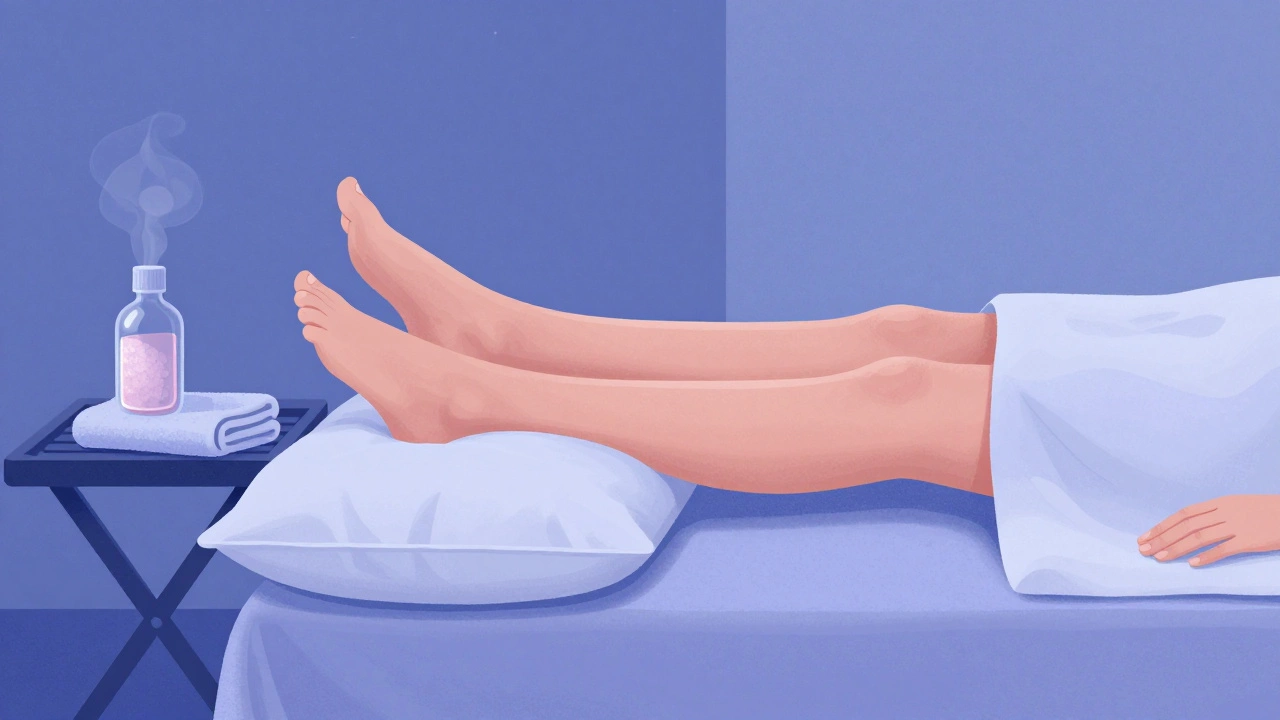
As soon as you get home, elevate your legs. Lie down and prop your feet above heart level for 15-20 minutes. This uses gravity to drain fluid from your ankles and reduce swelling. Combine this with gentle stretching. Focus on your calves, hamstrings, and lower back.
Consider an Epsom salt bath. Magnesium sulfate in Epsom salts may help relax muscles and reduce inflammation. Soak for 15 minutes to soothe sore tissues. Follow up with moisturizer to keep skin supple and prevent cracking, especially between toes.
Ice therapy can also be helpful if you have acute pain or swelling. Apply ice packs to inflamed areas for 10-15 minutes. Never apply ice directly to skin; wrap it in a towel first.
Environmental Adjustments: Control What You Can
Sometimes, the problem isn't you-it's your workplace. Hard floors like concrete or tile transfer maximum impact to your joints. If you have influence over your environment, request anti-fatigue mats.
Anti-fatigue mats are thick, resilient surfaces that compress slightly underfoot, encouraging subtle muscle contractions and reducing joint stress. Studies show they can reduce leg fatigue by up to 50%. Even if your employer doesn't provide them, consider buying a small mat for your primary workstation.
Lighting and temperature also matter. Poor lighting forces you to hunch forward, straining your neck and back. Extreme heat increases sweating and dehydration. Advocate for better conditions where possible. A cooler, well-lit space makes standing feel less oppressive.
What are the best shoes for standing 12 hours a day?
The best shoes combine cushioning, support, and breathability. Popular choices include Hoka One One Bondi for maximum cushioning, Brooks Ghost for balanced support, and Dansko Professional Clogs for rigid arch support. Choose based on your foot type and job requirements.
Do compression socks really help with standing all day?
Yes, compression socks improve blood circulation, reduce swelling, and decrease the risk of varicose veins. They are particularly beneficial for people who stand still for long periods. Look for 15-20 mmHg pressure for daily use.
How often should I replace my work shoes?
Replace running-style work shoes every 6-8 months or after 300-500 miles of use. Cushioning breaks down over time, losing its shock-absorbing ability. Clogs and boots may last longer, but inspect soles regularly for wear.
Can I use orthotics in my work shoes?
Absolutely. Custom or over-the-counter orthotics can provide additional arch support and alignment correction. Ensure your shoes have removable insoles and enough room to accommodate extra thickness without feeling tight.
What stretches should I do after a long shift?
Focus on calf stretches, hamstring stretches, and hip flexor stretches. Stand facing a wall, place one foot back, and lean forward to stretch the calf. Sit on the floor, extend one leg, and reach for your toes to stretch the hamstring. These relieve tension built up during standing.