How to Identify a High-Quality Hoodie: A Buyer’s Guide
Interactive Hoodie Quality Analyzer
Enter the specifications of the hoodie you are looking at. The tool calculates a "Worth Keeping" score based on professional standards.
Analysis Result
65%
Good Standard
Why this rating?
- The GSM indicates medium density, decent for summer but thin for heavy winter.
- Blend material helps with durability over time.
The Truth About Hoodie Shopping
You grab the tag, check the price, and take it home. Three washes later, the sleeves are twisted, the fabric feels thin, and the color has faded to a dull grey. This happens far too often. Spotting a high-quality hoodie isn't just about looking at the brand logo or checking the price tag. It is about understanding the materials, the build, and the small details that signal longevity.
If you want your wardrobe staple to last through dozens of winters, you need to know what to feel for in the store or what to look for in product descriptions online. Let's break down exactly what separates a throwaway garment from an investment piece.
Understanding Fabric Weight and GSM
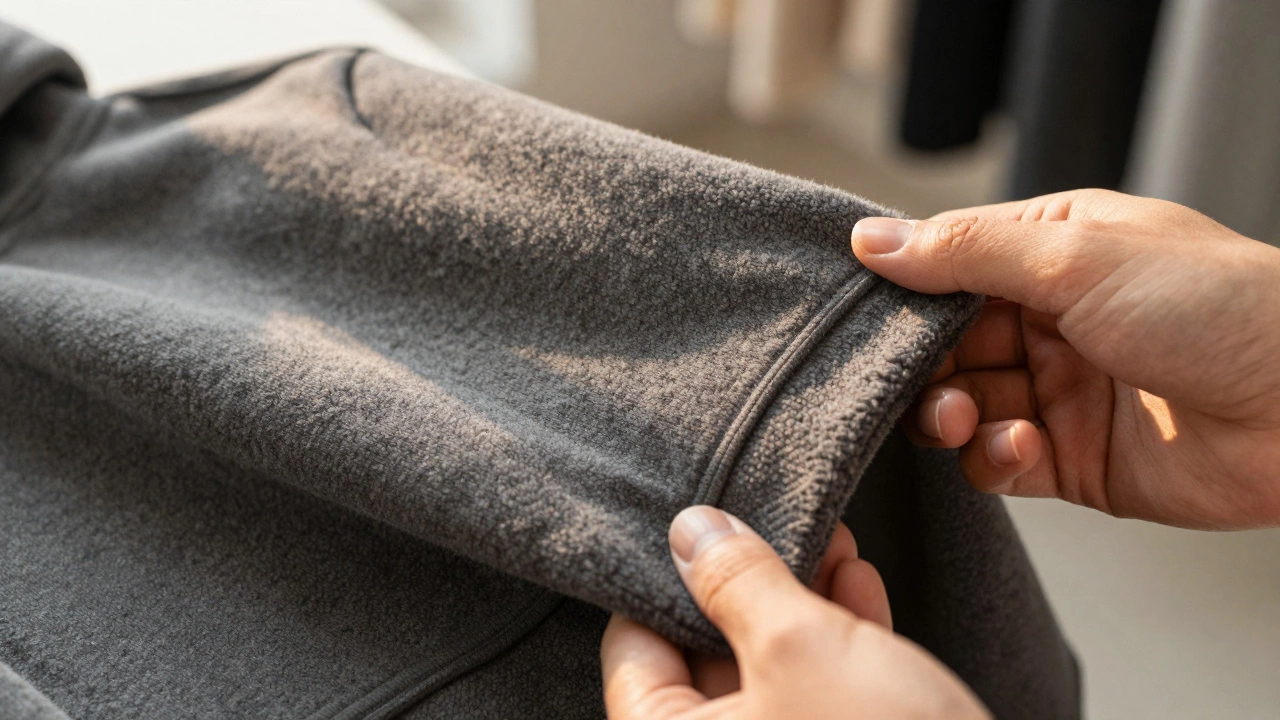
One of the first metrics that separate decent apparel from premium gear is Grams Per Square Meter (GSM). This number tells you how dense the fabric is. Most budget hoodies hover around 250 to 300 GSM. They feel light and sometimes sheer when stretched over a light. However, a heavier hoodie usually indicates better insulation and durability.
A top-tier Hoodie typically sits between 350 and 500 GSM. When you hold the fabric up to the light, you shouldn't see your fingers through the loops. Think about heavy canvas or denim; those fabrics block light because they are tightly woven. The same logic applies here. Heavier fleece offers better warmth retention and resists pilling-the unsightly bobbles that appear after friction.
Does a higher number always mean better? Not necessarily. Excessively thick fabric can restrict movement and dry poorly. Look for that sweet spot around 400 GSM for everyday wear. If you shop during cold seasons, you might even prefer 450 GSM or higher for that cozy, wind-resistant barrier.
Analyzing Material Composition
The label in the back of the neck is your roadmap. While 100% cotton sounds appealing, pure cotton shrinks easily and wrinkles without care. Many modern designers opt for a blend to balance comfort with resilience. A common premium mix involves heavyweight cotton and polyester.
| Fabric Type | Pros | Cons |
|---|---|---|
| Pure Cotton | Breathable, natural feel | Shrinks, fades faster |
| Cotton/Poly Blend | Durable, holds shape | Less breathable |
| French Terry | Lightweight, moisture-wicking | Less warmth than fleece |
| Fleece Lining | High insulation, soft | Can pill if low grade |
Look for "Ring-Spun Cotton." This process twists the fibers differently, making them softer and stronger than standard carded cotton. Another key indicator is organic certification. Brands that invest in organic cotton often pay more attention to the entire supply chain, which correlates with better manufacturing standards.
Synthetic materials like recycled polyester are also rising. These are excellent for athletic performance because they wick sweat away quickly. However, for daily streetwear, a natural fiber dominant blend usually breathes better and smells less after wear.
Construction and Stitching Techniques
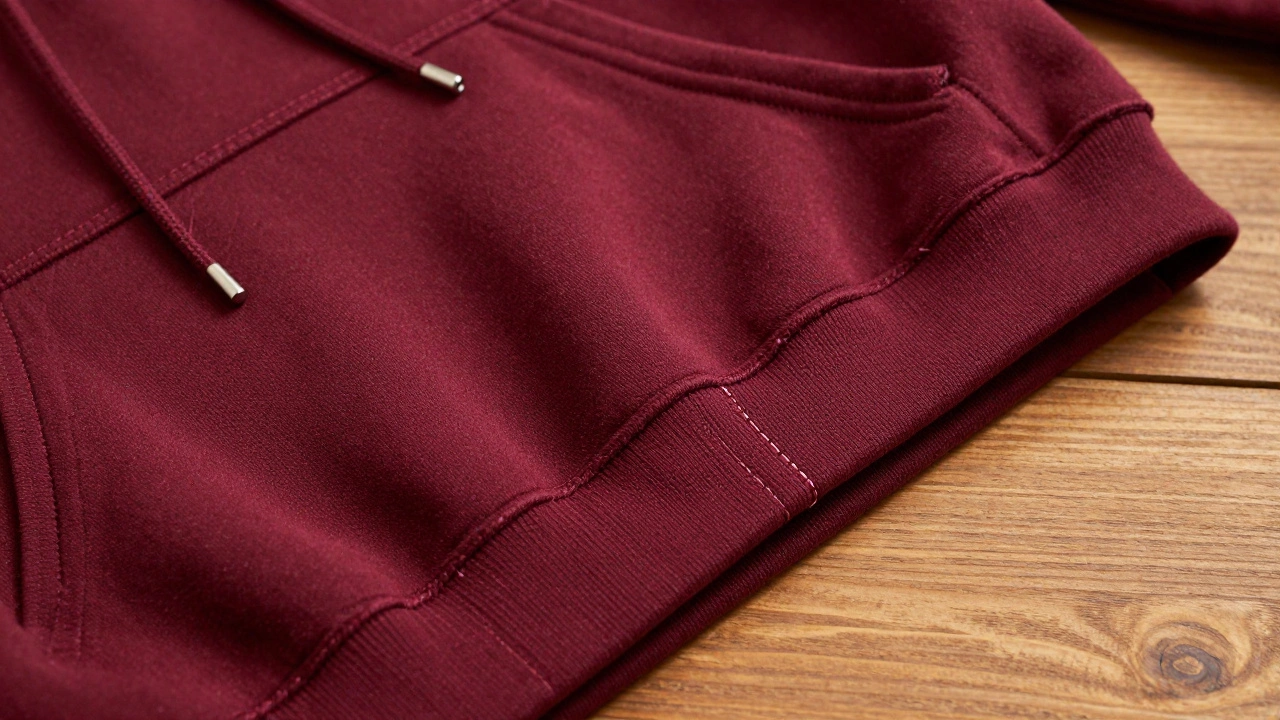
You might notice some shirts have a single line of thread running along the bottom hem. That is a giveaway of cost-cutting. A robust garment uses double-needle stitching. This creates two parallel lines of stitching that reinforce the fabric. If the tension snaps on one side, the other side holds the garment together.
Check the collar. On cheaper models, the neckband is often loose and stretches out immediately after the first wear. High-grade hoodies use ribbing made from a tighter weave, sometimes called "interlock," that retains its elasticity. Run your hand over the shoulder seams. They should lay flat. If you feel lumps or bulky thread stacks, the manufacturer likely used standard industrial sewing machines meant for mass production rather than specialized equipment for fine tailoring.
The construction method defines how long the item lasts. Flatlock seams lie flush against the skin, reducing chafing. You will find these mostly in sporty cuts. For casual fits, blind-stitching keeps the hems secure without visible perforation holes on the outside.
Hardware and Trim Details
The devil really is in the details. Small components often fail before the fabric does. Drawstrings are a prime example. Flimsy plastic aglets melt or crack when they rub against metal rings. Metal aglets, however, slide smoothly and resist breaking.
Examine the grommets (the eyelets where the string exits). Plastic grommets tear through the fabric under tension. Metal inserts offer support. If you buy a zipper hoodie, pull the slider up and down. It should move silently and glide. Stiff zippers suggest low-grade metal teeth or misalignment that will eventually jam completely.
Finally, inspect the pocket depth. Cheap versions cut corners here to save fabric. A well-designed kangaroo pocket extends deep enough so your hands don't slip out when you reach forward. The pockets should have bound edges internally to prevent fraying.
Pre-Shrinking and Washing Tests
Genuine quality assurance includes pre-shrinking processes. Manufacturers treat the fabric with heat or enzymes before cutting to minimize shrinkage. Without this, a large hoodie might become a medium after one cycle. Check the wash tag instructions. If it demands "Dry Clean Only" for a simple cotton garment, proceed with caution. It often signals that the fabric wasn't washed properly during production.
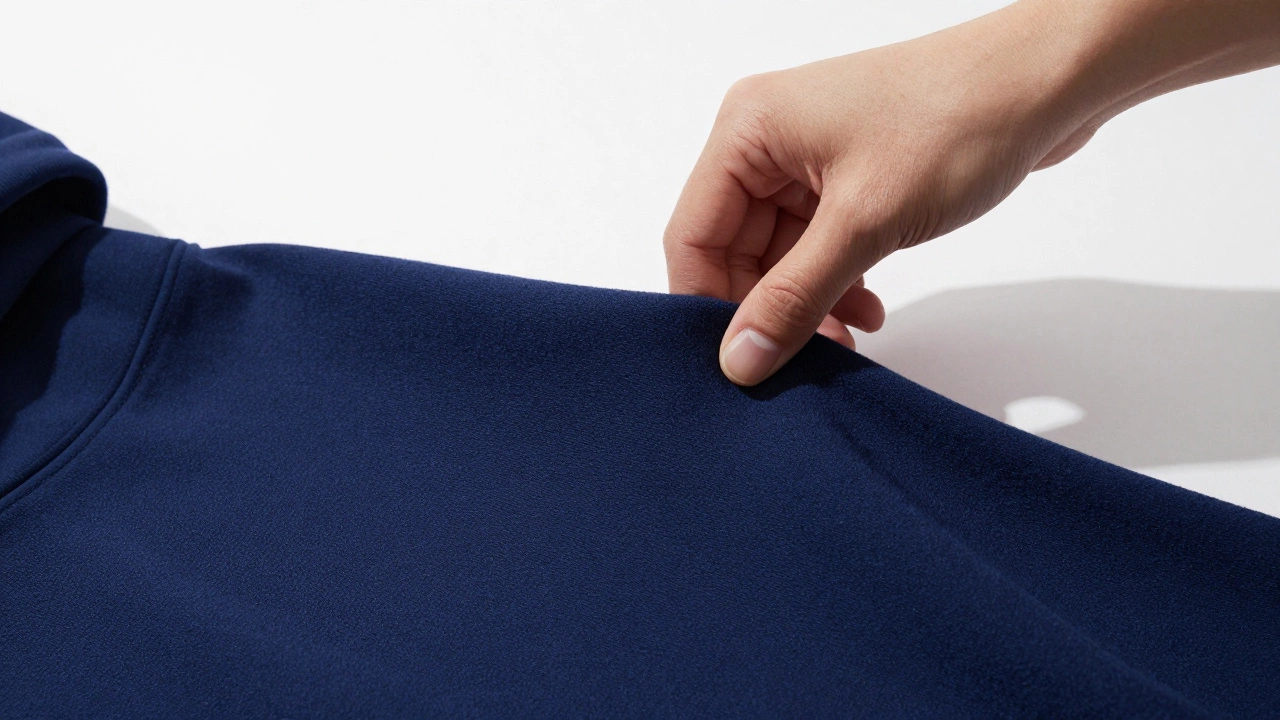
If buying in-person, perform the stretch test. Grab the fabric between two fingers and pull gently. It should snap back instantly. If it stays stretched or leaves a dimple, the elasticity fibers have already degraded.
Ethical Manufacturing Signals
In today's market, sustainability is a proxy for quality. Companies transparent about their factories tend to have stricter quality control. If a brand publishes audit reports or follows fair labor standards like SA8000, they are less likely to cut costs on worker training and machine maintenance. Fast fashion brands rarely disclose this info, focusing instead on rapid turnover cycles that prioritize volume over precision.
What GSM rating is considered luxury for a hoodie?
Generally, a GSM of 400 or higher is viewed as premium. This density provides significant warmth and structure without feeling stiff.
How can I tell if a hoodie is pre-shrunk?
Look for 'pre-shrunk' on the label, though it helps to ask customer service if the fabric was treated during production. Testing the elastic recovery of the fabric is also a good clue.
Is polyester better than cotton for hoodies?
It depends on the use case. Polyester is superior for gym wear and sweat management, while cotton offers better breathability and temperature regulation for casual use.
Why do some hoodies pill so quickly?
Pilling occurs due to loose fibers tangling on the surface. High-quality fleece uses longer staple fibers and tighter weaves to prevent this wear and tear.
Do heavy hoods mean better quality?
Usually yes. A structured hood that doesn't collapse suggests a higher thread count and better lining material, contributing to overall durability.