Best Shoes for Standing All Day: Comfort Guide for Workers
Find Your Perfect Work Shoe
Select your options above to see personalized recommendations.
Imagine your feet screaming at you by 2 PM. You’ve been on concrete floors since 6 AM, and every step feels like a punishment. If you’re a nurse, server, retail worker, or warehouse associate, this is your daily reality. The wrong pair of shoes for standing all day doesn’t just hurt; it leads to back pain, knee issues, and chronic fatigue. But the right pair can change everything.
You don’t need expensive medical gear to feel better. You need specific features: cushioning that absorbs shock, arch support that aligns your posture, and a sole that grips slippery floors. This guide breaks down exactly what to look for, which brands actually deliver, and how to keep your feet healthy through long shifts.
The Anatomy of an All-Day Shoe
Not all sneakers are created equal. A shoe designed for running looks similar to one designed for walking, but the engineering is completely different. Running shoes push you forward. Walking and standing shoes need to absorb vertical impact repeatedly without collapsing.
When you stand still, your body weight concentrates on specific pressure points: the ball of the foot and the heel. Without proper cushioning, these areas take a beating. Look for shoes with dual-density midsoles. These use a softer layer on top for comfort and a firmer layer below for stability. This combination prevents the "bottomed-out" feeling where the foam becomes flat and unresponsive after a few hours.
Arch support is equally critical. Flat feet (pes planus) and high arches (pes cavus) both suffer when unsupported. Low arches cause overpronation, rolling the foot inward and straining the inner knee. High arches lead to supination, putting pressure on the outer ankle. A good work shoe includes a removable insole so you can swap it for custom orthotics if needed. Brands like Hoka and Brooks excel here, offering built-in support that fits most foot shapes out of the box.
Top Picks for Different Work Environments
Your job dictates your shoe needs. A chef needs slip resistance and easy cleaning. A nurse needs lightweight flexibility and all-day cushioning. A construction worker needs toe protection and rugged durability. Here’s how to match the shoe to the scenario.
| Shoe Model | Best For | Key Feature | Price Range |
|---|---|---|---|
| Hoka Bondi 8 | Nurses, Retail | Maximum Cushioning | $165 - $180 |
| Brooks Ghost 16 | General Office/Walking | Balanced Support | $140 - $150 |
| New Balance Fresh Foam X 1080v13 | Wide Feet, Long Shifts | Plush Upper & Fit | $165 - $170 |
| Dansko Professional Clog | Chefs, Healthcare | Rigid Arch, Slip Resistant | $130 - $140 |
| Crocs Bistro | Kitchens, Quick Tasks | Easy Clean, Lightweight | $40 - $50 |
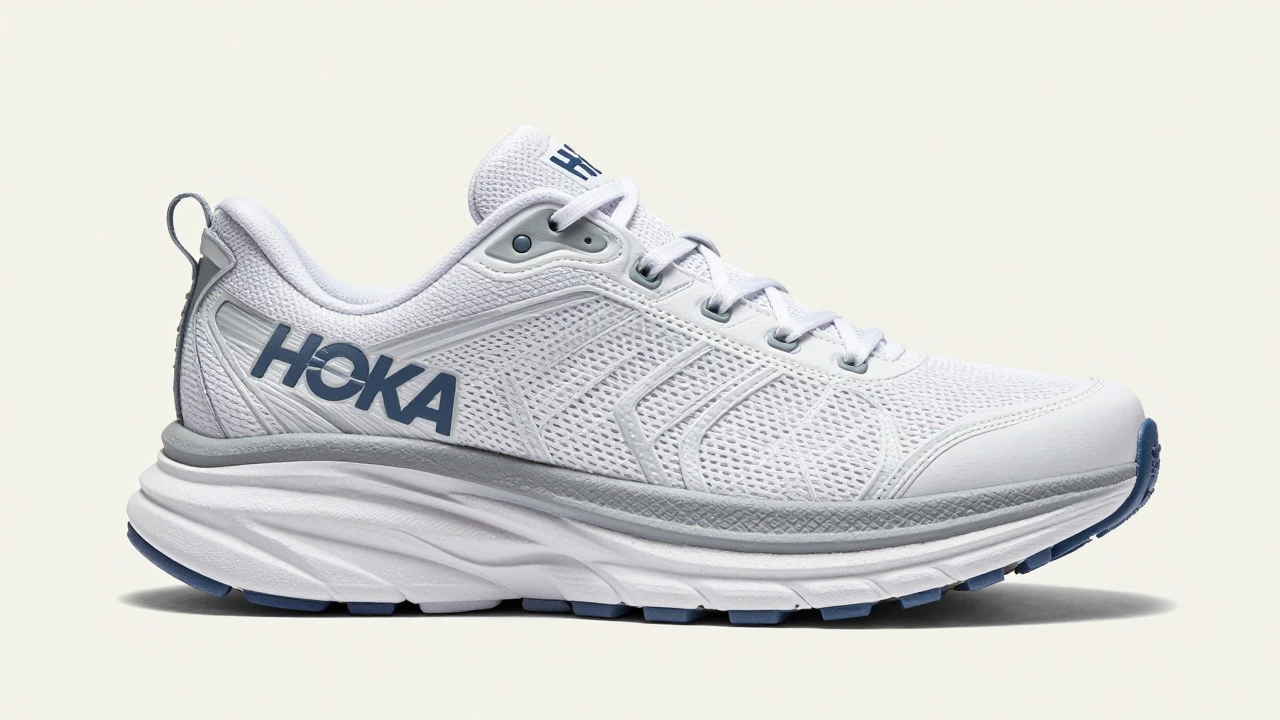
The Hoka Bondi 8 is often called the gold standard for standing. Its thick midsole acts like a cloud, absorbing nearly all impact. However, the height can make some people feel unstable on uneven ground. If you prefer a flatter profile, the Brooks Ghost 16 offers reliable support without excessive bulk. It’s durable enough for mixed surfaces and breathable enough for hot kitchens.
For those with wide feet, New Balance dominates. They offer multiple width options (B, D, 2E, 4E). The Fresh Foam X line provides a smooth ride that adapts to your stride. Don’t underestimate the value of a proper fit. Squeezing into narrow shoes causes blisters and numbness. Always try shoes on in the afternoon when your feet are slightly swollen from daily activity.
Clogs vs. Sneakers: Which Is Better?
This debate rages in hospitals and restaurants everywhere. Clogs like Dansko or Birkenstock Professional have a rigid arch and a rocker bottom. The rocker shape helps roll your foot forward, reducing strain on the Achilles tendon and calf muscles. They are also easy to clean-just wipe them down. In environments with spills, grease, or blood, this hygiene factor is huge.
Sneakers, however, offer more breathability. Mesh uppers allow air circulation, keeping feet cooler during summer shifts. They also provide better lateral support if you’re moving quickly or changing directions often. If your job involves running between stations, stick with sneakers. If you’re mostly standing in one place or walking slowly, clogs might save your lower back.
A hybrid option is the closed-toe sandal style, like Teva or Chaco work models. These offer excellent strap adjustability for swelling feet but may not meet safety requirements in industrial settings. Check your workplace policy before buying open-structured footwear.
The Role of Anti-Fatigue Mats and Insoles
Even the best shoes can’t fully compensate for poor flooring. Hardwood, tile, and concrete transmit shock directly into your skeleton. That’s why many workplaces install anti-fatigue mats. These mats compress slightly underfoot, forcing your leg muscles to micro-adjust, which improves circulation and reduces stiffness.
If your employer doesn’t provide mats, invest in high-quality insoles. Brands like Superfeet, Dr. Scholl’s, and Powerstep offer replacements that add structure and cushioning. Gel heel cups are particularly effective for plantar fasciitis sufferers. Swap out the factory insole within the first week of wearing new shoes. Factory insoles are often thin and lack real support.
Rotate your shoes. Wearing the same pair every day compresses the foam permanently. Alternate between two pairs to let the materials recover their shape. This simple habit doubles the lifespan of your footwear and maintains consistent comfort levels.
Common Mistakes to Avoid
- Ignoring Break-In Periods: New shoes need time to mold to your feet. Wear them for short periods before a full shift. Blister prevention starts with gradual exposure.
- Choosing Style Over Function: Fashion flats or heels may look professional, but they destroy posture. Opt for dressy loafers or oxfords with hidden cushioning if aesthetics matter.
- Neglecting Toe Box Space: Your toes should wiggle freely. Tight toe boxes cause bunions and hammertoes over time. Measure your foot length and ensure half an inch of space beyond your longest toe.
- Waiting Until Pain Starts: Foot pain is a warning sign. Replace shoes every 300-500 miles of wear, even if they look fine externally. The internal cushioning degrades silently.
Maintaining Foot Health Beyond Footwear
Shoes are only part of the equation. Stretching your calves and hamstrings after work relieves tension pulled from tight footwear. Roll a tennis ball under your arch for five minutes to massage the plantar fascia. Elevate your legs when resting to reduce swelling.
Hydration matters too. Dehydrated tissues are less elastic and more prone to injury. Drink water consistently throughout your shift. Combine this with proper footwear, and you’ll notice a dramatic difference in energy levels and joint health.
What is the best shoe brand for standing all day?
Brands like Hoka, Brooks, and New Balance are widely recommended for all-day standing due to their advanced cushioning technologies and ergonomic designs. Hoka excels in maximum cushioning, while Brooks offers balanced support and durability.
Are Crocs good for standing all day?
Yes, specifically the Crocs Bistro or Specialist models. They are lightweight, slip-resistant, and easy to clean. While they lack the structural support of athletic shoes, their memory foam insoles provide adequate comfort for moderate standing tasks.
How often should I replace work shoes?
Replace work shoes every 6 to 12 months, depending on usage intensity. Look for signs of worn-out tread, collapsed midsoles, or persistent foot pain despite using insoles. Regular replacement ensures ongoing support and injury prevention.
Do I need arch support if I have flat feet?
Absolutely. Flat feet benefit significantly from structured arch support to prevent overpronation and reduce strain on knees and hips. Consider custom orthotics if off-the-shelf solutions don’t alleviate discomfort.
Can I wear running shoes for standing jobs?
Running shoes can be used, but they are optimized for forward motion rather than static standing. For pure standing roles, choose walking-specific or stability shoes with firmer heel counters and broader bases for better balance.